FITMENT
DESCRIPTION
Product Overview
- The 2010–2012 Ram 6.7L Cummins suffers from fuel-wasting DPF regenerations, leaking EGR coolers that clog intakes with sludge, and an OEM CCV that vents oil mist into the intake—sticking VGT turbo vanes and choking airflow.
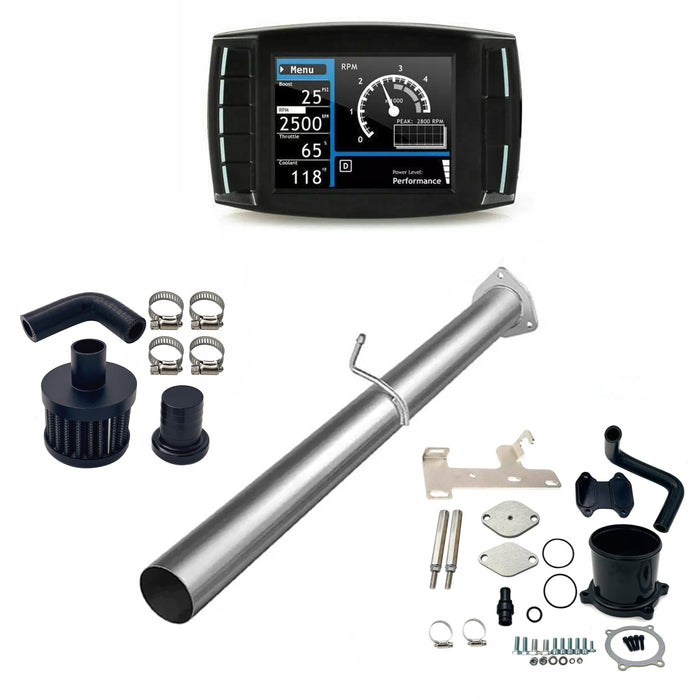
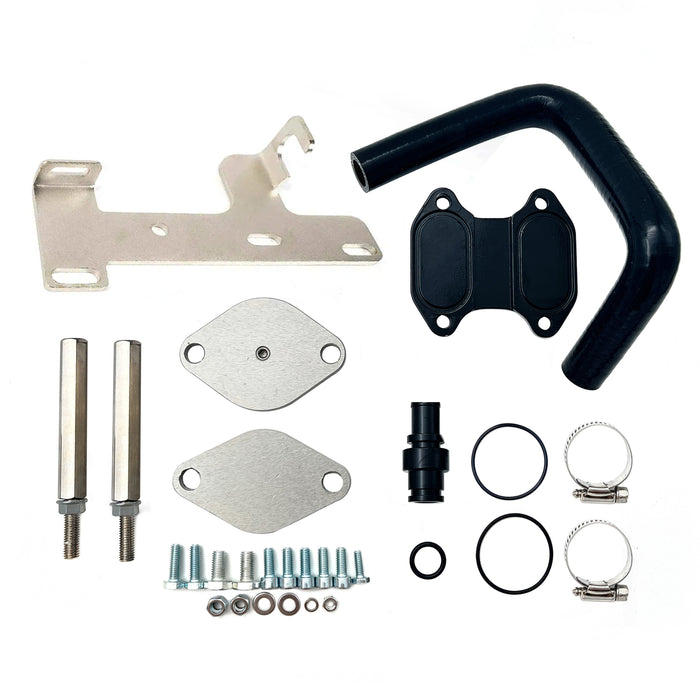
- The Delete Kit with Mini Maxx V1 Tuner fixes these issues completely. The pre-loaded tuner clears CEL codes and disables emissions diagnostics, while the delete pipe, CCV reroute, and EGR bypass lower EGTs, stop intake sludge, eliminate backpressure, and unlock 150+ HP on-the-fly.
Key Features
- Shift-on-the-Fly Power Gains: Switch power levels directly from the cabin display, unlocking up to 150+ additional horsepower and restoring legendary Cummins low-end torque.
- Stops hot exhaust gases from being recirculated into the combustion chamber, leading to significantly lower EGTs during heavy towing.
- 4" High-Flow DPF Race Pipe: Replaces restrictive factory DPF and DOC filters with a 4" mandrel-bent stainless steel pipe, maximizing exhaust velocity, dropping EGTs, and eliminating backpressure.
-
Complete 4-in-1 Cummins Delete Package: Completely removes and disables restrictive DPF pipes, failure-prone EGR coolers/valves, and CCV filters.
FAQ
Q: Does a 2010–2012 Dodge Ram 6.7L Cummins use Diesel Exhaust Fluid?
A: No. DEF systems were not equipped on Ram 2500/3500 pickup trucks until 2013. The 2010–2012 6.7L Cummins uses only a DPF filter, DOC catalyst, EGR cooler, and CCV filter.
Q: Why is a CCV (Crankcase Ventilation) reroute included with this 6.7L Cummins package?
A: Factory CCV systems vent oily vapors into the intake, mixing with soot to form turbo-coating sludge that sticks VGT nozzle vanes. The CCV reroute vents these vapors outside, keeping your turbo and intake completely clean.
Q: Do I need an unlocked ECM or bench flashing for a 2010–2012 Dodge Ram?
A: No. Unlike 2013+ Ram models, the 2010–2012 Cummins ECM is fully unlocked from the factory. The Mini Maxx V1 flashes directly through the OBDII port under the dash without extra unlocking hardware.
Q: Does deleting the DPF filter improve real-world fuel economy on my truck?
A: Yes. By eliminating active DPF regenerations, most drivers see an average gain of 2 to 4 MPG, depending on driving style and trailer loads.