

2020–2022 3.0L Duramax LM2: DPF Regeneration & EGR Issues
Owners of the 2020–2022 Silverado and Sierra 1500 with the 3.0L LM2 tend to say the same two things first: it gets real fuel economy on the highway, and it pulls harder than its 3.0 liters suggest. Those are the reasons people pick the engine over a gas V8.
The complaints come second, and they’re just as consistent: the emissions hardware. Frequent DPF regenerations that spike the fuel gauge on short trips, an EGR system quietly feeding exhaust soot into a composite intake manifold, and the occasional check-engine light that shows up right when you’re farthest from a dealer. Two different systems — but on the LM2, they’re connected in ways that aren’t obvious until you’re under the hood.
This guide breaks down both. What the EGR and DPF systems actually do, why they cause the symptoms they do, how the two feed into each other, and the two targeted fixes that address each one at the source.
What the LM2’s Emissions Systems Actually Do
Before you can decide what to fix, it’s worth knowing what each system is doing — and what happens when it stops doing it well.
The EGR (exhaust gas recirculation) system routes a portion of exhaust gas back into the intake to lower combustion temperatures and cut NOx formation. On the LM2, that means a valve and a coolant-fed cooler sitting in the middle of the intake path. The trade-off is inherent to the design: the same exhaust that leaves the cylinder as hot gas comes back loaded with dry carbon soot. That soot meets the crankcase oil vapor already present in the intake tract, and the two bake together into a sticky sludge that coats the intake manifold, the throttle body, and the valves.
The DPF (diesel particulate filter) sits in the exhaust path and catches the soot the combustion process leaves behind. It’s a physical trap, and like any trap it eventually fills. To clear itself, the truck runs a regeneration cycle — the computer injects extra fuel to push exhaust temperatures high enough to burn the collected soot into ash. That regen is the thing LM2 owners learn to recognize: a slightly different idle, a hot exhaust smell, and a fuel economy readout that dips while it runs.
The DEF/SCR system works alongside both. Diesel exhaust fluid is injected into the exhaust to break down NOx after the fact. On the LM2, all three — EGR, DPF, and SCR — are managed together by the engine computer, and none of them fails in isolation.
Is This Legal? A Quick Reality Check
The legal question matters enough to address up front, because it changes how you read everything below.
Modifying or removing emissions-control equipment is only appropriate for off-road, competition, or closed-course use — not a truck registered and driven on public roads. Removing the EGR or the DPF from a street-driven vehicle can violate the Clean Air Act and other applicable laws, and labeling a part “off-road” or “competition use only” does not by itself create a legal exemption.
The rest of this article explains how these systems work and what the parts in question are built to do — not an endorsement of removing emissions hardware from a street vehicle.
Owner Symptoms: What EGR and DPF Trouble Looks Like
Both systems tend to announce themselves in a fairly predictable way. Here’s what shows up in the real world.
EGR trouble
- A gradual loss of throttle response as the intake manifold cakes up.
- A rough or inconsistent idle that gets worse as the buildup accumulates.
- White smoke or a sweet coolant smell if the cooler develops an internal leak.
- A check-engine light tied to EGR flow or the EGR cooler.
DPF trouble
- Regeneration cycles that come on more and more often, especially on short trips.
- A noticeable drop in fuel economy while the truck forces a regen.
- Higher exhaust temperatures under load, particularly when towing.
- A “cleaning exhaust filter” message that keeps returning, or a derate warning on the dash.
These symptoms tend to stack rather than show up alone — which is part of why this article treats the two systems together.
Here’s a quick map to match a symptom to where you should look first:
| Symptom | Possible Cause | What to Check First |
|---|---|---|
| Rough idle, soft throttle | EGR soot sludge in the intake | Check intake for buildup |
| Coolant dropping, white smoke | EGR cooler internal leak |
Pressure-test cool system; check for exhaust gases |
| Frequent regens on short trips | DPF loading faster than it can clear | Track regen frequency & driving conditions |
| Fuel economy dip, hot exhaust | Active regen running often | Check DPF backpressure & sensor readings |
| Check-engine light, EGR code | Valve or cooler fault | Read the code; don’t guess at the cause |
“Smoke color is a clue, not a full diagnosis” — confirm any suspicion against the actual codes and a hands-on inspection before you buy parts.
Why the LM2’s EGR System Causes Trouble
The LM2’s EGR system has a few specific weak points that keep showing up as these trucks accumulate miles:
The intake manifold is composite, not metal.
The LM2 runs a plastic composite intake manifold. Exhaust soot and oil vapor don’t just sit there — the combination bakes on and, over time, the localized heat and pressure can stress the manifold itself. That’s a bigger repair than a dirty throttle body.
The cooler is a coolant-fed failure point.
The EGR cooler has engine coolant flowing through it. After repeated hot-cold cycling, the internal passages can crack. When they do, coolant leaks into the intake stream — the classic “coolant disappearing with no puddle” complaint, followed by white smoke and, in a worst case, enough coolant in a cylinder to cause a hydrolock.
The valve and passages collect sludge.
The EGR valve is constantly in the soot stream, so it’s one of the first things to stick or fail open. When it does, exhaust flow through the loop changes, and the computer notices.
Short-trip driving makes it worse.
A truck that never fully warms up keeps the EGR system wet with condensation, which turns dry soot into paste.
The fix that actually addresses this is removing the valve and cooler from the loop and re-routing the coolant so it stays closed — the approach behind the kit we’ll get to in a moment.
Why the LM2 DPF Keeps Regenerating
On its own, the DPF isn’t a failure — it’s a maintenance cycle that the truck manages for you. The problems start when the cycle can’t keep up.
How regeneration works. The DPF catches soot until a pressure sensor tells the computer it’s getting full. The computer then injects extra fuel to push exhaust temperatures up and burn the trapped soot into ash. That’s an active regen, and it’s normal — when it happens on schedule, on a fully-warm truck, at highway speed.
What goes wrong on the LM2. The trouble is that the LM2 lives a lot of its life in half-ton duty: short trips, stop-and-go, cold starts, and light loads. Those are exactly the conditions where a regen can’t complete cleanly. The truck starts a regen, gets interrupted, starts another, gets interrupted again — and the soot never fully clears. The filter loads progressively, backpressure climbs, and the truck has to regen more often just to stay ahead.
The symptoms that follow. More frequent regens mean more fuel burned just to clean the filter, which shows up as a fuel economy dip. Higher backpressure means the turbo works harder and exhaust temperatures run higher under load, especially towing. And when the system can’t stay ahead — or when a sensor gives up — the computer protects itself with a derate, which is the last thing you want while towing a trailer up a grade.
The root of it is backpressure — the factory DPF, catalyst, and SCR sit right behind the turbo and choke its exhaust flow as they load.
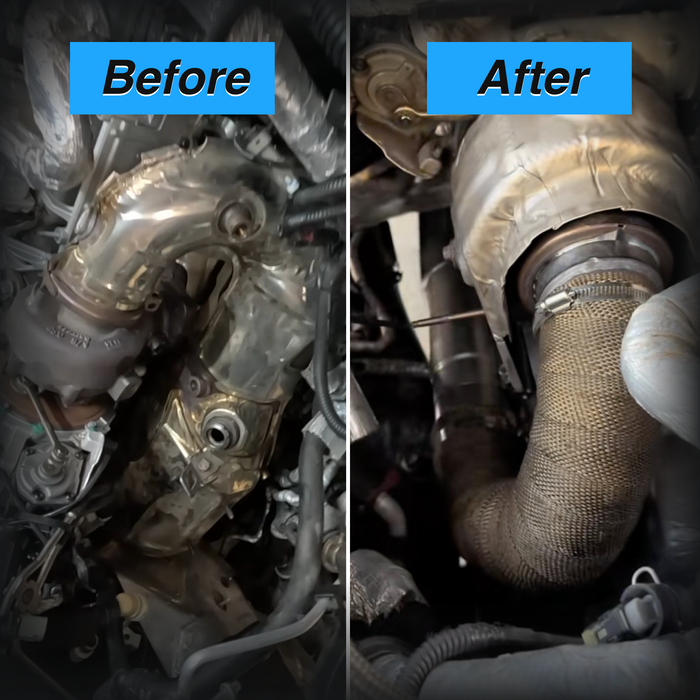
The EGR–DPF Connection: Related, Not Always Linked
Here’s where the two systems overlap. EGR-related intake deposits and frequent DPF regeneration can show up on the same truck, and they can feed into each other — a dirtier intake can mean less efficient combustion, which can mean more exhaust soot, which can load the DPF faster. But they don’t always share the same root cause. Driving patterns, sensor readings, and the condition of each system all matter when diagnosing the problem, and two trucks with the same symptom can have different causes.
That’s not to say you always need both. You don’t. The honest way to think about it is this:
| If your truck… | The relevant fix | Why |
|---|---|---|
| Cakes the intake & throttle body | EGR removal | Blocks the soot feed into the intake |
| Regens constantly & runs hot towing | DPF pipe | Relieves backpressure behind the turbo |
| Does both | Both, together |
Breaks the soot-to-backpressure loop at both ends |
“You may not need both” is the honest starting point. A truck with a clean intake and normal regen behavior doesn’t need either. But a truck that’s fighting both — the classic high-mileage LM2 with a dirty intake and a regen-happy DPF — is often dealing with two related but separate problems.
Two Targeted Fixes for Two Specific Problems
If you’ve confirmed that the issue is related to the EGR or exhaust system, the next step is to understand which component addresses the problem you’re dealing with. The Seguler EGR kit and the 3-inch turbo-back pipe target different systems, so fitment and the actual diagnosis should guide your decision. Here’s what each one replaces and why it’s built the way it is.
The EGR Valve Cooler Delete Kit
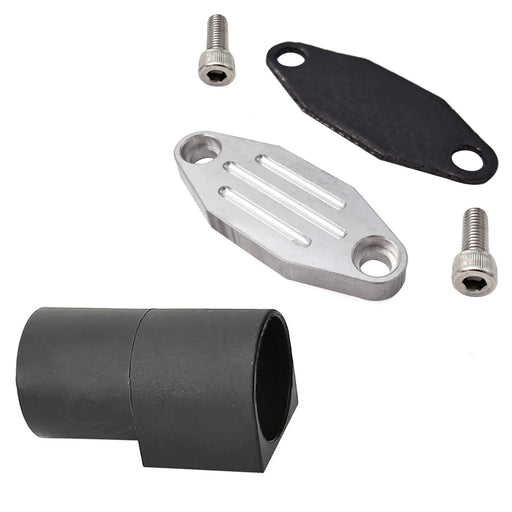
The EGR valve cooler delete kit takes the factory EGR valve and cooler out of the intake path and seals the ports behind them. It’s built from billet aluminum with CNC-machined block-off plates designed to seat flat and seal tight, so the intake no longer receives that steady feed of hot exhaust soot.

The detail worth knowing is the coolant side. The factory EGR cooler has coolant running through it, so simply pulling it leaves a gap in the cooling loop. The kit includes a U-shaped silicone bypass hose that bridges that gap and keeps the coolant circuit intact — that’s the difference between a clean removal and a coolant leak waiting to happen.
Why owners choose this one: it removes the two failure points at once — the soot-fed intake buildup and the crack-prone cooler. It’s a mechanical change that takes the hardware out of the equation — not an electronic box — and it’s sized specifically for the 2020–2022 LM2.
The 3" Turbo-Back DPF Delete Pipe
The 3" turbo-back DPF delete pipe replaces the factory DPF, catalyst, and SCR canisters behind the turbo with a straight 3-inch mandrel-bent stainless section. It bolts to the turbo flange on one end and ties into the factory tailpipe on the other, so the truck keeps its stock rear-exit look while the restrictive mid-body emissions hardware is gone.
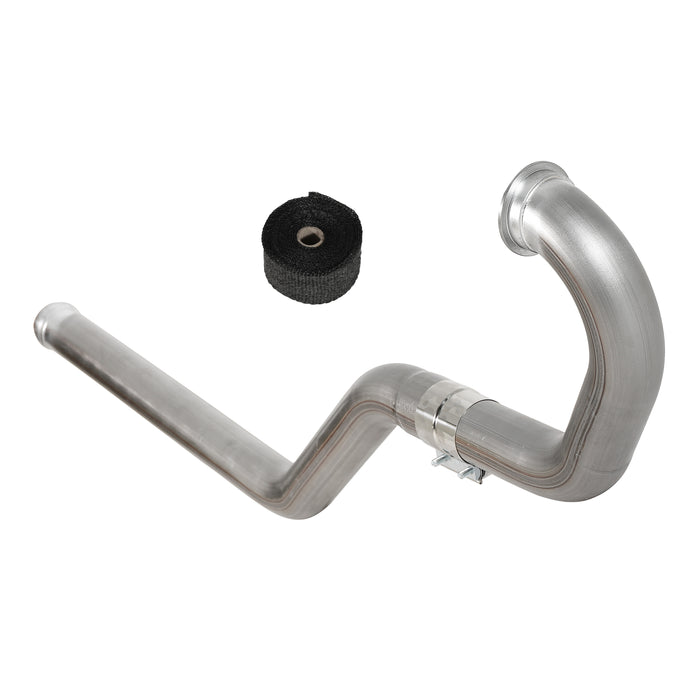
The 3-inch diameter is the specification of this LM2-specific pipe. Its actual effect on exhaust flow, throttle response, and towing performance depends on the complete exhaust setup and the engine calibration, not on pipe diameter alone.
Why owners choose this one: it removes the regen cycle and the backpressure behind it. With the DPF and catalyst out of the loop, the turbo isn’t fighting a loaded filter, and the truck is no longer burning extra fuel to clean one. “A pipe alone doesn’t make a fixed horsepower number” — but it changes the one thing that was actively working against the engine.
Here’s the quick reference for both, once you’ve read through each:
| Part | What it replaces | Why owners do it |
|---|---|---|
| EGR Valve Cooler Delete Kit | EGR valve & cooler |
Blocks intake soot feed; removes the cooler leak point |
| 3" Turbo-Back DPF Delete Pipe | DPF, catalyst, & SCR |
Relieves backpressure; removes the regen cycle |
Fitment: Know Your LM2, Not Your LZ0
This is the single biggest fitment trap for the 3.0L Duramax, so it gets its own section.
The 3.0L Duramax comes in two generations that look similar but are not interchangeable:
- LM2 (2020–2022) — the engine this article is about.
- LZ0 (2023 & newer) — the updated 3.0L with revised internals and, critically, a different exhaust routing and flange geometry.
The two parts in this guide are built for the LM2 only. They will not fit a 2023+ LZ0, because the LZ0’s factory exhaust routing and flange shapes were redesigned. If you have a 2023 or newer truck, you need a different part — ordering the LM2 version will not bolt up.
| Engine | Years | EGR kit | DPF pipe |
|---|---|---|---|
| LM2 | 2020–2022 | Fits | Fits |
| LZ0 | 2023+ | Does not fit | Does not fit |
The practical takeaway: confirm your engine code, not just your model year. “Not sure what your truck has? Check the data plate, not the model year.” The 2022-to-2023 model-year boundary is exactly where owners get tripped up, because a late-2022 truck and an early-2023 truck can look nearly identical from the outside.
Installation Overview
Neither of these is a driveway job for someone who’s never turned a wrench on a diesel, but they’re both bolt-on by design — no cutting, no fabrication.
The EGR kit is the more involved of the two. It means draining the coolant, pulling the intake plumbing and the MAF sensor to reach the cooler, disconnecting the coolant lines and the wiring, and unbolting the EGR assembly. The block-off plates then seat into the intake and exhaust ports, the U-shaped hose re-routes the coolant, and you refill and bleed the cooling system before running the engine to check for leaks. Budget several hours, and expect the intake side of the engine bay to come apart and go back together.
The DPF pipe is simpler in terms of steps but still means getting under the truck and working with exhaust hardware. The factory mid-body assembly drops out from the turbo flange, the new pipe hangs in its place, and it ties into the stock tailpipe. Exhaust fasteners on a truck with miles can be stubborn, so a competent set of tools and some patience matter more than raw speed.
Both are jobs a competent shop or an experienced DIY owner can handle, but neither is something to rush. The installs are covered in detail in the respective product listings, and the exact procedure depends on your specific truck’s configuration.
Tuning & the Check-Engine Light
This is the part that trips people up, so let’s be direct about it.
The LM2’s engine computer continuously monitors the EGR loop and the downstream emissions equipment. Removing or modifying that hardware can trigger diagnostic faults or affect engine-control behavior, depending on the truck’s configuration and calibration. Because the specifics vary by year, configuration, and intended use, the exact requirements — including whether a recalibration is needed — should be confirmed against the applicable service information for your truck before you make any changes.
Don’t assume a hardware change is the whole story — the software side matters as much. Have the work handled by someone familiar with the 3.0L Duramax.
Mistakes to Avoid
A few common mistakes are worth checking before ordering parts. Confirm the fitment, identify the actual cause, and make sure the component matches your truck's needs.
Assuming the LM2 and LZ0 parts interchange.
The 2020–2022 LM2 and 2023+ LZ0 use different exhaust routing and flange designs. Parts designed for one generation may not fit the other. Confirm your engine code, model year, and vehicle configuration before ordering.
Buying parts before the diagnosis is confirmed.
A new EGR kit won’t fix a failing injector or fuel-system issue. Match the fix to the symptom.
Skipping the coolant re-route on the EGR job.
Pulling the cooler without bridging the loop leaves a leak — the U-shaped hose in the kit is there for a reason.
Expecting a hardware change to be the whole job.
The software side matters — ignore it and you may end up with a check-engine light and a derate.
Why Choose Seguler
If you’ve decided this is the right direction for your truck, the differences between kits mostly come down to a few concrete details. Here’s what to look for and how these parts line up:
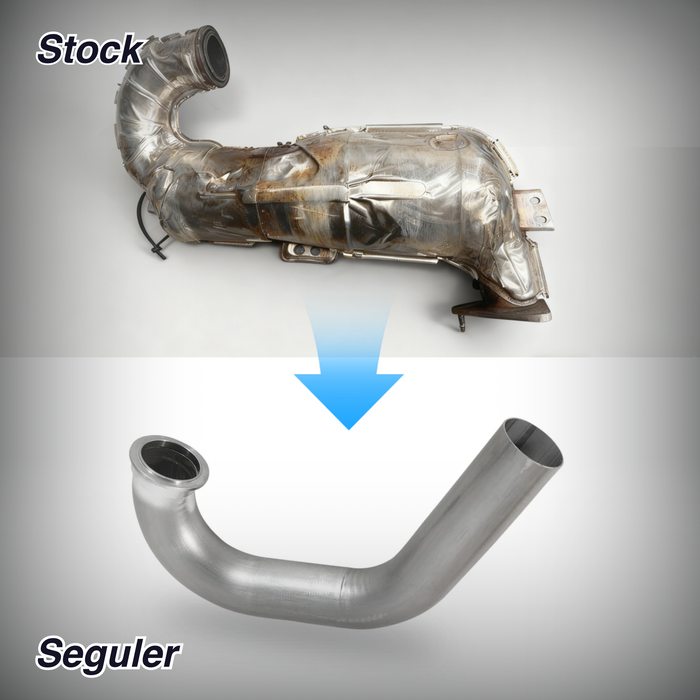
| What to check | What to look for | Seguler kit |
|---|---|---|
| EGR plate design |
Flat, one-piece block-off vs. port-specific plates |
CNC-machined block-off plates sized for the LM2 ports |
| Coolant loop | Is the cooler’s coolant gap addressed? | U-shaped silicone bypass hose included |
| Exhaust material | Thin wall vs. heavy-duty mandrel-bent | 3" mandrel-bent stainless, turbo-back |
| Fitment clarity | “Universal” vs. year-specific | LM2-specific (2020–2022), LZ0 excluded |
The differences come down to materials, how the coolant loop is handled, and how clearly the fitment is stated — confirm those details against the product page before you order. Both parts covered here live in the Duramax Performance Parts collection, alongside the rest of the 3.0L range.
Legal Disclaimer
Emissions modifications are intended strictly for off-road and competition use only. Removing or modifying emissions-control equipment on vehicles registered or driven on public roads may violate federal, state, or local laws (including the Clean Air Act). Labeling a product “off-road” or “competition use only” does not by itself create a legal exemption. Modifications may also affect vehicle warranty coverage. Ensure full compliance with all applicable laws in your jurisdiction. This article is provided for informational and educational purposes only and does not constitute legal advice.
For 2020–2022 3.0L LM2 owners researching their EGR and DPF options, both kits are listed with their full fitment details at seguler.com. Confirm your engine code and truck configuration against the product page before ordering.
FAQ
Q: Do both of these changes require custom tuning?
A:Requirements depend on the truck’s configuration, the specific hardware, and applicable regulations — verify the service information for your truck before making changes. On an emissions-monitored engine like the LM2, a hardware change alone is rarely the whole story.
Q: Why does the EGR delete kit include a coolant bypass hose?
A:The factory EGR cooler has engine coolant flowing through it. Taking the cooler out leaves a gap in the coolant loop, and the included U-shaped silicone hose bridges that gap so the circuit stays closed and leak-free.
Q: Will removing the EGR trigger a check-engine light?
A:It can, depending on the truck’s configuration and calibration. The engine computer monitors the EGR loop, so confirm the applicable service information before making changes.
Q: Why is the DPF delete pipe 3-inch instead of 4-inch or 5-inch?
A:The 3-inch diameter is the specification of this LM2-specific pipe, sized to the engine’s displacement and exhaust routing. The actual effect on throttle response and towing performance depends on the full exhaust setup and calibration.
Q: Do these parts fit the 2023+ LZ0 engine?
A:No. The LZ0 (2023+) is the updated 3.0L Duramax with revised internals and a different exhaust routing and flange geometry. Both parts here are built for the 2020–2022 LM2 only and will not bolt up to an LZ0.
Q: Should I do the EGR delete and DPF delete at the same time?
A:Not necessarily. They address two different halves of the same loop, and whether you need both depends on your truck’s symptoms, configuration, and how you use it. A truck fighting both a dirty intake and constant regens often benefits from both, but you don’t have to buy them as a set.
Q: Will deleting the EGR keep my intake clean forever?
A:It removes one source of intake contamination — the exhaust soot feed. The crankcase ventilation system still introduces oil vapor, so an EGR change alone doesn’t guarantee a permanently clean intake. It addresses the dry-soot side, not every source.
Q: Is this legal for my street-driven truck?
A:These modifications are intended for off-road and competition use only. Removing emissions hardware from a vehicle registered and driven on public roads can violate the Clean Air Act and other laws. Consult qualified legal counsel for your specific situation.
Q: Will I need new gaskets or hardware for the install?
A:The kits include the plates, hose, and hardware specific to the job. Any factory gaskets or fasteners that are worn or damaged during disassembly should be replaced rather than reused, and the exact procedure depends on your truck’s configuration.
Featured collection
-
Seguler 1986-1995 Ford F150 F250 F350 Mustang Trucks EGR Simulator Eliminator / Block Off Plate Kit
SEGULEROriginal price $79.99 - Original price $79.99Original price$79.99$79.99 - $79.99Current price $79.99Block Off Plate Material: Aluminum alloy. Easy installation,and convenient to use. Made of CNC milled from aircraft grade Billet aluminum. Will N...
View full details -

Seguler 2011-2023 6.7L Ford Powerstroke Diesel EGR Delete Kit
SEGULEROriginal price $109.99 - Original price $109.99Original price$109.99$109.99 - $109.99Current price $109.99FITMENT 2011-2023 6.7L Ford Powerstroke F-250 F-350 F-450 F-550 Super Duty V8 Diesel. compatible with both standard Pickups and commercial Cab &...
View full details -
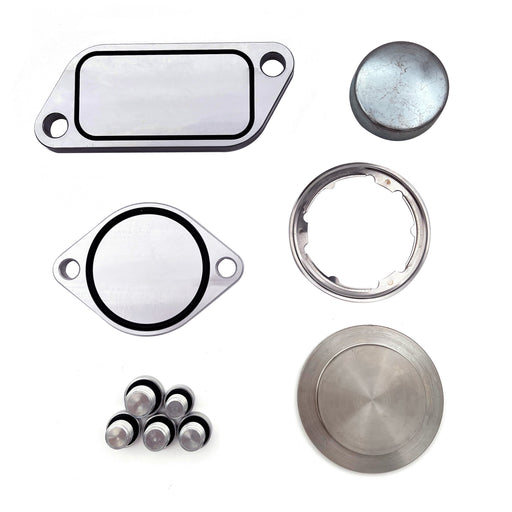
For 2010-Present Stage 2 ISX 15 CM2250 CM2350 EGR Delete Kit
SEGULEROriginal price $59.99 - Original price $59.99Original price$59.99$59.99 - $59.99Current price $59.99FITMENT 2010-Present Cummins Volvo, Peterbilt, Mack, International, Freightliner, Kenworth with the ISX15 CM2250 / CM2350 engines. DESCRIPTION P...
View full details -
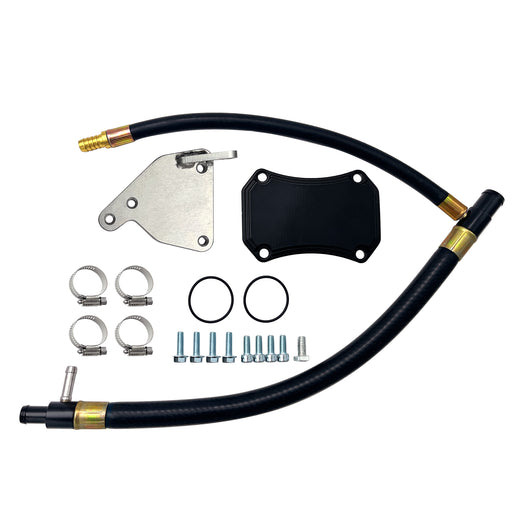
For 2011-2016 6.6L GMC Chevy Duramax Diesel LML EGR Valve Cooler Delete Kit
SEGULEROriginal price $66.49 - Original price $66.49Original price$66.49$66.49 - $66.49Current price $66.49FITMENT 2011-2016 6.6L Chevy GMC Duramax LML 2500 HD 3500 HD Diesel. DESCRIPTION Product Overview The 2011–2016 LML Duramax uses a complex EG...
View full details -
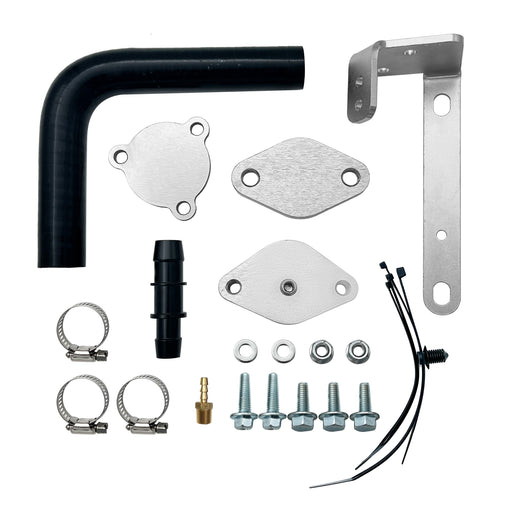
Seguler For 2014-2019 3.0L Dodge Ram 1500 EcoDiesel EGR Valve & Cooler Delete Kit
SEGULEROriginal price $72.99 - Original price $72.99Original price$72.99$72.99 - $72.99Current price $72.99FITMENT 2014-2019 3.0L Dodge Ram 1500 EcoDiesel V6 engine trucks. DESCRIPTION Product Overview Exhaust gas recirculation on 3.0L EcoDiesel V6 ...
View full details -
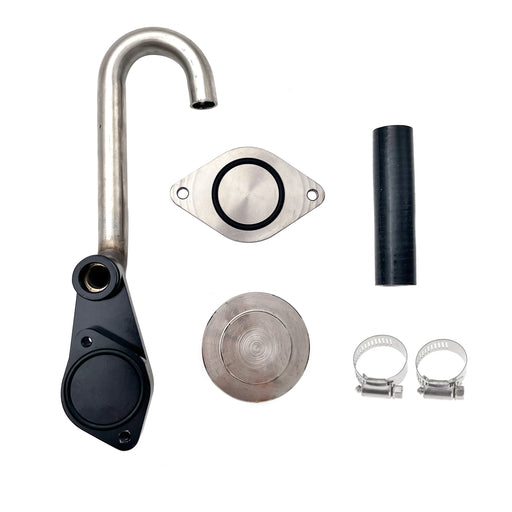
Seguler 2003-2007 6.0L FORD Powerstroke Diesel EGR Cooler Delete Kit
SEGULEROriginal price $56.14 - Original price $56.14Original price$56.14$56.14 - $56.14Current price $56.14FITMENT 2003-2007 6.0L Ford F-250 Ford F-350 F-450 F-550 Super Duty. 2003-2007 6.0L Ford Excursion SUV (Diesel Models Only). 2005-2010 Ford E-Se...
View full details -

Seguler 2011-2023 6.7L Ford Powerstroke Diesel EGR Delete Kit
SEGULEROriginal price $85.99 - Original price $85.99Original price$85.99$85.99 - $85.99Current price $85.99FITMENT 2011-2023 6.7L Ford Powerstroke F-250 F-350 F-450 F-550 Super Duty V8 Diesel. compatible with both standard Pickups and commercial Cab &...
View full details -

Seguler 2017-2019 L5P Duramax Diesel 4pcs L5P Can Bus Plugs Connector Replacement
SEGULEROriginal price $75.00 - Original price $75.00Original price$75.00$75.00 - $75.00Current price $75.00FITMENT 2017–2019 Chevrolet Silverado / GMC Sierra Duramax L5P 2500HD & 3500HD Diesel. DESCRIPTION Product Overview Unprotected harness con...
View full details -

Seguler 2010-2024 6.7L Dodge Ram Cummins Diesel EGR Valve Cooler Delete Kit
SEGULEROriginal price $89.99 - Original price $89.99Original price$89.99$89.99 - $89.99Current price $89.99FITMENT 2010–2024 6.7L Dodge Ram Cummins 2500 / 3500 Pickup Turbo Diesel. Note: Does NOT fit Chassis Cab 3500 / 4500 / 5500 models. DESCRIPTIO...
View full details -
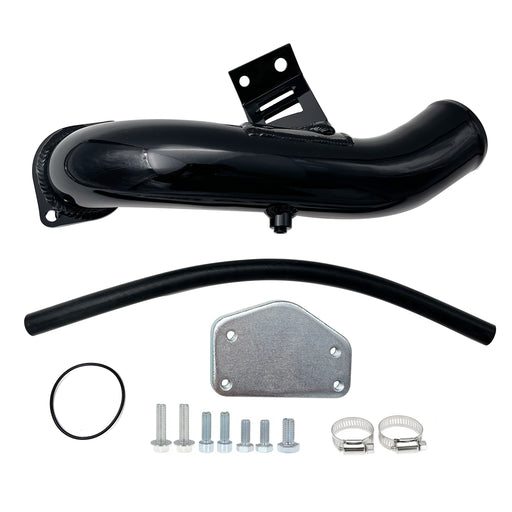
For 2004.5-2005 6.6L Chevy GMC Silverado LLY Duramax Diesel EGR Delete Kit
SEGULEROriginal price $92.99 - Original price $92.99Original price$92.99$92.99 - $92.99Current price $92.99FITMENT 2004.5-2005 6.6L Chevrolet Silverado Duramax LLY 2500HD / 3500 HD. 2004.5-2005 6.6L GMC Sierra Duramax LLY 2500HD / 3500 HD. DESCRIPTION...
View full details -

Seguler 2020-2023 chevy duramax L5P Diesel Can Bus Plugs Connector
SEGULEROriginal price $80.00 - Original price $80.00Original price$80.00$80.00 - $80.00Current price $80.00FITMENT 2020–2023 Chevrolet Silverado / GMC Sierra Duramax L5P 2500HD & 3500HD Diesel. DESCRIPTION Product Overview Unprotected harness pl...
View full details -
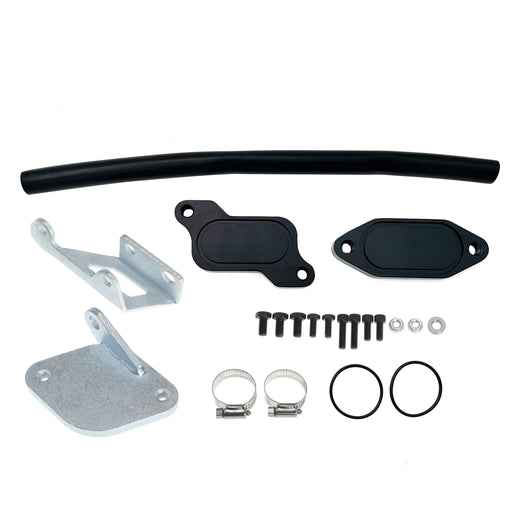
For 2006-2007 6.6L Chevrolet Silverado Classic GMC Duramax LBZ Diesel EGR Valve Cooler Delete Kit
SEGULEROriginal price $63.49 - Original price $63.49Original price$63.49$63.49 - $63.49Current price $63.49FITMENT 2006-2007.4 Chevrolet Silverado Duramax LBZ 2500HD / 3500HD. 2007.4 Chevrolet Silverado Duramax LBZ 2500HD / 3500HD Classic. 2006-2007.4 ...
View full details -

Seguler 2011-2023 6.7L Ford F250 F350 F450 F550 Powerstroke Diesel EGR Valve Delete Cooler Delete Kit
SEGULEROriginal price $55.99 - Original price $55.99Original price$55.99$55.99 - $55.99Current price $55.99FITMENT 2011-2023 6.7L Ford Powerstroke F-250 F-350 F-450 F-550 Super Duty V8 Diesel compatible with both standard Pickups and commercial Cab &a...
View full details -
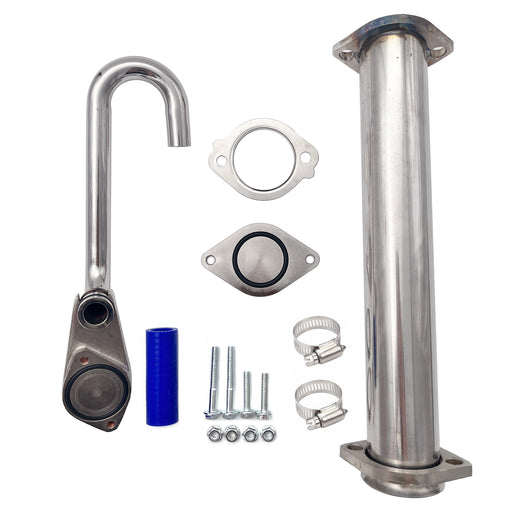
Seguler 2003-2007 6.0L Ford F250 F350 Powerstroke Diesel EGR Basic Cooler Kit
SEGULEROriginal price $79.99 - Original price $79.99Original price$79.99$79.99 - $79.99Current price $79.99FITMENT 2003-2007 6.0L Ford F250 F350 F450 F550 Super Duty Turbo (except 2004 F250 Super Duty). 2003-2005 6.0L Ford Excursion Turbo. 2005 Ford F...
View full details -
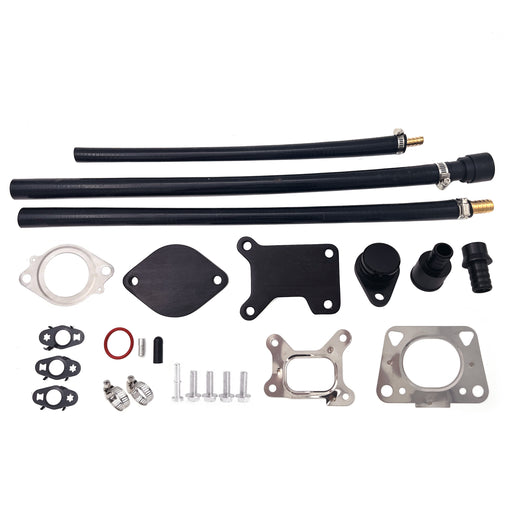
For 2017-2023 6.6L Chevy GMC Duramax L5P diesel EGR Valve Cooler Delete kit
SEGULEROriginal price $131.99 - Original price $131.99Original price$131.99$131.99 - $131.99Current price $131.99FITMENT 2017–2023 6.6L Chevrolet Silverado / GMC Sierra Duramax L5P 2500HD 3500HD Diesel. DESCRIPTION Product Overview Hot soot recirculation ...
View full details -
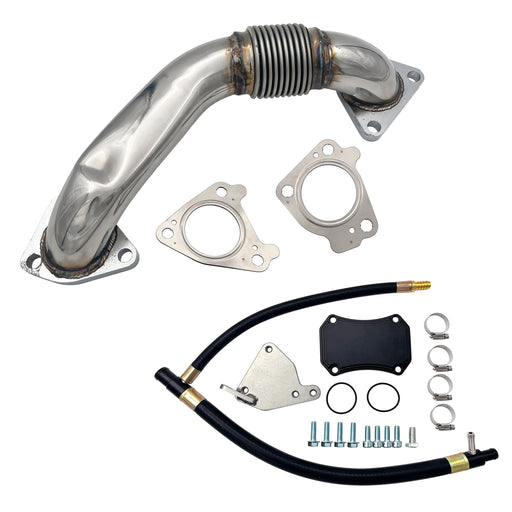
Seguler 2011-2016 6.6L GMC Chevy Duramax Diesel LML Up-Pipe & EGR Valve Cooler Delete Kit
SEGULEROriginal price $173.86 - Original price $173.86Original price$173.86$173.86 - $173.86Current price $173.86FITMENT 2011-2016 6.6L Chevy GMC Duramax LML 2500 HD 3500 HD Diesel. DESCRIPTION Product Overview Direct-injection technology endows GM 5.3L an...
View full details -
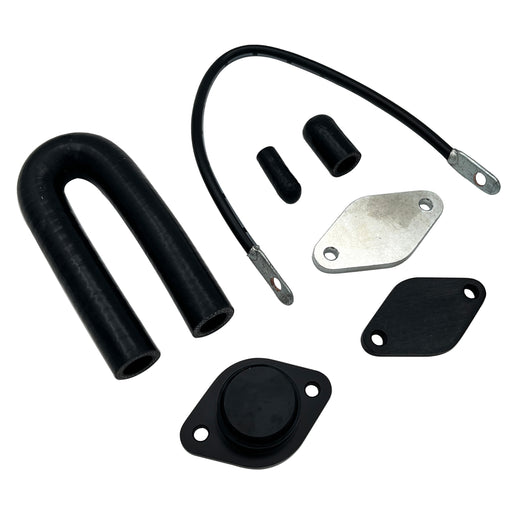
Seguler EGR valve cooler Delete kit for 2020-2022 3.0L Chevy Duramax LM2
SEGULEROriginal price $189.12 - Original price $189.12Original price$189.12$189.12 - $189.12Current price $189.12FITMENT 2020–2022 3.0L Chevrolet Silverado GMC Sierra 1500 LM2 Turbo-Diesel. DESCRIPTION Product Overview Powered by smooth inline-six engine...
View full details -
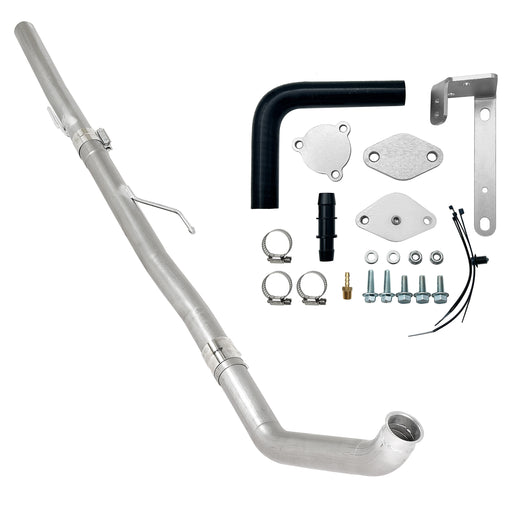
Seguler 3" Ecodiesel DPF Delete Pipe & EGR Delete kit for 2014-2018 3.0L Ram
SEGULEROriginal price $342.00 - Original price $342.00Original price$342.00$342.00 - $342.00Current price $342.00FITMENT 2014–2018 3.0L Dodge Ram 1500 EcoDiesel V6. NOTE: Fit standard Pickup models only (Crew Cab, Quad Cab). Does NOT fit Jeep Grand Cheroke...
View full details -

For 2013-2023 6.7L Dodge Ram Cummins Cab & Chassis EGR Delete Kit Diesel
SEGULEROriginal price $62.99 - Original price $62.99Original price$62.99$62.99 - $62.99Current price $62.99FITMENT 2013–2023 6.7L Ram Cummins 3500 4500 5500 Cab & Chassis / Commercial Trucks. Does NOT fit standard Ram 2500 3500 Pickups. DESCRIPTIO...
View full details -
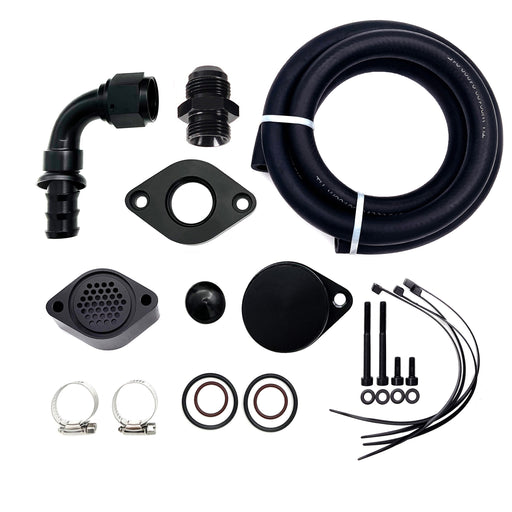
Seguler 2011-2023 6.7L Ford Powerstroke CCV PCV Reroute Engine Ventilation Kit
SEGULEROriginal price $82.99 - Original price $82.99Original price$82.99$82.99 - $82.99Current price $82.99FITMENT 2011-2023 6.7L Ford Powerstroke F-250 F-350 F-450 F-550 Super Duty V8 Diesel. Compatible with both standard Pickups and commercial Cab &...
View full details -
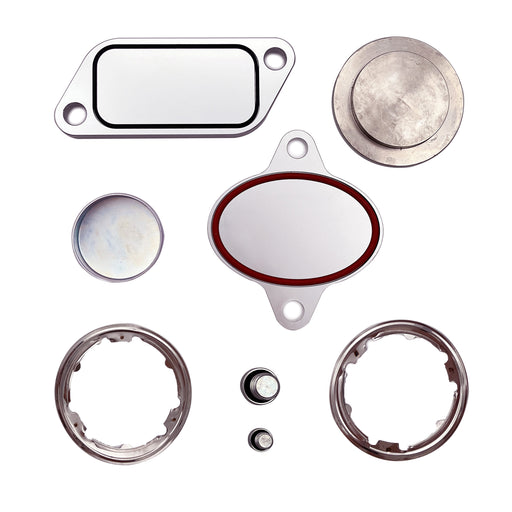
For 2007-2010 Cummins ISX CM871 EGR Plug Kit Stage 2 Plates and Plugs Aluminum
SEGULEROriginal price $67.99 - Original price $67.99Original price$67.99$67.99 - $67.99Current price $67.99FITMENT 2007-2010 Cummins Volvo, Peterbilt, Mack, International, Freightliner, Kenworth with the ISX CM871 Engines. DESCRIPTION Product Overvie...
View full details -
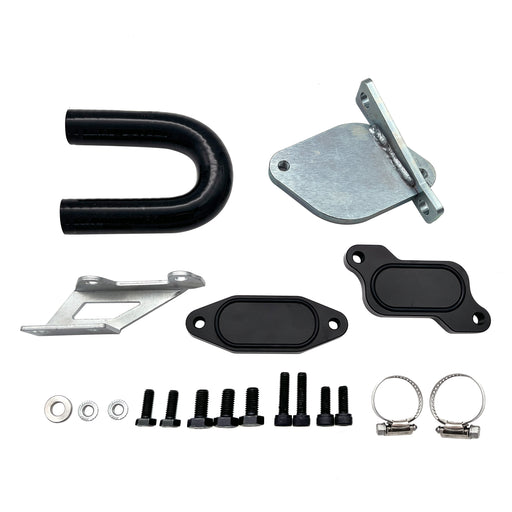
For 2007-2010 6.6L Chevy GMC LMM Duramax EGR Valve Cooler Delete Kit Fit
SEGULEROriginal price $61.99 - Original price $61.99Original price$61.99$61.99 - $61.99Current price $61.99FITMENT 2007.5-2010 6.6L Chevrolet Silverado Duramax LMM 2500HD / 3500HD. 2007.5-2010 6.6L GMC Sierra Duramax LMM 2500HD / 3500HD. Note: Standard...
View full details -
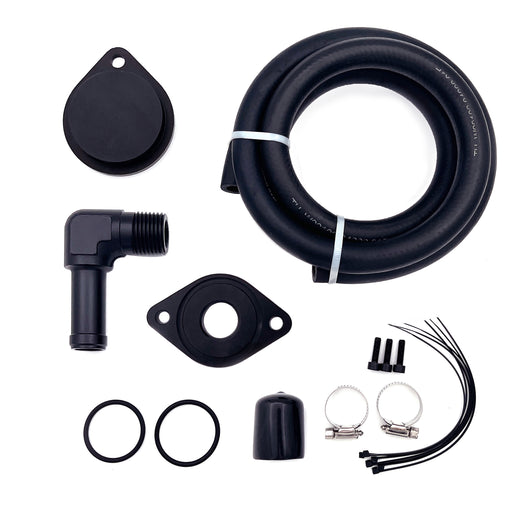
Seguler 2011-2023 Ford 6.7L Powerstroke CCV/PCV Reroute/Delete Engine Ventilation Kit
SEGULEROriginal price $72.00 - Original price $72.00Original price$72.00$72.00 - $72.00Current price $72.00FITMENT 2011-2023 6.7L Ford Powerstroke F-250 F-350 F-450 F-550 Super Duty V8 Diesel. Compatible with both standard Pickups and commercial Cab &...
View full details -

Seguler 2010+ Dodge Ram Cummins EZ-Lynk/CCV SOTF Switch
SEGULEROriginal price $80.00 - Original price $80.00Original price$80.00$80.00 - $80.00Current price $80.00FITMENT 2010-2024 6.7L Ram Cummins 2500 3500 4500 5500 Turbo Diesel. DESCRIPTION Product Overview Changing horsepower levels on a tuned Ram tr...
View full details -
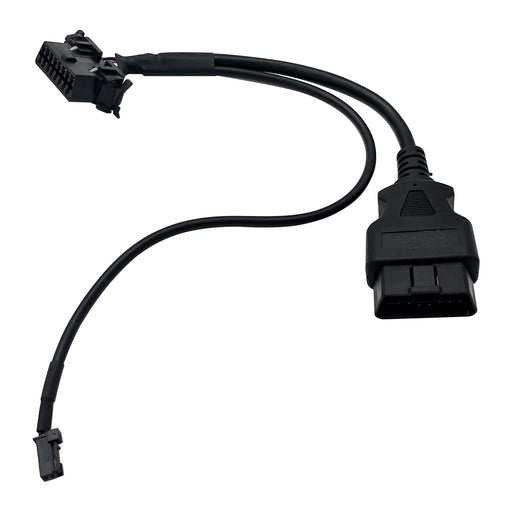
Seguler 2018+ RAM Cummins OBD2 HD Security Gate Bypass Cable
SEGULEROriginal price $45.00 - Original price $45.00Original price$45.00$45.00 - $45.00Current price $45.00FITMENT 2018+ 6.7L Ram Cummins 2500 3500 Turbo Diesel. Designed for Ram pickup trucks equipped with the factory Security Gateway Module. Note: Pl...
View full details


Leave a comment