

2013–2019 Ram 6.7 Cummins Cab & Chassis: EGR, DPF & Exhaust Upgrades
The 6.7L Cummins is the same engine in a Ram 2500 pickup and a Ram 5500 Cab & Chassis, but the truck wrapped around it is not the same, and neither are the EGR and exhaust parts that bolt to it. That fact alone sends a lot of fleet buyers back to the parts counter with the wrong box. A Cab & Chassis is not a pickup without a bed — it is a separate platform with straight frame rails, different coolant routing, and its own exhaust geometry. Order a pickup EGR kit or pickup exhaust for a 4500 or 5500 and the plates will not seat, the hoses will kink, and the hangers will not line up.
This guide walks through what makes the commercial Cab & Chassis platform different, how the EGR and DPF systems on a 6.7 Cummins work, and how to match the right components for a 3500, 4500, or 5500. The two products covered here — a 4-inch Cab & Chassis exhaust pipe and a Cab & Chassis EGR kit — are built for the straight-rail commercial chassis, not the standard pickup. If you run commercial equipment on one of these platforms, that distinction is the part that matters most.
What Makes Ram Cab & Chassis Different From Standard Pickups
Before any parts get ordered, it helps to be clear on why the Cab & Chassis is its own thing.
Frame Rail Design
A standard Ram pickup uses curved frame rails shaped around a factory bed and specific hanger locations. A commercial Cab & Chassis rides on straight, C-channel frame rails with a flat, open top — built so an upfitter can bolt a flatbed, box, wrecker body, or crane straight onto the rail. That straight-rail layout changes where the exhaust can run, where hangers mount, and how much room exists around the transmission and rear axle.
Exhaust Routing and Hanger Locations
Because the frame is straight and the wheelbase is often longer, the exhaust path on a Cab & Chassis does not follow the same route as a pickup’s. The factory hanger positions are different, and the pipe has to clear larger commercial fuel tanks and the extra frame length. This is why a pickup exhaust — even one for the “same” 6.7 Cummins — will not hang correctly on a 4500 or 5500. The product pages for the components covered below state this outright: they are custom-contoured for straight-rail commercial chassis, not for trucks with a standard factory bed.
Commercial Duty Applications
These trucks earn their keep in ways a daily-driver pickup usually does not: flatbed hauling, utility and service bodies, tow and wrecker trucks, and construction. That means sustained load, long idle hours, and high mileage — the conditions that put the most stress on the EGR and exhaust systems and make maintenance of those systems a real fleet cost.
The practical takeaway: the Cab & Chassis is a separate fitment platform. Engine size does not decide which EGR or exhaust part fits; the chassis does.
Understanding the EGR System on the 6.7 Cummins
Exhaust gas recirculation (EGR) is a factory emissions strategy. It pulls a measured amount of exhaust gas out of the exhaust stream and feeds it back into the intake, which lowers peak combustion temperature and, in turn, reduces oxides of nitrogen (NOx).
How the EGR System Works
On the 6.7 Cummins, the loop runs through a few key pieces. The EGR valve meters how much exhaust gas gets recirculated. The EGR cooler is a heat exchanger that sheds heat from that gas — engine coolant on one side, hot exhaust on the other — before it re-enters the intake. The engine control module manages the whole loop, opening and closing the valve based on load, temperature, and the readings from the EGR-related sensors.
Common EGR-Related Problems
The EGR system is one of the first places a hard-working Cummins shows its age, for a simple reason: it routes soot back into the intake.
- Carbon buildup — recirculated soot deposits itself on the valve, inside the cooler, and along the intake runners. Over hundreds of thousands of miles, that becomes a restriction and, eventually, a sticking or leaking component.
- EGR valve issues — a valve caked with deposits can stick open or closed, which throws off airflow and sets codes.
- EGR cooler coolant leaks — the cooler lives under constant thermal load. When it splits internally, coolant can make its way into the intake, which shows up as coolant loss without a visible puddle.
- Sensor-related fault codes — EGR flow, temperature, and pressure sensors can drift or fail and trigger codes even when the mechanical parts are still fine.
- Intake contamination — soot and oil vapor combine into a carbon sludge along the intake path.
Warning Signs Worth Checking
None of these symptoms prove the EGR system is the cause on their own — they point toward it and need a diagnosis to confirm:
| Symptom | Where owners usually start | What to check first |
|---|---|---|
| Check Engine Light with an EGR code | EGR valve or flow sensor | Scan the codes before touching hardware |
| Coolant loss with no visible leak | EGR cooler cracking internally | Check coolant level & pressure-test. |
| Rough or unstable idle | Sticking EGR valve | Valve movement and EGR flow codes |
| Loss of power under load | Carbon restriction in the intake | Intake passages for soot buildup |
| Frequent regen or derate behavior | EGR/DPF interaction | Look at the system as a whole, not one part |
Coolant loss can come from a dozen places, and a power complaint can be fuel, boost, or injectors. Diagnose before you buy parts.
Understanding the DPF and Exhaust System
Where the EGR handles NOx during combustion, the diesel particulate filter (DPF) handles soot after combustion. On these commercial trucks it works alongside a diesel oxidation catalyst (DOC) and, on many builds, selective catalytic reduction (SCR) with diesel exhaust fluid (DEF).
What the DPF Does
The DPF is a filter in the exhaust stream that traps soot before it leaves the tailpipe. During regeneration, elevated exhaust temperatures oxidize the accumulated soot, helping restore filter capacity. Non-combustible ash — from oil additives and other residues — remains in the filter over time and may eventually require professional cleaning or replacement. The engine control module watches exhaust temperature sensors and a differential pressure sensor across the filter to decide when a regen is needed.
Common DPF-Related Concerns
- Frequent regeneration — when the filter keeps filling, the truck regens more often, which wastes fuel and adds heat load.
- DPF restriction — a filter that can no longer regenerate effectively becomes a backpressure restriction, which raises exhaust gas temperature and works the turbo harder.
- Differential pressure sensor faults — the sensor that measures pressure drop across the filter can fail and trigger false DPF warnings.
- Exhaust temperature sensor faults — regen depends on accurate temperature readings; a failing sensor disrupts the cycle.
- DPF-related warning messages — a derate or warning usually points to the filter or its sensors, but the cause needs to be read, not guessed.
Exhaust System Maintenance
On a commercial truck, the exhaust system itself is worth regular attention: inspect the pipe and connections for leaks, check the hangers and support brackets for cracking, and keep an eye on the sensors and their connectors. A loose hanger on a long-wheelbase chassis turns into a cracked pipe or a failed joint faster than people expect.
How EGR, DPF and Exhaust Systems Work Together
These systems are not independent boxes bolted to the same engine — they are layers of one emissions strategy that talk to each other through the engine control module.
| System | Primary job | How it connects to the others |
|---|---|---|
| EGR | Lowers NOx during combustion | Recirculated exhaust can cause intake deposits. |
| DPF | Traps soot after combustion | Regen clears soot but adds heat & load. |
| SCR / DEF | Reduces NOx in the exhaust stream | Works downstream of the DPF, monitored together |
| Exhaust | Carries gas out and controls backpressure |
Restrictions raise backpressure & affect operation. |
| Sensors | Report temperature, pressure, and flow | One faulty reading can trigger multiple system codes. |
When one of these systems acts up, it often shows symptoms that look like a different system. High EGT can look like a DPF problem when the real cause is a restricted exhaust or a turbo issue. Frequent regen can be driven by EGR soot loading the intake and changing combustion. That is why a scan and a careful read of the whole system beats swapping one part on a hunch.
Choosing the Correct Cab & Chassis Components
This is where the platform difference from earlier turns into a buying decision. Two Seguler components are built specifically for the straight-rail Cab & Chassis — and neither is a standard pickup part relabeled. Both are emissions-system modifications, not repair replacements for a failing factory DPF or EGR part.
4-Inch Cab & Chassis Exhaust Pipe
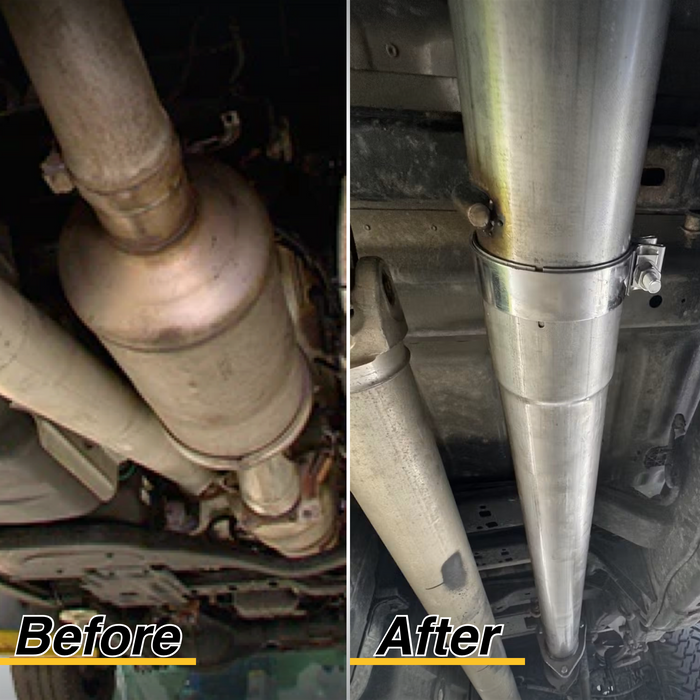
For the 2013–2019 Ram 3500, 4500, and 5500 Cab & Chassis, this is a 4-inch exhaust pipe contoured for the straight-rail commercial chassis. It replaces the factory DPF, catalyst, and SCR/DEF section with a mandrel-bent 4-inch T409 stainless steel run that connects to the factory exhaust path.
 What makes it a Cab & Chassis part rather than a pickup part is the geometry. The pipe is bent for straight, C-channel frame rails, uses pre-welded hanger rods positioned to align with the factory commercial rubber mounts, and clears the larger fuel tanks and longer wheelbase of a 4500 or 5500. It is a bolt-on design — no welding — held together with stainless clamps.
Fitment to confirm: 2013–2019 Cab & Chassis models with straight frame rails only. It is not for standard pickup trucks with a factory cargo bed, and it is not for trucks with factory rear air suspension. Those are separate platforms.
Cab & Chassis EGR Kit
For the 2013–2023 Ram 3500, 4500, and 5500 Cab & Chassis, this is an EGR block-off kit built around CNC-machined billet aluminum plates. The plates close off the EGR passages, and the kit includes coolant reroute fittings designed for the specified Cab & Chassis configuration. Proper compatibility and cooling-system condition should be verified before any modification.
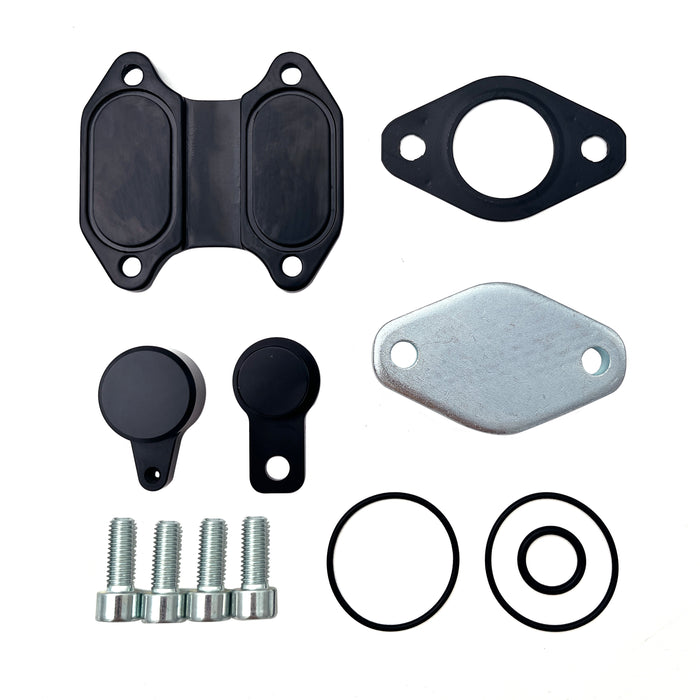 The reason a standard pickup EGR kit will not do the job here comes down to three things the product page calls out: the Cab & Chassis uses a different frame design, different coolant hose routing, and different EGR valve geometry. The commercial kit is shaped for the tighter firewall and frame clearances of the 3500/4500/5500 chassis cab — which is why it uses a solid block-off plate rather than a probe port, leaving no threaded fitting to become a leak point under sustained load.
Fitment to confirm: 2013–2023 Cab & Chassis / commercial trucks only. It is not for standard Ram 2500/3500 pickups — those use a different kit.
The Two Components at a Glance
| Component | Years | Fits | Does not fit |
|---|---|---|---|
| 4" Cab & Chassis exhaust pipe | 2013–2019 | 3500/4500/5500 straight-rail Cab & Chassis | Standard pickups, rear air suspension trucks |
| Cab & Chassis EGR kit | 2013–2023 | 3500/4500/5500 Cab & Chassis | Standard Ram 2500/3500 pickups |
Two things stand out from that table. First, the two parts do not cover identical year ranges — the exhaust is listed 2013–2019 while the EGR kit runs 2013–2023 — so confirm each one against your truck rather than assuming both follow the same window. Second, both parts exist specifically because the commercial chassis is a different platform; neither is a pickup part that happens to fit. If your truck is a standard pickup, these are the wrong components.
Maintenance Considerations for High-Mileage Commercial Cummins Trucks
Commercial trucks live at high load and high hours, which is where small problems compound. A few habits keep a 6.7 Cummins Cab & Chassis working:
- Watch the EGR system. Check for coolant loss with no puddle, and catch a failing cooler before it becomes an intake-side problem.
- Track regen frequency. A truck that regens more and more often is telling you something — filter restriction, a sensor, or a combustion-side issue worth chasing.
- Inspect the exhaust and its hangers. On a long-wheelbase chassis, a loose hanger turns into a crack; catch it while it is a bracket, not a pipe.
- Keep an eye on coolant condition. The EGR cooler runs coolant against hot exhaust; degraded coolant shortens cooler life.
- Read fault codes, do not clear and forget. A recurring code is a diagnosis waiting to happen, not a nuisance to reset.
- Follow the factory maintenance schedule. It exists for a reason on equipment that has to stay in service.
Legal and Emissions Compliance Considerations
These systems are regulated, and it is worth being clear about that before any change. The EGR, DPF, and SCR/DEF equipment on a road vehicle are part of a federally mandated emissions-control system. Removing or disabling them on a vehicle operated on public roads is prohibited under the federal Clean Air Act, and state and local requirements can add their own restrictions.
The distinction that matters is between how a part is labeled and what the law allows. Labeling a vehicle or a part “off-road” or “competition use only” does not by itself create a legal exemption. An off-road label does not convert an on-road truck into a non-road machine. The components discussed here are marketed for off-road and competition applications, and product labeling alone does not establish a legal exemption — owners and operators must verify the applicable federal, state, and local requirements for their specific vehicle and intended use before purchasing or making any emissions-related modifications. This article is informational, not legal advice.
Final Thoughts
A Ram Cab & Chassis is a separate platform from a standard pickup, so its EGR and exhaust parts do not swap with a pickup’s — even with the same 6.7 Cummins under the hood. Match the part to the chassis, not the engine. Confirm the chassis type, the model year, and the frame configuration against the part before you order.
- 2013–2019 Cab & Chassis exhaust → 4" Cab & Chassis DPF Delete Exhaust Pipe
- 2013–2023 Cab & Chassis EGR kit → Cab & Chassis EGR Delete Kit
Find both at seguler.com.
Frequently Asked Questions
Q: What Is the Difference Between Ram Cab & Chassis and Standard Pickup?
A:A Cab & Chassis rides on straight, C-channel frame rails with a flat, open top built for an upfitter to mount a flatbed, box, or service body. A standard pickup uses curved frame rails shaped around a factory bed. The difference changes coolant routing, EGR valve geometry, and exhaust path — which is why EGR and exhaust parts do not swap between the two platforms.
Q: Does a Ram 3500 Cab & Chassis Use the Same Exhaust as a Standard Pickup?
A:No. The exhaust path on a Cab & Chassis follows its straight frame rails and longer wheelbase, with hangers that line up with the commercial mounts rather than a pickup bed. A pickup exhaust will not hang correctly on a 4500 or 5500.
Q: What Causes Frequent DPF Regeneration on a 6.7 Cummins?
A:Frequent regen usually means the filter is filling faster than it can stay clear — often from a restricted filter, a failing differential pressure or temperature sensor, or a combustion-side issue like EGR soot loading or an injector problem. It needs a diagnostic read rather than a guess, because the cause is not always the filter itself.
Q: What Are Common EGR Problems on a 6.7 Cummins?
A:Carbon buildup on the valve and through the intake, a sticking EGR valve, and an EGR cooler that splits internally and leaks coolant are the most common. Sensor faults and intake contamination round out the list. Coolant loss without a visible puddle is a classic cooler symptom.
Q: How Does the DPF System Work on a Ram 5500?
A:The DPF traps soot in the exhaust stream. During regeneration, elevated exhaust temperatures oxidize the accumulated soot to help restore filter capacity; non-combustible ash remains and may eventually require professional cleaning or replacement. Exhaust temperature sensors and a differential pressure sensor tell the engine control module when a regen is needed. On a 5500 it works alongside the DOC and, on many builds, SCR with DEF.
Q: What Should You Check When a Cummins EGR Fault Appears?
A:Scan the codes first, then check the EGR valve for sticking, the cooler for internal coolant loss, and the intake for soot buildup. Do not assume the code points to a single bad part — EGR symptoms overlap with fuel, boost, and cooling problems.
Q: Does Ram 4500 Use the Same Cab & Chassis Exhaust as Ram 5500?
A:Yes — the 4-inch Cab & Chassis exhaust covered here is listed for the 3500, 4500, and 5500 together, because they share the straight-rail commercial chassis geometry. The year range and frame configuration still need to match your specific truck, so confirm fitment before ordering.
Q: How Can You Identify the Correct Exhaust Fitment for a Ram Cab & Chassis?
A:Confirm the truck is a commercial Cab & Chassis with straight frame rails, not a standard pickup with a factory bed, and not a truck with factory rear air suspension. Then match the model year against the part’s listed range.
Q: Does the Cab & Chassis EGR Kit Fit Standard Ram 2500/3500 Pickups?
A:No. It is built for the 3500/4500/5500 commercial chassis and does not fit standard Ram 2500/3500 pickups, which use a different kit.
Q: Do the Exhaust and EGR Kit Cover the Same Model Years?
A:No. The 4-inch exhaust is listed for 2013–2019, while the EGR kit is listed for 2013–2023. The two parts overlap but do not share an identical window, so verify each one against your truck’s year rather than assuming they match.
Q: How Can Exhaust Modifications Affect ECM Monitoring?
A:The engine control module monitors exhaust temperatures, pressure readings, and emissions-system operation. Changes to the factory exhaust configuration can trigger diagnostic faults or reduced-power warnings. Owners should confirm applicable emissions requirements and consult a qualified diesel technician about compliant maintenance and repair options.
Legal Disclaimer: Removing, disabling, or modifying emissions control equipment on a vehicle operated on public roads is prohibited by the federal Clean Air Act and may void your warranty under the Magnuson-Moss Warranty Act. The products discussed here are marketed for off-road and competition applications, and labeling a vehicle or product as “off-road” or “competition use only” does not by itself create a legal exemption. Confirm federal, state, and local regulations — and your vehicle’s specific configuration — before purchasing or installing any emissions-related component. This article is provided for informational purposes and is not legal advice.
Featured collection
-
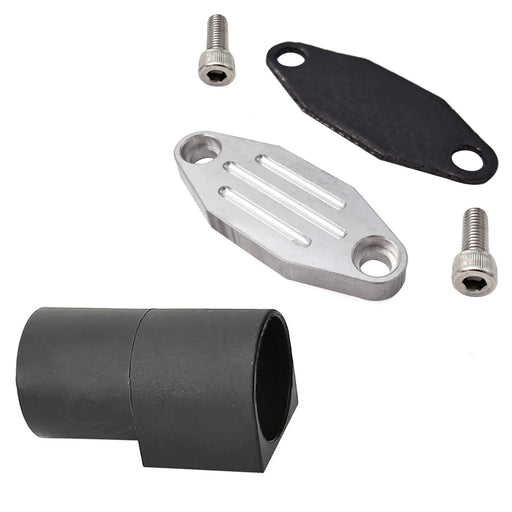
Seguler 1986-1995 Ford F150 F250 F350 Mustang Trucks EGR Simulator Eliminator / Block Off Plate Kit
SEGULEROriginal price $79.99 - Original price $79.99Original price$79.99$79.99 - $79.99Current price $79.99Block Off Plate Material: Aluminum alloy. Easy installation,and convenient to use. Made of CNC milled from aircraft grade Billet aluminum. Will N...
View full details -

Seguler 2011-2023 6.7L Ford Powerstroke Diesel EGR Delete Kit
SEGULEROriginal price $109.99 - Original price $109.99Original price$109.99$109.99 - $109.99Current price $109.99FITMENT 2011-2023 6.7L Ford Powerstroke F-250 F-350 F-450 F-550 Super Duty V8 Diesel. compatible with both standard Pickups and commercial Cab &...
View full details -
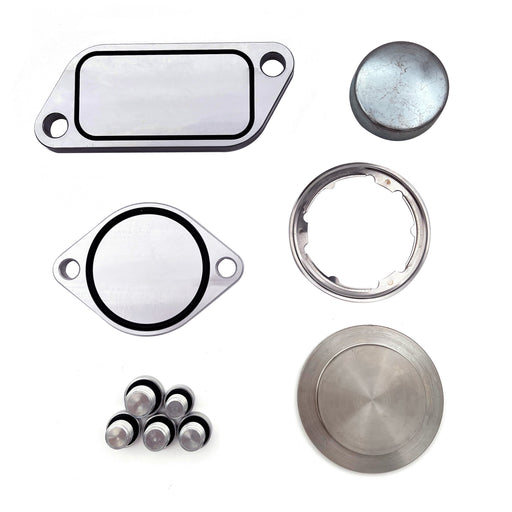
For 2010-Present Stage 2 ISX 15 CM2250 CM2350 EGR Delete Kit
SEGULEROriginal price $59.99 - Original price $59.99Original price$59.99$59.99 - $59.99Current price $59.99FITMENT 2010-Present Cummins Volvo, Peterbilt, Mack, International, Freightliner, Kenworth with the ISX15 CM2250 / CM2350 engines. DESCRIPTION P...
View full details -
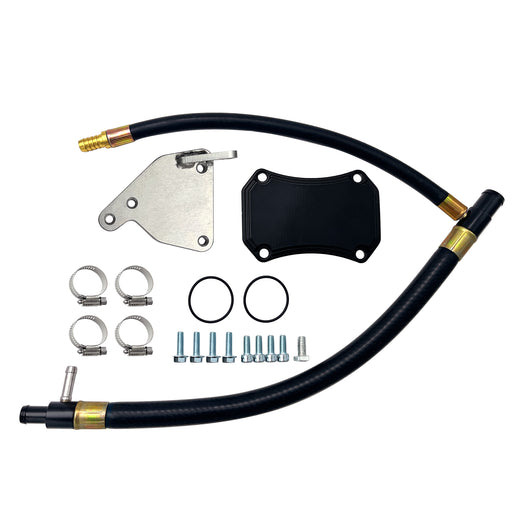
For 2011-2016 6.6L GMC Chevy Duramax Diesel LML EGR Valve Cooler Delete Kit
SEGULEROriginal price $66.49 - Original price $66.49Original price$66.49$66.49 - $66.49Current price $66.49FITMENT 2011-2016 6.6L Chevy GMC Duramax LML 2500 HD 3500 HD Diesel. DESCRIPTION Product Overview The 2011–2016 LML Duramax uses a complex EG...
View full details -
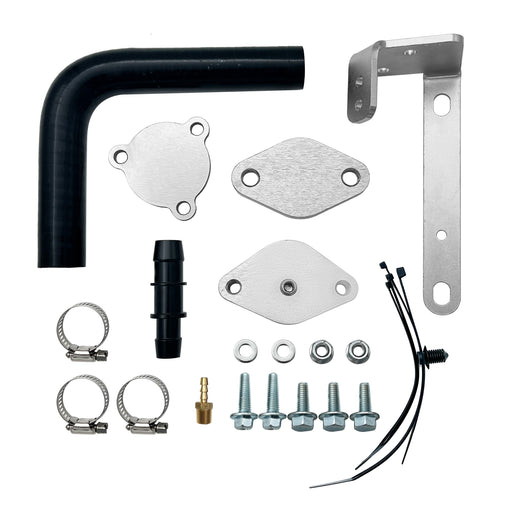
Seguler For 2014-2019 3.0L Dodge Ram 1500 EcoDiesel EGR Valve & Cooler Delete Kit
SEGULEROriginal price $72.99 - Original price $72.99Original price$72.99$72.99 - $72.99Current price $72.99FITMENT 2014-2019 3.0L Dodge Ram 1500 EcoDiesel V6 engine trucks. DESCRIPTION Product Overview Exhaust gas recirculation on 3.0L EcoDiesel V6 ...
View full details -
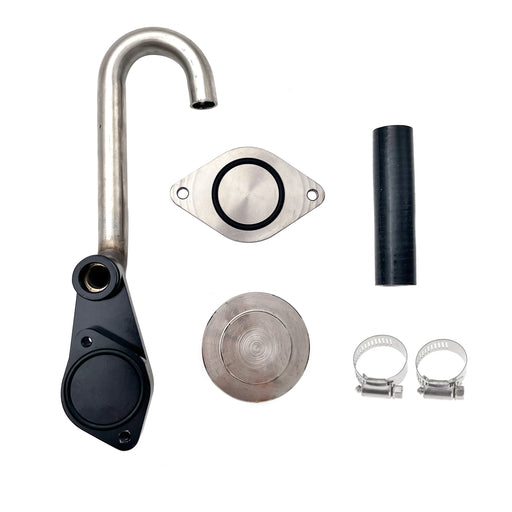
Seguler 2003-2007 6.0L FORD Powerstroke Diesel EGR Cooler Delete Kit
SEGULEROriginal price $56.14 - Original price $56.14Original price$56.14$56.14 - $56.14Current price $56.14FITMENT 2003-2007 6.0L Ford F-250 Ford F-350 F-450 F-550 Super Duty. 2003-2007 6.0L Ford Excursion SUV (Diesel Models Only). 2005-2010 Ford E-Se...
View full details -

Seguler 2011-2023 6.7L Ford Powerstroke Diesel EGR Delete Kit
SEGULEROriginal price $85.99 - Original price $85.99Original price$85.99$85.99 - $85.99Current price $85.99FITMENT 2011-2023 6.7L Ford Powerstroke F-250 F-350 F-450 F-550 Super Duty V8 Diesel. compatible with both standard Pickups and commercial Cab &...
View full details -

Seguler 2017-2019 L5P Duramax Diesel 4pcs L5P Can Bus Plugs Connector Replacement
SEGULEROriginal price $75.00 - Original price $75.00Original price$75.00$75.00 - $75.00Current price $75.00FITMENT 2017–2019 Chevrolet Silverado / GMC Sierra Duramax L5P 2500HD & 3500HD Diesel. DESCRIPTION Product Overview Unprotected harness con...
View full details -

Seguler 2010-2024 6.7L Dodge Ram Cummins Diesel EGR Valve Cooler Delete Kit
SEGULEROriginal price $89.99 - Original price $89.99Original price$89.99$89.99 - $89.99Current price $89.99FITMENT 2010–2024 6.7L Dodge Ram Cummins 2500 / 3500 Pickup Turbo Diesel. Note: Does NOT fit Chassis Cab 3500 / 4500 / 5500 models. DESCRIPTIO...
View full details -
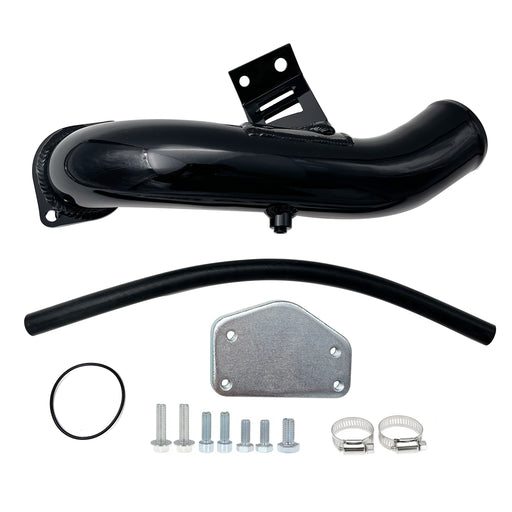
For 2004.5-2005 6.6L Chevy GMC Silverado LLY Duramax Diesel EGR Delete Kit
SEGULEROriginal price $92.99 - Original price $92.99Original price$92.99$92.99 - $92.99Current price $92.99FITMENT 2004.5-2005 6.6L Chevrolet Silverado Duramax LLY 2500HD / 3500 HD. 2004.5-2005 6.6L GMC Sierra Duramax LLY 2500HD / 3500 HD. DESCRIPTION...
View full details -

Seguler 2020-2023 chevy duramax L5P Diesel Can Bus Plugs Connector
SEGULEROriginal price $80.00 - Original price $80.00Original price$80.00$80.00 - $80.00Current price $80.00FITMENT 2020–2023 Chevrolet Silverado / GMC Sierra Duramax L5P 2500HD & 3500HD Diesel. DESCRIPTION Product Overview Unprotected harness pl...
View full details -
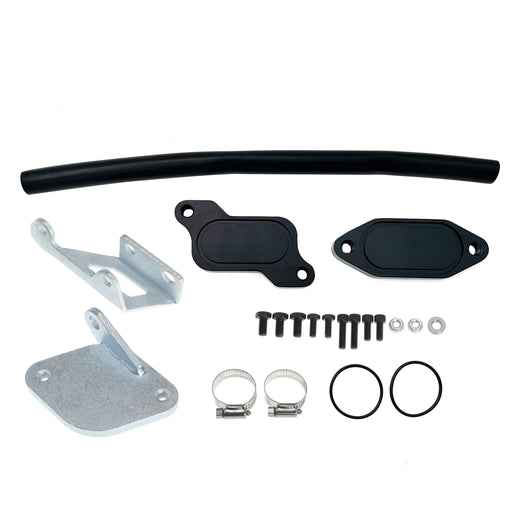
For 2006-2007 6.6L Chevrolet Silverado Classic GMC Duramax LBZ Diesel EGR Valve Cooler Delete Kit
SEGULEROriginal price $63.49 - Original price $63.49Original price$63.49$63.49 - $63.49Current price $63.49FITMENT 2006-2007.4 Chevrolet Silverado Duramax LBZ 2500HD / 3500HD. 2007.4 Chevrolet Silverado Duramax LBZ 2500HD / 3500HD Classic. 2006-2007.4 ...
View full details -

Seguler 2011-2023 6.7L Ford F250 F350 F450 F550 Powerstroke Diesel EGR Valve Delete Cooler Delete Kit
SEGULEROriginal price $55.99 - Original price $55.99Original price$55.99$55.99 - $55.99Current price $55.99FITMENT 2011-2023 6.7L Ford Powerstroke F-250 F-350 F-450 F-550 Super Duty V8 Diesel compatible with both standard Pickups and commercial Cab &a...
View full details -
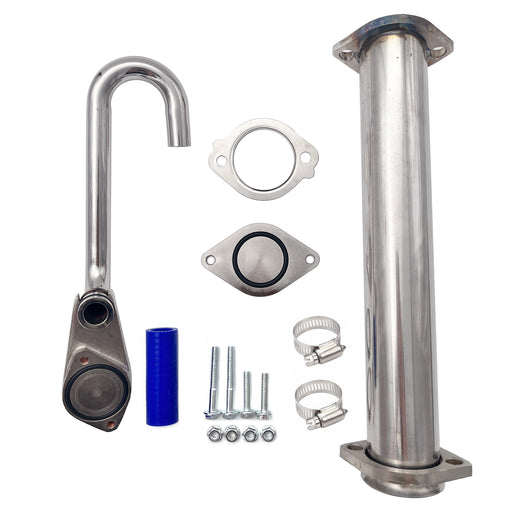
Seguler 2003-2007 6.0L Ford F250 F350 Powerstroke Diesel EGR Basic Cooler Kit
SEGULEROriginal price $79.99 - Original price $79.99Original price$79.99$79.99 - $79.99Current price $79.99FITMENT 2003-2007 6.0L Ford F250 F350 F450 F550 Super Duty Turbo (except 2004 F250 Super Duty). 2003-2005 6.0L Ford Excursion Turbo. 2005 Ford F...
View full details -
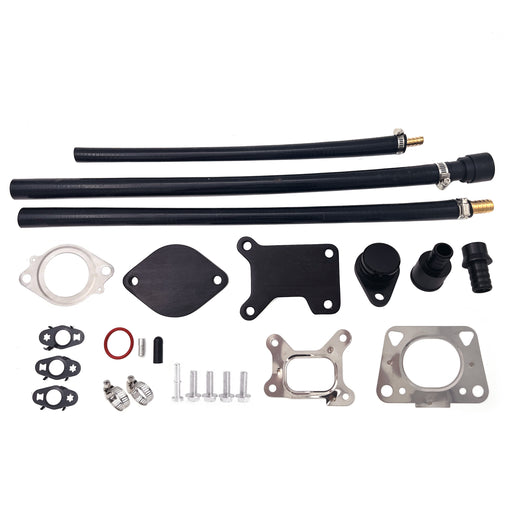
For 2017-2023 6.6L Chevy GMC Duramax L5P diesel EGR Valve Cooler Delete kit
SEGULEROriginal price $131.99 - Original price $131.99Original price$131.99$131.99 - $131.99Current price $131.99FITMENT 2017–2023 6.6L Chevrolet Silverado / GMC Sierra Duramax L5P 2500HD 3500HD Diesel. DESCRIPTION Product Overview Hot soot recirculation ...
View full details -
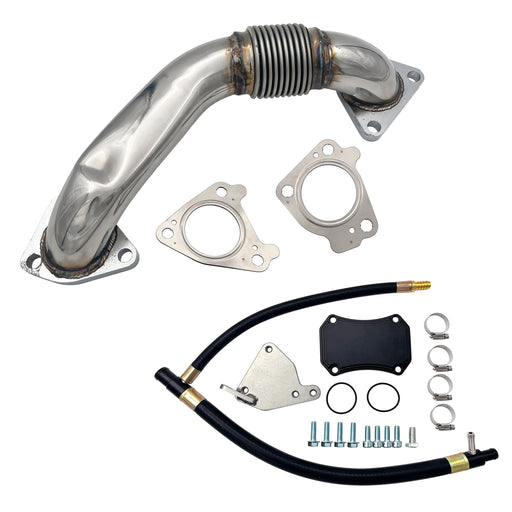
Seguler 2011-2016 6.6L GMC Chevy Duramax Diesel LML Up-Pipe & EGR Valve Cooler Delete Kit
SEGULEROriginal price $173.86 - Original price $173.86Original price$173.86$173.86 - $173.86Current price $173.86FITMENT 2011-2016 6.6L Chevy GMC Duramax LML 2500 HD 3500 HD Diesel. DESCRIPTION Product Overview Direct-injection technology endows GM 5.3L an...
View full details -
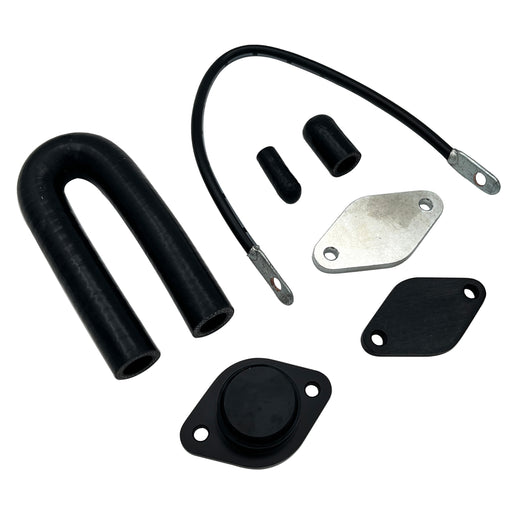
Seguler EGR valve cooler Delete kit for 2020-2022 3.0L Chevy Duramax LM2
SEGULEROriginal price $189.12 - Original price $189.12Original price$189.12$189.12 - $189.12Current price $189.12FITMENT 2020–2022 3.0L Chevrolet Silverado GMC Sierra 1500 LM2 Turbo-Diesel. DESCRIPTION Product Overview Powered by smooth inline-six engine...
View full details -
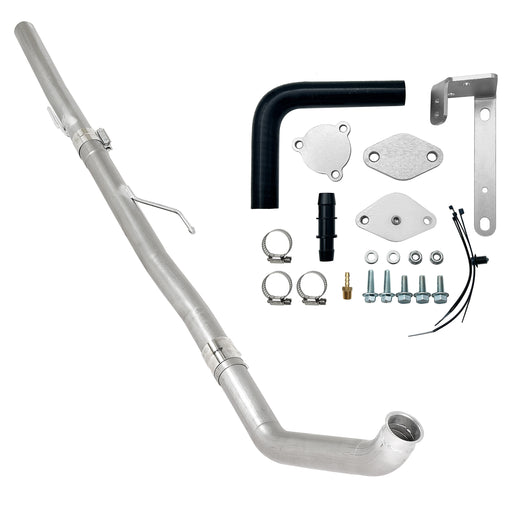
Seguler 3" Ecodiesel DPF Delete Pipe & EGR Delete kit for 2014-2018 3.0L Ram
SEGULEROriginal price $342.00 - Original price $342.00Original price$342.00$342.00 - $342.00Current price $342.00FITMENT 2014–2018 3.0L Dodge Ram 1500 EcoDiesel V6. NOTE: Fit standard Pickup models only (Crew Cab, Quad Cab). Does NOT fit Jeep Grand Cheroke...
View full details -

For 2013-2023 6.7L Dodge Ram Cummins Cab & Chassis EGR Delete Kit Diesel
SEGULEROriginal price $62.99 - Original price $62.99Original price$62.99$62.99 - $62.99Current price $62.99FITMENT 2013–2023 6.7L Ram Cummins 3500 4500 5500 Cab & Chassis / Commercial Trucks. Does NOT fit standard Ram 2500 3500 Pickups. DESCRIPTIO...
View full details -
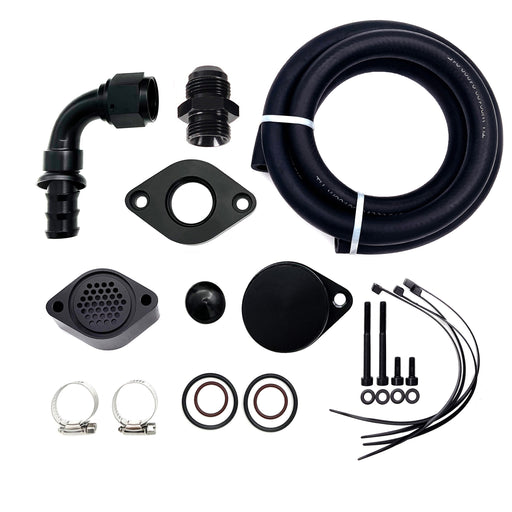
Seguler 2011-2023 6.7L Ford Powerstroke CCV PCV Reroute Engine Ventilation Kit
SEGULEROriginal price $82.99 - Original price $82.99Original price$82.99$82.99 - $82.99Current price $82.99FITMENT 2011-2023 6.7L Ford Powerstroke F-250 F-350 F-450 F-550 Super Duty V8 Diesel. Compatible with both standard Pickups and commercial Cab &...
View full details -
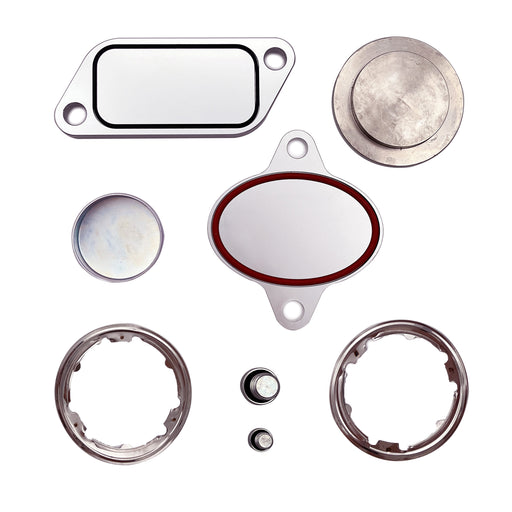
For 2007-2010 Cummins ISX CM871 EGR Plug Kit Stage 2 Plates and Plugs Aluminum
SEGULEROriginal price $67.99 - Original price $67.99Original price$67.99$67.99 - $67.99Current price $67.99FITMENT 2007-2010 Cummins Volvo, Peterbilt, Mack, International, Freightliner, Kenworth with the ISX CM871 Engines. DESCRIPTION Product Overvie...
View full details -
For 2007-2010 6.6L Chevy GMC LMM Duramax EGR Valve Cooler Delete Kit Fit
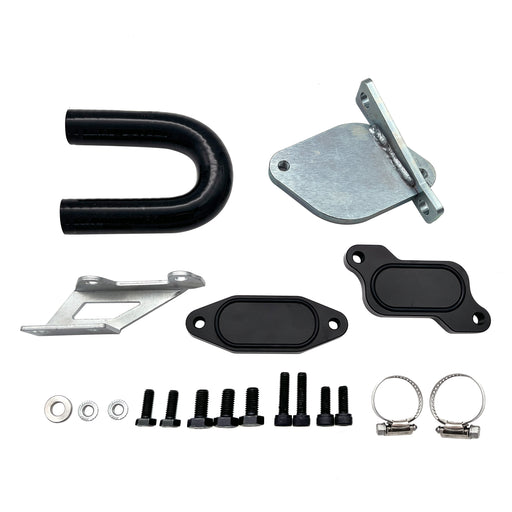
SEGULEROriginal price $61.99 - Original price $61.99Original price$61.99$61.99 - $61.99Current price $61.99FITMENT 2007.5-2010 6.6L Chevrolet Silverado Duramax LMM 2500HD / 3500HD. 2007.5-2010 6.6L GMC Sierra Duramax LMM 2500HD / 3500HD. Note: Standard...
View full details -
Seguler 2011-2023 Ford 6.7L Powerstroke CCV/PCV Reroute/Delete Engine Ventilation Kit
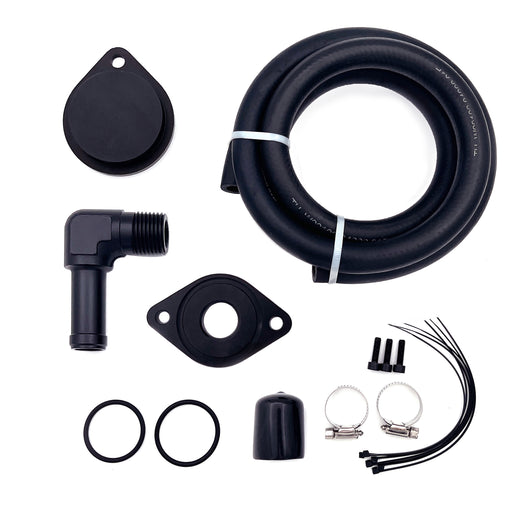
SEGULEROriginal price $72.00 - Original price $72.00Original price$72.00$72.00 - $72.00Current price $72.00FITMENT 2011-2023 6.7L Ford Powerstroke F-250 F-350 F-450 F-550 Super Duty V8 Diesel. Compatible with both standard Pickups and commercial Cab &...
View full details -
3" Turbo Back DPF & EGR Delete Kit for 2020-2022 GM 3.0L LM2 Duramax
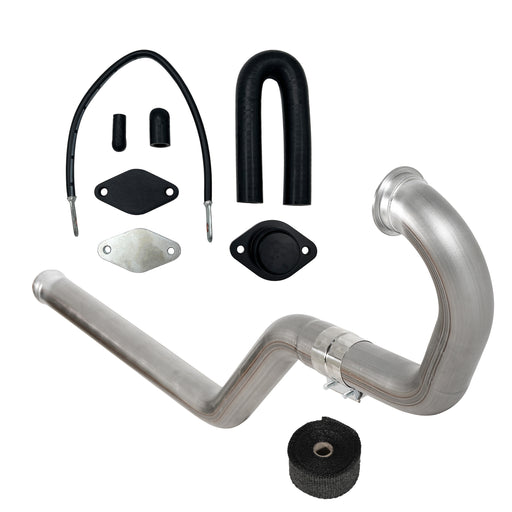
SEGULEROriginal price $550.00 - Original price $550.00Original price$550.00$550.00 - $550.00Current price $550.00FITMENT 2020–2022 3.0L Chevrolet Silverado 1500 LM2 Diesel. 2020–2022 3.0L GMC Sierra 1500 LM2 Diesel. DESCRIPTION Product Overview On the 3.0...
View full details -

Seguler 2010+ Dodge Ram Cummins EZ-Lynk/CCV SOTF Switch
SEGULEROriginal price $80.00 - Original price $80.00Original price$80.00$80.00 - $80.00Current price $80.00FITMENT 2010-2024 6.7L Ram Cummins 2500 3500 4500 5500 Turbo Diesel. DESCRIPTION Product Overview Changing horsepower levels on a tuned Ram tr...
View full details


Leave a comment