

6.0L Powerstroke Delete Kit 2026: Cost & Where to Start
Ford’s 6.0L is the second most-hated diesel they ever built — only the 6.4L beats it for that title — and the reputation is not entirely unfair. The engine made Ward’s 10 Best Engines list in 2003 when it was brand new. Nobody knew the failure chain yet. A few years later, shops were stacking blown EGR coolers in the scrap pile and pulling cabs to do head gaskets.
But here’s what the forum horror stories miss: most 6.0 failures trace back to a single root cause — the EGR cooler — and a single root cause behind that — the oil cooler. Fix those two things, in that order, and the rest of the engine is actually solid. The bottom end is stout. The 5R110 transmission handles torque beautifully. The VGT turbo spools fast and sounds better than almost anything on the road.
This guide covers what it costs to delete the EGR system on a 6.0L Powerstroke in 2026, the three upgrade levels based on how deep you want to go, and the installation reality check that separates a weekend project from a shop bill.
The Domino Effect: Why the 60L Powerstroke EGR Cooler Has to Go
Every 6.0 Powerstroke failure chain starts the same way, and understanding it matters because it tells you what else you need to check while you’re in there.
Step 1: The Oil Cooler Clogs
The 6.0’s oil cooler sits in the valley of the engine — between the cylinder banks, directly underneath the intake manifold. It uses tiny internal passages to exchange heat between engine oil and coolant. These passages are small. The factory coolant — contains silicates that drop out of suspension over time. Combined with casting sand left in the block from manufacturing, those silicates plug the oil cooler passages.
Step 2: The EGR Cooler Starves, Then Ruptures
The EGR cooler’s job is to cool exhaust gas before it gets dumped back into the intake. Exhaust gases run at 1,000°F+. Without adequate coolant flow, the cooler can’t reject that heat. The remaining coolant inside flash-boils. The internal welds crack. Coolant dumps into the intake ports.
This Is Where The Real Damage Begins
Coolant doesn’t compress. In sufficient volume, it hydro-locks a cylinder. In smaller volumes, it pressurizes the cooling system, lifts the cylinder heads, and stretches the factory torque-to-yield head bolts — which Ford compounded by using only four bolts per cylinder instead of the six that the 7.3L, Duramax, and Cummins all used.
Step 3: Head Gaskets Blow — and the Internet Blames the Engine
This is the part most people see: white smoke, degas bottle puking coolant, overheating. They assume “6.0 head gaskets are junk.” The reality is that the head gaskets were fine — until the oil cooler clogged, the EGR cooler ruptured, coolant hit the cylinders, combustion pressure spiked, and the bolts stretched beyond their yield point.
The Fix Order Matters
If you just stud the heads and leave a clogged oil cooler and a factory EGR cooler in place, you’ll be back. The oil cooler will keep clogging. The EGR cooler will keep rupturing. Studs won’t stop coolant from entering the cylinders — they’ll just hold the heads down while it happens.
The correct order: Oil cooler → EGR cooler → Head studs (only if needed).
Three Upgrade Paths: What to Delete 6.0L Powerstroke and What It Costs
Not every 6.0 owner needs the same level of deletion. Here are the three paths, from the minimum viable fix to the full exhaust overhaul.
Level 1: The Budget Block-Off — EGR Cooler Delete Only
What you get: A kit that removes the EGR cooler and valve, blocks off the exhaust and intake ports, and reroutes coolant back into the circuit with a billet bypass tube.
What it fixes:
The single most dangerous failure point on the engine. No more coolant-to-intake rupture risk. No more soot recirculation. No more hot exhaust gas diluting your air/fuel charge. Lower EGTs. Cleaner intake.
What it doesn’t fix:
The oil cooler. If your oil cooler is already partially clogged, the delete won’t unclog it. You still need to monitor oil vs. coolant temperature delta — get on a flat highway at 65 MPH with cruise control, and if the difference is more than 15°F, the oil cooler needs attention regardless. Also, this kit doesn’t address the factory up-pipes, which are known to crack at the bellows.
2003-2007 6.0L FORD Powerstroke Diesel EGR Cooler Valve Delete Kit
The EGR delete for a 6.0L Powerstroke that’s still running well but has a factory EGR cooler you don’t trust. Billet aluminum and 304 stainless construction, CNC-machined for a direct fit. Includes the block-off plates, coolant reroute J-tube, and all hardware.

- Fits 2003-2007 F-250/F-350/F-450/F-550 Super Duty + Excursion + E-Series vans
- Billet block-off plates with precision CNC machining — no leaks, no exhaust bypass
- Coolant reroute tube redirects flow from oil cooler straight to water pump, completely isolating the deleted EGR circuit
- Stops diesel soot from ever entering the intake manifold again
Level 1 total cost:
| Item | Price |
|---|---|
| EGR delete kit (SG-ER-0195) | $44.96 |
| Tuner (required to disable EGR codes) | $300 – $500 |
| DIY labor (first-timer, full day) | Your weekend |
| DIY total | ~$345 – $545 |
| Shop labor (4-6 hours) | $400 – $900 |
| Shop total | ~$745 – $1,445 |
Level 2: EGR Delete + Heavy-Duty Up-Pipe — Do It Once, Do It Right
What you get: Everything in Level 1, plus a polished stainless steel up-pipe (Y-pipe) assembly that replaces the factory unit with TIG-welded mandrel-bent tubing and reinforced flex joints.
Why this makes sense:
-
The factory up-pipes on the 6.0 have bellows-style flex sections that crack over time from repeated heat cycling. When they crack, exhaust pressure leaks before it reaches the turbo — you lose boost, spool gets lazy, and the truck feels down on power.
-
The up-pipe and the EGR cooler share the same cramped real estate behind the engine. Accessing either one requires substantial disassembly.
-
Doing them together avoids paying for duplicate labor when the up-pipes inevitably crack six months after your delete.
The video consensus:
Multiple 6.0-focused YouTubers and shop owners recommend replacing the up-pipe during the EGR delete if the truck has over 100,000 miles on the original pipes. The cost of the pipe is modest compared to the labor to access it a second time.
2003-2007 6.0L Ford Powerstroke Exhaust Up-Pipe Y-Pipe & EGR Cooler Kit
The “while you’re in there” upgrade that makes Level 1 incomplete. This kit bundles the EGR cooler delete with a polished stainless steel Y-pipe assembly featuring reinforced flex joints and CNC-machined flanges. Fixes cracked bellows, restores turbo spool, and deletes the EGR system in one disassembly.

- Fits 2003-2007 F-250/F-350/F-450/F-550 + Excursion + E-Series
- High-grade TIG-welded stainless up-pipes with reinforced flex joints — stops exhaust leaks at the source
- Replaces both the crack-prone factory Y-pipe AND the failure-prone EGR cooler in one teardown
- Recovers lost turbo boost by directing the full exhaust stream toward the turbine wheel
Level 2 total cost:
| Item | Price |
|---|---|
| Up-pipe + EGR delete combo kit (SG-ER-0197) | $179.92 |
| Tuner | $300 – $500 |
| DIY labor (first-timer, full day to weekend) | Your time |
| DIY total | ~$480 – $680 |
| Shop labor (6-8 hours) | $600 – $1,200 |
| Shop total | ~$780 – $1,880 |
Level 3: EGR Delete + Full Exhaust — The Complete Package
What you get: Level 2’s EGR delete and up-pipe, plus a 3.5-inch cat and muffler delete pipe that replaces the factory catalytic converter and chambered muffler with a single straight-through mandrel-bent section.
Why go this far:
The 6.0’s factory exhaust is designed to be quiet, not efficient. The catalytic converter and muffler create backpressure that holds heat in the engine, delays turbo spool, and muffles one of the best-sounding VGT turbos ever fitted to a pickup. A straight pipe drops EGTs further and sharpens throttle response.
Important difference from newer trucks:
The 2003-2007 6.0L does not have a DPF, DEF, or SCR system. There are no post-cat oxygen sensors or particulate matter sensors to trigger a check engine light. On most 2003-2007 trucks — unlike late-model diesels that need a full tune to suppress DPF-related codes.
3.5" Cat & Muffler Delete Pipe 2003-2007 6.0L Ford Powerstroke
The finishing move. The delete pipe mandrel-bent 3.5-inch T409 stainless steel replaces the entire factory mid-section — catalytic converter and muffler — with a direct bolt-in straight pipe. No welding. No adapters. Factory rubber hanger locations preserved. Drops EGTs, sharpens throttle, and unleashes the 6.0’s VGT whistle that Ford spent millions trying to silence.
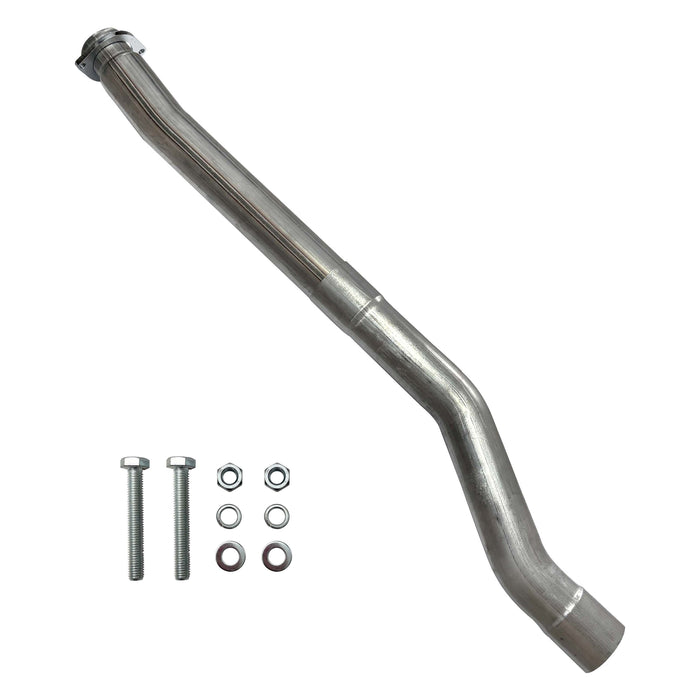
- Fits 2003-2007 F-250/F-350 Super Duty (SuperCab & Crew Cab; minor trim for short wheelbase)
- 3.5-inch diameter matches factory downpipe — no adapter needed
- Direct bolt-on — uses stock clamps and rubber hanger locations
- Dual elimination: removes both the restrictive catalytic converter and chambered muffler
Level 3 total cost:
| Item | Price |
|---|---|
| EGR delete kit | $44.96 |
| Up-pipe + EGR cooler combo | $179.92 |
| Cat & muffler delete pipe | $169.00 |
| Tuner | $300 – $500 |
| DIY total | ~$694 – $894 |
Optimized Level 3 combo:
| Item | Price |
|---|---|
| Up-pipe + EGR Cooler Delete Kit (SG-ER-0197) | $179.92 |
| Cat & Muffler Delete Pipe (SG-DP-0324) | $169.00 |
| Tuner | $300 – $500 |
| DIY total (parts only) | ~$649 – $849 |
| Shop labor (8-12 hours) | $800 – $1,800 |
| Shop total | ~$1,449 – $2,649 |
Year Compatibility: Round vs. Square Cooler
This trips up first-time buyers more than anything else. The 6.0 Powerstroke used two different EGR cooler designs:
- 2003 – early 2004: Round EGR cooler. The housing is cylindrical. Delete kits need round-specific block-off plates.
- Late 2004 – 2007: Square EGR cooler. Rectangular housing. Uses square-specific plates.
The two are not interchangeable. If you order a round-cooler kit for a square-cooler truck (or vice versa), the block-off plates won’t seal, the coolant reroute won’t line up, and you’ll be returning parts with coolant dripping onto your garage floor.
The SEGULER kits above are designed for the late 2004-2007 square cooler layout — the most common configuration. If you have a 2003 or early 2004 truck, verify cooler shape before ordering. Look at the EGR cooler through the passenger side of the engine bay. Round = cylindrical housing. Square = flat-sided rectangular housing.
Installation Reality: What the 7-Step Process Actually Feels Like
The installation guide breaks the job into seven stages. Here’s the real-world translation — not the manual’s version, but what actually happens when you’re under the hood:
Stage 1 – Cool, disconnect, drain
Park level. Let the engine go cold — a hot 6.0 will burn you with coolant. Disconnect both negative battery cables (there are two). Drain coolant below the EGR cooler level. Take photos of every hose routing and connector position before you touch a bolt.
Stage 2 – Clear the top
Remove the air intake tube, turbo inlet duct, CCV tube, charge-air pipe, and the upper fan shroud. Move the wiring harness toward the windshield (unclip, don’t pull wires). Cap every open port immediately — a dropped nut in an intake port turns a weekend job into an engine-out disaster.
Stage 3 – Remove the turbo
Penetrating oil on the V-band clamps (up-pipe and downpipe) at least 30 minutes before you touch them. These bolts seize. Remove the VGT electrical connector, oil feed, and oil drain. Lift the turbo straight up — watch the oil drain tube doesn’t hang up on the rear V-band area. Cover the open oil and intake ports.
Stage 4 – Remove the EGR cooler
Label every intake manifold bolt by location — they’re different lengths and mixing them up causes reassembly nightmares. Unbolt the driver-side intake manifold bolts, remove passenger-side bolts needed to lift the manifold. Disconnect EGR cooler coolant hoses. Lift the intake just enough to slide the cooler out through the front.
Stage 5 – Install delete hardware
Exhaust block-off plate at the up-pipe connection — seat the V-band clamp evenly around the full joint before tightening. Install the coolant bypass tube. Lightly lubricate the new intake adapter O-ring before pressing it in. Reposition the intake manifold and hand-start every bolt before torquing. Use the correct torque sequence — do not guess.
Stage 6 – Reassemble
Turbo goes back on with fresh seals. Align the oil drain before tightening the turbo mounts. Reconnect everything in reverse order. Check every V-band joint is fully seated — a clamp can feel tight while the flange is still cocked.
Stage 7 – Refill and test
Refill coolant slowly. Reconnect both batteries. Turn the key to ON first — check for electrical faults before starting. Start, idle, and inspect every joint for leaks. Listen for an exhaust tick or boost hiss at the V-band connections. Run to operating temperature, shut down, let it cool, recheck coolant level, and inspect the engine valley.
What the Pros Do That First-Timers Miss
-
Monitor first. Before spending a dime on parts, install a monitor (Edge CTS, Torque Pro, or at minimum a basic gauge) to watch fuel pressure, oil temp, coolant temp, and FICM voltage.
-
Blue spring upgrade. The factory fuel pressure regulator spring weakens over time. If fuel pressure drops below 45 PSI at wide-open throttle, the injectors don’t fill properly — the fuel body acts as a shock absorber inside the injector, and without it, the internal parts hammer themselves to death.
-
Check the delta. At 65 MPH on a flat highway with cruise control, the difference between engine oil temperature and coolant temperature should be under 15°F. If it’s pushing 15°F or higher, the oil cooler is already partially clogged and needs to be addressed during the delete — not after.
-
FICM voltage. The Fuel Injection Control Module needs 48 volts. If it dips below 47 volts — especially during cranking — the module is on its way out. FICMRepair.com is the go-to for rebuilds, and their Atlas 40 economy tune on the FICM itself is a popular reliability upgrade.
-
Head studs are last on the list. Unless you’re planning a 500+ horsepower build or already have head gasket symptoms, don’t preemptively stud the heads. Monitor your temps, delete the EGR system, maintain the cooling system, and the factory bolts are fine.
Do You Need a Tune After Deleting the 6.0 EGR?
Yes. Not optional. The factory ECU is programmed to monitor EGR valve position, EGR flow, and related sensor feedback. When those components are removed or blocked off, the ECU sees missing or implausible signals and throws diagnostic trouble codes — typically P0401 (insufficient EGR flow) and related faults.
Without A Tune:
- The check engine light stays on. In states with OBD-II plug-in emissions testing, that’s an automatic fail.
- The ECU may run in a reduced-power or limp-mode strategy depending on the calibration.
- Fuel and timing maps remain optimized for EGR operation — meaning they’re not ideal for a deleted engine.
With A Tune:
A proper 6.0 delete tune disables the EGR monitor routines, removes the trouble codes, adjusts fuel and timing for the new airflow characteristics, and — as a bonus — typically adds 15-40 horsepower from optimized mapping alone. Popular tuning platforms for the 6.0 include the SCT X4, EZ Lynk, and H&S Mini Maxx .
Budget $300-500 for a tuner with EGR delete capability. Custom tuning from a diesel specialist adds $100-300 on top of the device cost.
Common Mistakes That Put Trucks Back in the Shop
These come straight from post-installation comebacks and multiple shop owners’ experience:
-
Starting with a hot engine. Hot coolant under pressure causes severe burns. Let it cool completely.
-
Leaving intake ports uncovered. One dropped bolt = engine teardown. Cap everything the moment it’s exposed.
-
Reusing old O-rings and seals. A flattened O-ring on the turbo oil drain or intake adapter will leak. The parts cost a few dollars. The labor to access them again costs hundreds.
-
Forcing V-band clamps. The flanges must meet squarely before the clamp is tightened. If you have to pull the clamp tight to close a gap, the joint isn’t seated.
-
Mixing up intake manifold bolts. They’re different lengths. Label them by location during removal.
-
Guessing torque values. The intake manifold, turbo mounts, V-band clamps, and adapter plate all use different specifications. Use the correct torque for each fastener.
-
Skipping the heat cycle. Do not immediately tow, race, or load the engine after the delete. Complete a full warm-up and cool-down cycle, recheck coolant, and inspect for leaks before putting the truck to work.
Conclusion
The 6.0 Powerstroke earned its reputation honestly — but it also earned a fix that’s well understood, widely available, and not particularly expensive relative to the cost of the truck.
A budget EGR block-off costs $45 and an afternoon. A proper full delete with up-pipe replacement and exhaust straight-pipe costs under $700 in parts. Compare that to the $5,000+ repair bill from a single EGR cooler rupture taking out head gaskets, and the math isn’t complicated.
If your build plan goes beyond the 6.0L — EGR deletes for L5P Duramax, ISX Cummins, or 6.7 Powerstroke; stainless headers; universal diesel mufflers — browse the full catalog at seguler.com.
FAQ About 6.0L Powerstroke Delete Kit in 2026
Q1: Can I reverse an EGR delete?
Yes. If you keep the factory parts, you can reinstall the EGR cooler, valve, and piping. You’ll also need to flash the ECU back to the stock calibration. Most owners don’t bother — by the time they delete, the factory cooler is already compromised or they don’t plan to sell in an emissions-testing state.
Q2: Will a delete increase fuel economy?
Slightly. Most owners report a 1-2 MPG improvement, primarily from cleaner combustion (no diluted intake charge) and reduced pumping losses. The larger gain is in consistency — no more random drops in efficiency when the EGR system acts up.
Q3: Does an EGR delete add horsepower by itself?
No. The hardware change alone doesn’t add power. What changes is that tuning the ECU for a deleted engine unlocks 15-40 horsepower through optimized fuel and timing maps that weren’t possible with EGR in place. The delete enables the tune; the tune adds the power.
Q4: Can a 6.0 run without a tune after an EGR delete?
It might start and drive, but the check engine light will be on, EGR-related codes will be stored, and in some calibrations the truck will enter a reduced-power strategy. It’s not a “run it and see” situation — plan the tune before the hardware goes in.
Q5: What’s the difference between this and a DPF delete?
The 2003-2007 6.0L Powerstroke does not have a DPF, DEF, or SCR system. An EGR delete on a 6.0 handles the exhaust gas recirculation circuit only. DPF deletes apply to 2008+ trucks (6.4L, 6.7L) and are a completely different system. This is one reason the 6.0 is simpler to delete — fewer systems to address.
Q6: Should I replace the oil cooler during the EGR delete?
If the oil temperature vs. coolant temperature delta is approaching or exceeding 15°F at 65 MPH cruise: yes, absolutely. The oil cooler is what clogs first, and it’s what kills EGR coolers. Deleting the EGR cooler without addressing a partially clogged oil cooler is incomplete. Access is right there while you have the intake manifold off.
Q7: Does deleting the EGR affect the turbo or fan clutch?
In most cases, no — but you should monitor. Lower EGTs from a delete mean the cooling fan engages less frequently, which is normal. If the fan stops engaging entirely under load, the fan clutch itself may need attention. The turbo benefits from cleaner intake air (no soot) and generally spools more consistently after a delete.
Q8: Is a 6.0 worth buying in 2026, knowing all of this?
The 6.0 is priced significantly lower than equivalent-year Cummins and Duramax trucks — often $5,000-10,000 less for a comparable truck. That price gap covers a full delete, tune, oil cooler, and head studs with money left over. For someone willing to invest the initial work, a deleted and properly maintained 6.0 is one of the best value propositions in the used diesel market.
Featured collection
-
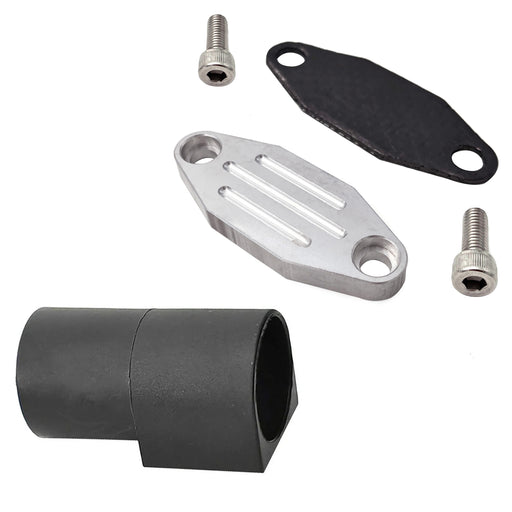
Seguler 1986-1995 Ford F150 F250 F350 Mustang Trucks EGR Simulator Eliminator / Block Off Plate Kit
SEGULEROriginal price $79.99 - Original price $79.99Original price$79.99$79.99 - $79.99Current price $79.99Block Off Plate Material: Aluminum alloy. Easy installation,and convenient to use. Made of CNC milled from aircraft grade Billet aluminum. Will N...
View full details -

Seguler 2011-2023 6.7L Ford Powerstroke Diesel EGR Delete Kit
SEGULEROriginal price $109.99 - Original price $109.99Original price$109.99$109.99 - $109.99Current price $109.99FITMENT 2011-2023 6.7L Ford Powerstroke F-250 F-350 F-450 F-550 Super Duty V8 Diesel. compatible with both standard Pickups and commercial Cab &...
View full details -
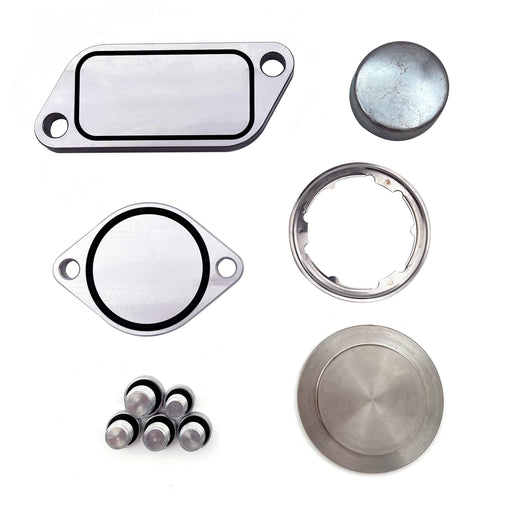
For 2010-Present Stage 2 ISX 15 CM2250 CM2350 EGR Delete Kit
SEGULEROriginal price $59.99 - Original price $59.99Original price$59.99$59.99 - $59.99Current price $59.99FITMENT 2010-Present Cummins Volvo, Peterbilt, Mack, International, Freightliner, Kenworth with the ISX15 CM2250 / CM2350 engines. DESCRIPTION P...
View full details -
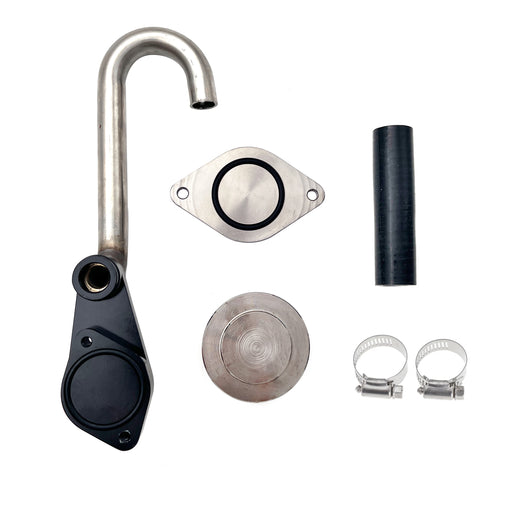
Seguler 2003-2007 6.0L FORD Powerstroke Diesel EGR Cooler Delete Kit
SEGULEROriginal price $56.14 - Original price $56.14Original price$56.14$56.14 - $56.14Current price $56.14FITMENT 2003-2007 6.0L Ford F-250 Ford F-350 F-450 F-550 Super Duty. 2003-2007 6.0L Ford Excursion SUV (Diesel Models Only). 2005-2010 Ford E-Se...
View full details -
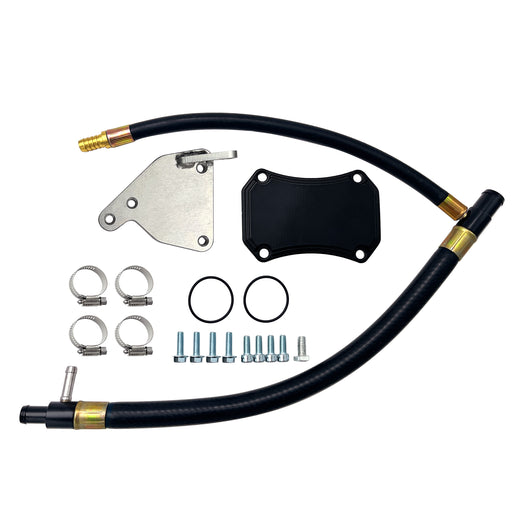
For 2011-2016 6.6L GMC Chevy Duramax Diesel LML EGR Valve Cooler Delete Kit
SEGULEROriginal price $66.49 - Original price $66.49Original price$66.49$66.49 - $66.49Current price $66.49FITMENT 2011-2016 6.6L Chevy GMC Duramax LML 2500 HD 3500 HD Diesel. DESCRIPTION Product Overview The 2011–2016 LML Duramax uses a complex EG...
View full details -
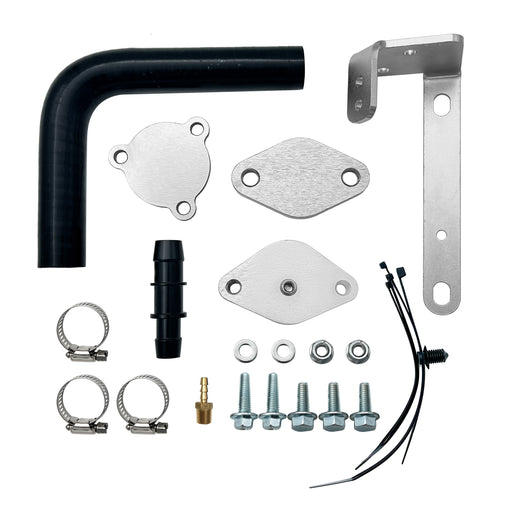
Seguler For 2014-2019 3.0L Dodge Ram 1500 EcoDiesel EGR Valve & Cooler Delete Kit
SEGULEROriginal price $72.99 - Original price $72.99Original price$72.99$72.99 - $72.99Current price $72.99FITMENT 2014-2019 3.0L Dodge Ram 1500 EcoDiesel V6 engine trucks. DESCRIPTION Product Overview Exhaust gas recirculation on 3.0L EcoDiesel V6 ...
View full details -

Seguler 2011-2023 6.7L Ford Powerstroke Diesel EGR Delete Kit
SEGULEROriginal price $85.99 - Original price $85.99Original price$85.99$85.99 - $85.99Current price $85.99FITMENT 2011-2023 6.7L Ford Powerstroke F-250 F-350 F-450 F-550 Super Duty V8 Diesel. compatible with both standard Pickups and commercial Cab &...
View full details -

Seguler 2010-2024 6.7L Dodge Ram Cummins Diesel EGR Valve Cooler Delete Kit
SEGULEROriginal price $89.99 - Original price $89.99Original price$89.99$89.99 - $89.99Current price $89.99FITMENT 2010–2024 6.7L Dodge Ram Cummins 2500 / 3500 Pickup Turbo Diesel. Note: Does NOT fit Chassis Cab 3500 / 4500 / 5500 models. DESCRIPTIO...
View full details -
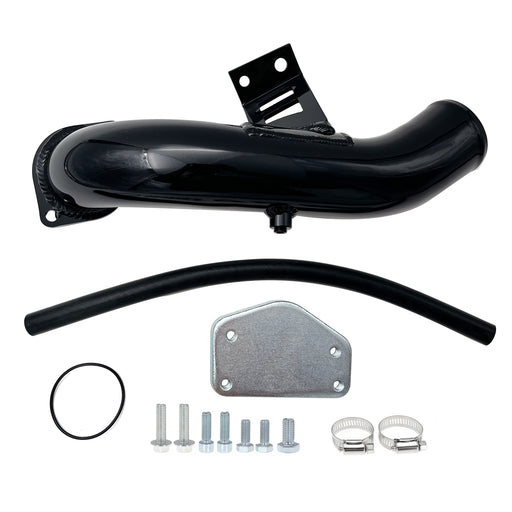
For 2004.5-2005 6.6L Chevy GMC Silverado LLY Duramax Diesel EGR Delete Kit
SEGULEROriginal price $92.99 - Original price $92.99Original price$92.99$92.99 - $92.99Current price $92.99FITMENT 2004.5-2005 6.6L Chevrolet Silverado Duramax LLY 2500HD / 3500 HD. 2004.5-2005 6.6L GMC Sierra Duramax LLY 2500HD / 3500 HD. DESCRIPTION...
View full details -

Seguler 2017-2019 L5P Duramax Diesel 4pcs L5P Can Bus Plugs Connector Replacement
SEGULEROriginal price $75.00 - Original price $75.00Original price$75.00$75.00 - $75.00Current price $75.00FITMENT 2017–2019 Chevrolet Silverado / GMC Sierra Duramax L5P 2500HD & 3500HD Diesel. DESCRIPTION Product Overview Unprotected harness con...
View full details -

Seguler 2020-2023 chevy duramax L5P Diesel Can Bus Plugs Connector
SEGULEROriginal price $80.00 - Original price $80.00Original price$80.00$80.00 - $80.00Current price $80.00FITMENT 2020–2023 Chevrolet Silverado / GMC Sierra Duramax L5P 2500HD & 3500HD Diesel. DESCRIPTION Product Overview Unprotected harness pl...
View full details -
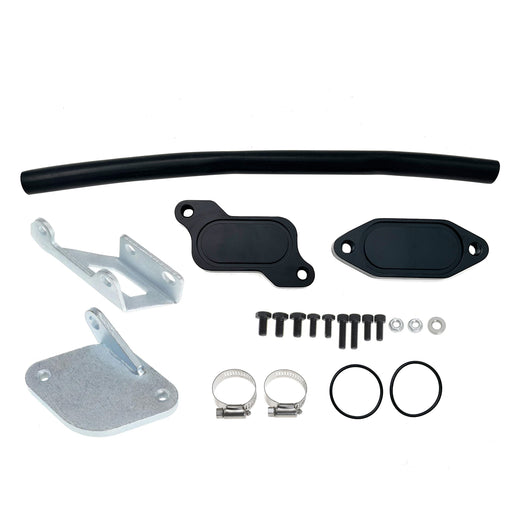
For 2006-2007 6.6L Chevrolet Silverado Classic GMC Duramax LBZ Diesel EGR Valve Cooler Delete Kit
SEGULEROriginal price $63.49 - Original price $63.49Original price$63.49$63.49 - $63.49Current price $63.49FITMENT 2006-2007.4 Chevrolet Silverado Duramax LBZ 2500HD / 3500HD. 2007.4 Chevrolet Silverado Duramax LBZ 2500HD / 3500HD Classic. 2006-2007.4 ...
View full details -

Seguler 2011-2023 6.7L Ford F250 F350 F450 F550 Powerstroke Diesel EGR Valve Delete Cooler Delete Kit
SEGULEROriginal price $55.99 - Original price $55.99Original price$55.99$55.99 - $55.99Current price $55.99FITMENT 2011-2023 6.7L Ford Powerstroke F-250 F-350 F-450 F-550 Super Duty V8 Diesel compatible with both standard Pickups and commercial Cab &a...
View full details -
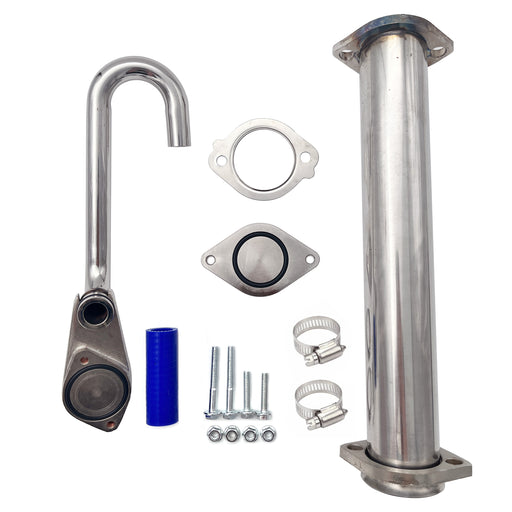
Seguler 2003-2007 6.0L Ford F250 F350 Powerstroke Diesel EGR Basic Cooler Kit
SEGULEROriginal price $79.99 - Original price $79.99Original price$79.99$79.99 - $79.99Current price $79.99FITMENT 2003-2007 6.0L Ford F250 F350 F450 F550 Super Duty Turbo (except 2004 F250 Super Duty). 2003-2005 6.0L Ford Excursion Turbo. 2005 Ford F...
View full details -
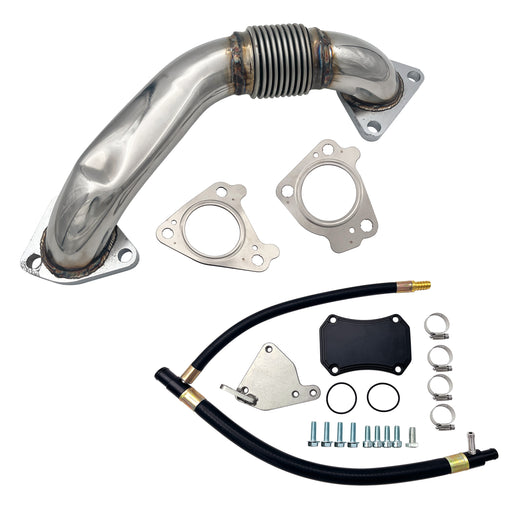
Seguler 2011-2016 6.6L GMC Chevy Duramax Diesel LML Up-Pipe & EGR Valve Cooler Delete Kit
SEGULEROriginal price $173.86 - Original price $173.86Original price$173.86$173.86 - $173.86Current price $173.86FITMENT 2011-2016 6.6L Chevy GMC Duramax LML 2500 HD 3500 HD Diesel. DESCRIPTION Product Overview Direct-injection technology endows GM 5.3L an...
View full details -
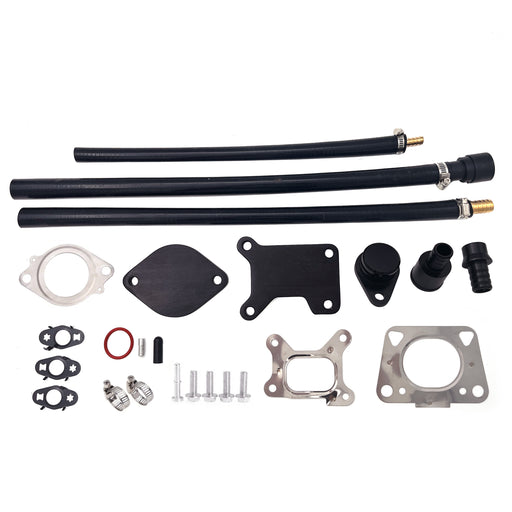
For 2017-2023 6.6L Chevy GMC Duramax L5P diesel EGR Valve Cooler Delete kit
SEGULEROriginal price $131.99 - Original price $131.99Original price$131.99$131.99 - $131.99Current price $131.99FITMENT 2017–2023 6.6L Chevrolet Silverado / GMC Sierra Duramax L5P 2500HD 3500HD Diesel. DESCRIPTION Product Overview Hot soot recirculation ...
View full details -
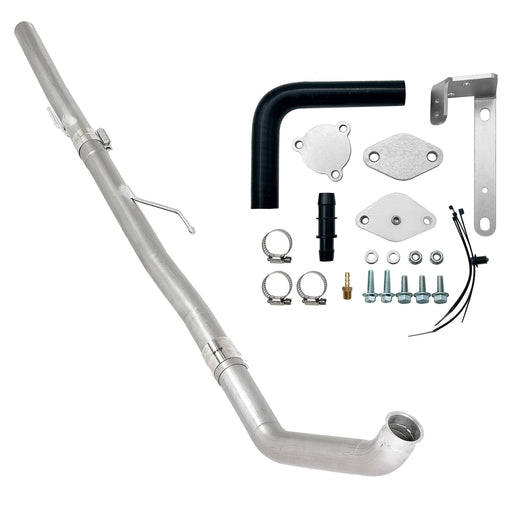
Seguler 3" Ecodiesel DPF Delete Pipe & EGR Delete kit for 2014-2018 3.0L Ram
SEGULEROriginal price $342.00 - Original price $342.00Original price$342.00$342.00 - $342.00Current price $342.00FITMENT 2014–2018 3.0L Dodge Ram 1500 EcoDiesel V6. NOTE: Fit standard Pickup models only (Crew Cab, Quad Cab). Does NOT fit Jeep Grand Cheroke...
View full details -
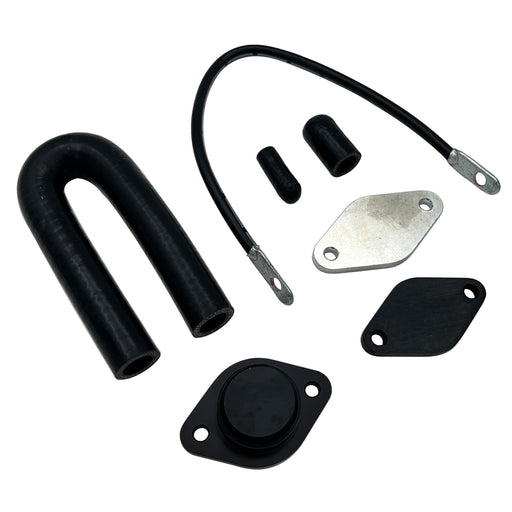
Seguler EGR valve cooler Delete kit for 2020-2022 3.0L Chevy Duramax LM2
SEGULEROriginal price $189.12 - Original price $189.12Original price$189.12$189.12 - $189.12Current price $189.12FITMENT 2020–2022 3.0L Chevrolet Silverado GMC Sierra 1500 LM2 Turbo-Diesel. DESCRIPTION Product Overview Powered by smooth inline-six engine...
View full details -

For 2013-2023 6.7L Dodge Ram Cummins Cab & Chassis EGR Delete Kit Diesel
SEGULEROriginal price $62.99 - Original price $62.99Original price$62.99$62.99 - $62.99Current price $62.99FITMENT 2013–2023 6.7L Ram Cummins 3500 4500 5500 Cab & Chassis / Commercial Trucks. Does NOT fit standard Ram 2500 3500 Pickups. DESCRIPTIO...
View full details -
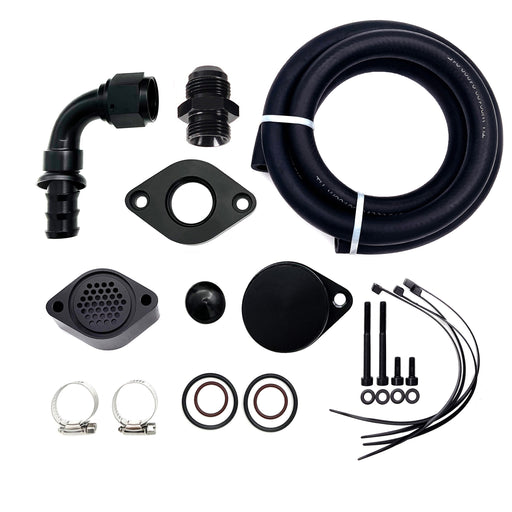
Seguler 2011-2023 6.7L Ford Powerstroke CCV PCV Reroute Engine Ventilation Kit
SEGULEROriginal price $82.99 - Original price $82.99Original price$82.99$82.99 - $82.99Current price $82.99FITMENT 2011-2023 6.7L Ford Powerstroke F-250 F-350 F-450 F-550 Super Duty V8 Diesel. Compatible with both standard Pickups and commercial Cab &...
View full details -
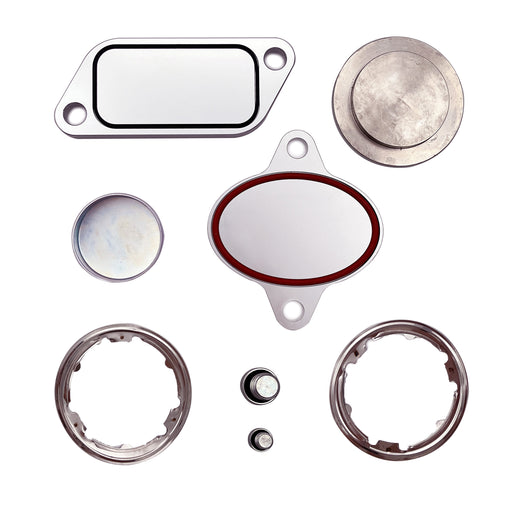
For 2007-2010 Cummins ISX CM871 EGR Plug Kit Stage 2 Plates and Plugs Aluminum
SEGULEROriginal price $67.99 - Original price $67.99Original price$67.99$67.99 - $67.99Current price $67.99FITMENT 2007-2010 Cummins Volvo, Peterbilt, Mack, International, Freightliner, Kenworth with the ISX CM871 Engines. DESCRIPTION Product Overvie...
View full details -
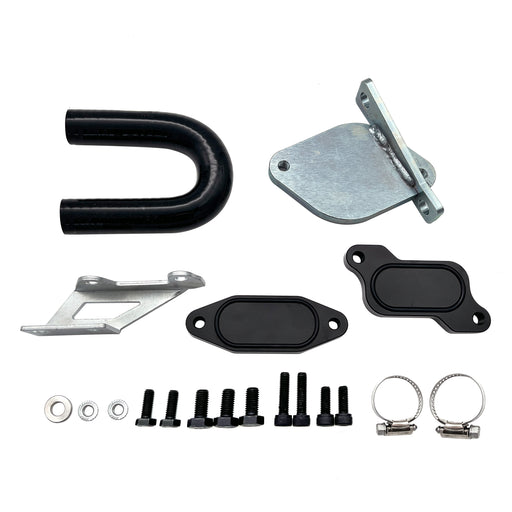
For 2007-2010 6.6L Chevy GMC LMM Duramax EGR Valve Cooler Delete Kit Fit
SEGULEROriginal price $61.99 - Original price $61.99Original price$61.99$61.99 - $61.99Current price $61.99FITMENT 2007.5-2010 6.6L Chevrolet Silverado Duramax LMM 2500HD / 3500HD. 2007.5-2010 6.6L GMC Sierra Duramax LMM 2500HD / 3500HD. Note: Standard...
View full details -
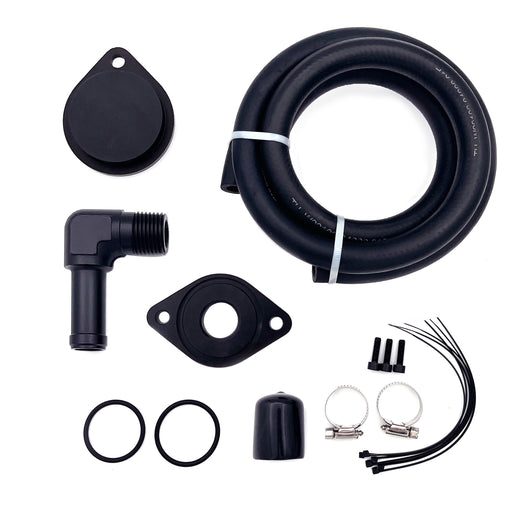
Seguler 2011-2023 Ford 6.7L Powerstroke CCV/PCV Reroute/Delete Engine Ventilation Kit
SEGULEROriginal price $72.00 - Original price $72.00Original price$72.00$72.00 - $72.00Current price $72.00FITMENT 2011-2023 6.7L Ford Powerstroke F-250 F-350 F-450 F-550 Super Duty V8 Diesel. Compatible with both standard Pickups and commercial Cab &...
View full details -
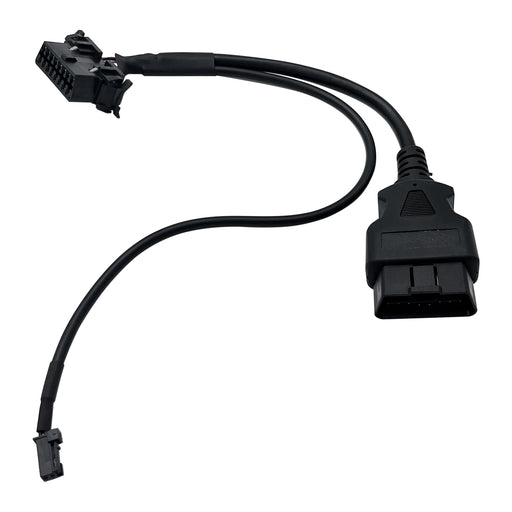
Seguler 2018+ RAM Cummins OBD2 HD Security Gate Bypass Cable
SEGULEROriginal price $45.00 - Original price $45.00Original price$45.00$45.00 - $45.00Current price $45.00FITMENT 2018+ 6.7L Ram Cummins 2500 3500 Turbo Diesel. Designed for Ram pickup trucks equipped with the factory Security Gateway Module. Note: Pl...
View full details -
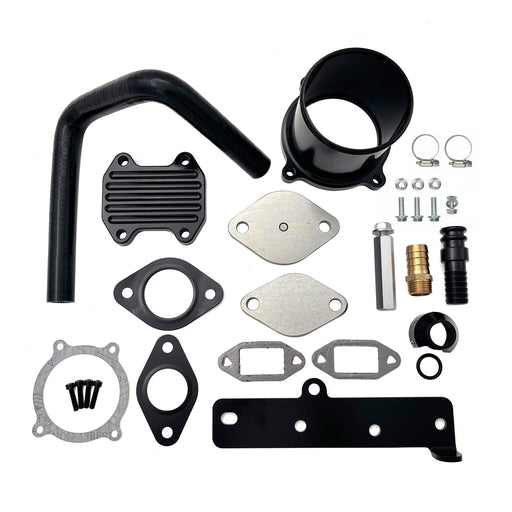
Seguler For 2013-2018 6.7L Dodge RAM 2500 3500 Cummins Diesel EGR Delete Cooler Throttle Valve Delete Kit
SEGULEROriginal price $112.00 - Original price $112.00Original price$112.00$112.00 - $112.00Current price $112.00FITMENT 2013–2018 6.7L Dodge Ram Cummins 2500 & 3500 Pickup Turbo Diesel. Note: Does NOT fit Cab & Chassis (3500 / 4500 / 5500 C&C) m...
View full details


Leave a comment