

6.7 Cummins CCV: Stop Oil Buildup in Your Turbo
You pull the intercooler boot during a routine inspection and notice oil coating the inside of the pipe. Not just a light mist — a wet, sticky residue that suggests oil vapor has been entering the intake system for some time. Checking the turbo inlet reveals the same oily buildup. The truck still runs normally with no warning lights, no smoke, and no obvious performance issues. But oil in the intake path is a sign that something needs attention.
Before blaming the turbocharger seals or assuming excessive engine blow-by, start with the system that connects the crankcase to the intake — the CCV system. On the 6.7 Cummins, CCV-related issues are one of the most common causes of oil accumulation in the turbo inlet, intercooler piping, and intake system.
🔬 What Does the 6.7 Cummins CCV System Actually Do?
CCV stands for Crankcase Ventilation. During normal engine operation, a small amount of combustion pressure passes the piston rings and enters the crankcase — a process known as blow-by. These gases contain combustion byproducts, fuel vapor, moisture, and fine oil mist that must be removed to prevent excessive crankcase pressure.
The factory 6.7 Cummins CCV system is designed to control this pressure by separating oil particles from blow-by gases through a filter element located in the valve cover. After filtration, the remaining vapor is routed back into the intake system through the turbocharger inlet, where it is burned during normal combustion.
When the CCV system is operating properly, this process happens without noticeable effects. However, when the filter becomes restricted or the system cannot effectively separate oil mist, excess oil vapor can enter the intake tract and accumulate around the turbo inlet, intercooler piping, and intake components.
How the CCV-to-Turbo Path Works
The routing on the 6.7 Cummins is straightforward in theory, problematic in practice:
- Blow-by enters the crankcase. Piston ring leakage during compression and power strokes pressurizes the lower end of the engine.
- Vapor rises to the valve cover. The CCV filter housing on top of the engine captures the rising oil mist.
- The CCV filter separates oil. A fibrous media element strips out oil droplets from the vapor stream.
- Filtered vapor enters the turbo inlet. The remaining gas flows through a hose from the CCV housing to the intake side of the turbocharger compressor.
- Vapor mixes with intake air. The blow-by gases are drawn through the compressor wheel, intercooler, and intake manifold before entering the cylinders.
The problem emerges at step 3. When the filter saturates, bypasses, or gets removed, step 4 stops being “filtered vapor” and becomes “oil aerosol sprayed directly into the compressor housing.”
🛢 Why Oil Ends Up in the Turbo — Not the Turbo’s Fault
A common diagnostic mistake on the 6.7 Cummins platform is seeing oil in the compressor inlet and assuming the turbo is leaking internally. Turbocharger seal failures do happen, but they typically produce oil on the exhaust side, not the intake side — blue smoke under load, oil in the downpipe, or visual leakage at the turbine housing.
Oil in the compressor inlet — directly upstream of the turbo — comes from the CCV system. There is no other source of oil upstream of the compressor. The CCV return hose connects directly to the intake pipe before the turbo. If that hose is transporting oil mist instead of clean vapor, the compressor wheel gets coated.
The Three Ways the CCV System Sends Oil to the Turbo
Saturated filter. The factory CCV filter is rated for approximately 67,500 miles under normal driving. Heavy towing, long idle hours, stop-and-go work use, and cold-weather condensation all accelerate loading. By 80,000–100,000 miles on a truck that works for a living, the filter media is often fully saturated. When it can’t hold any more oil, the excess carries straight through to the turbo inlet.
Filter bypass valve. Many CCV housings incorporate a bypass valve that opens under excessive pressure differential. If the filter element is restricted and crankcase pressure spikes — common under full-throttle towing — the bypass opens and routes unfiltered crankcase vapor, oil and all, directly into the turbo inlet. It’s designed to protect the engine from over-pressurization, but the trade-off is that it sends raw oil mist into the induction path.
Filter housing seal failure. The CCV filter assembly on the valve cover relies on a gasket seal. Over years of heat cycling, that gasket hardens and allows unfiltered crankcase vapor to escape around the filter element itself. Some of that vapor gets drawn back into the intake path through the CCV hose, bypassing the filter media entirely.
🔗 How the EGR System Makes the Turbo Oil Problem Worse
The CCV system and the EGR system are often discussed as separate issues. On the 6.7 Cummins, they interact in one critical way: oil vapor plus EGR soot equals intake sludge.
The Chemistry of the Sludge
EGR soot by itself is a dry, fine carbon particulate. It’s abrasive, but it flows through the intake path as a powder. CCV oil vapor by itself is a sticky aerosol. When they meet inside the intake — specifically at the junction where the EGR crossover introduces exhaust gas into the intake stream — they combine into something far worse than either component alone.
The oil acts as a binding agent. The soot acts as a thickening agent. Together, they form a black paste that:
- Coats the turbo compressor wheel, reducing aerodynamic efficiency and increasing spool lag
- Lines the intercooler tubes, insulating the charge air from cooling and raising intake air temperatures
- Narrows the intake manifold runners, reducing total airflow to the cylinders
- Fouls the MAP sensor, sending incorrect pressure data to the ECM
- Builds on the EGR valve and throttle valve, restricting movement and causing sticking
Every mile operated with a saturated CCV filter and an active EGR system is a mile of sludge accumulation that compounds exponentially. The first 50,000 miles might leave a thin, wipeable film. The next 50,000 will leave a hardened, baked-on layer that requires chemical cleaning or mechanical removal.
How the EGR Delete Breaks the Sludge Cycle
Deleting the EGR system removes the soot side of the equation. Without soot entering the intake, the oil vapor from the CCV system passes through without bonding to carbon. The vapor still coats surfaces, but it coats them with a thin oil film — not a thick carbon paste. That film can be managed with the right CCV configuration. The carbon paste cannot.
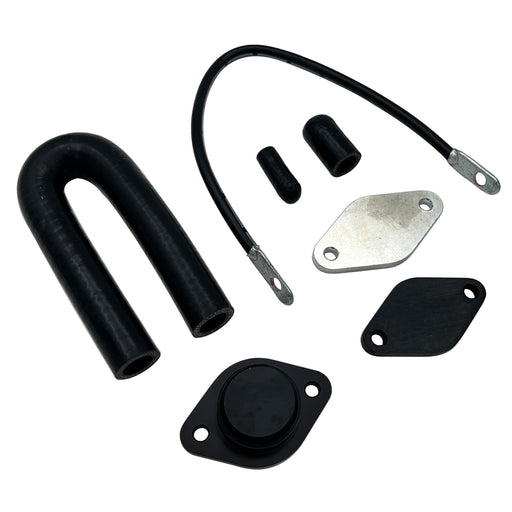
2013-2018 6.7L Dodge RAM 2500 3500 Cummins Diesel EGR Delete Cooler Throttle Valve Delete Kit
This is why a EGR Delete Cooler Throttle Valve Delete Kit is often paired with CCV system upgrades. The EGR delete stops the sludge formation. The CCV upgrade stops the oil entry. Together, you get a clean intake path that stays clean — not one that slowly clogs itself.

- Durable Corrosion-Resistant Construction: Crafted from a high-quality aluminum alloy, this kit offers exceptional resistance to rust and corrosion, ensuring long-term reliability under the hood.
- Superior Thermal Management: The aluminum material provides excellent heat dissipation properties, helping to maintain optimal engine operating temperatures.
- Enhanced Cooling Efficiency: Expertly engineered to facilitate faster and more efficient engine coolant circulation compared to the restricted stock EGR system.
- Comprehensive EGR Deletion: Designed for 6.7L Cummins diesel applications, this kit allows for the complete removal of the factory EGR valve and cooler, streamlining your engine bay for improved performance.
⚙️ What the Factory CCV Filter Can and Cannot Handle
The factory CCV system on the 6.7 Cummins was designed to meet emissions compliance targets, not to protect the turbo from oil contamination. The filter element is adequate for a truck driven lightly on a predictable schedule. It is under-designed for the way most Ram 2500 and 3500 trucks are actually used.
What It Handles Well
- Light-duty commuting with moderate mileage
- Clean, dry operating conditions
- Filter replacement performed on schedule, every 60,000–67,500 miles
- Low to moderate blow-by from a young, healthy engine
Where It Falls Short
- Heavy towing. Sustained high cylinder pressure increases blow-by volume. The filter loads faster than the service interval anticipates.
- Long idle hours. Jobsite trucks, hotshot rigs, and fleet vehicles that idle for hours between drives accumulate moisture in the crankcase. That moisture condenses in the CCV filter element and reduces its oil-holding capacity.
- Cold climates. In freezing temperatures, a saturated CCV filter can ice over. A frozen filter blocks crankcase ventilation entirely — pressure spikes, oil pushes past seals, and on the 6.7 Cummins, the rear main seal is often the first casualty.
- High-mileage engines. As ring seal degrades with mileage, blow-by volume increases. A filter sized for the blow-by of a 100,000-mile engine may be overwhelmed by 200,000 miles. The interval assumes a baseline blow-by level that doesn’t hold over the life of the engine.
🚨 The Symptoms That Point to the CCV — Not the Turbo
Oil in the compressor housing is the most visible sign, but it’s rarely the first. The 6.7 Cummins CCV system announces its decline through a sequence of symptoms that escalate over time:
Stage One: Visual Cues
The first sign many owners notice is oil residue — not a puddle, but a thin, wet film. It often appears around the valve cover perimeter, along the CCV filter housing seam, near the CCV hose connections, or around the turbo inlet boot. Many drivers dismiss it as “diesel engines just seep a little oil.” But excessive oil residue is not normal. When the CCV filter becomes restricted, rising crankcase pressure can force oil vapor and residue past seals and connections that normally stay dry.
Stage Two: Boost and Airflow Symptoms
As the intake path accumulates oil film, airflow dynamics change in subtle ways that the ECM registers as plausibility errors:
- P0299 — Turbocharger Underboost. Oil-soaked intercooler boots soften under heat and pressure, losing their grip on the pipe flanges. Boost leaks at the boots, not at the turbo.
- P0106 — MAP Sensor Performance. Oil mist coats the MAP sensor element. Pressure readings drift from actual manifold conditions. The ECM adjusts fuel delivery based on incorrect data.
- Engine surge or hesitation at part throttle. Contaminated MAP data plus oil-insulated intercooler pipes create a disconnect between the ECM’s commanded air-fuel ratio and the actual combustion event.
Stage Three: Mechanical Consequences
If the ventilation restriction persists, crankcase pressure reaches levels that the gaskets and seals cannot hold:
- Valve cover gasket seepage. Not a gasket failure — a pressure failure. Replacing the gasket without addressing the CCV restriction guarantees the leak returns.
- Rear main seal leak. The most expensive pressure-related failure on the 6.7 Cummins. The seal itself is a $20 part. The labor is ten hours of transmission removal. The root cause — crankcase over-pressurization — is addressed with a $100 CCV solution.
- Dipstick blowout. In extreme cases, crankcase pressure pushes the dipstick out of the tube and sprays oil mist across the engine bay. If this happens, the CCV system is not restricted — it is completely blocked.
🛠 Managing Oil Vapor: The Three Approaches
There are three ways to address CCV oil vapor on the 6.7 Cummins. They are not interchangeable, and the right one depends entirely on how the truck is used.
Replace the Factory CCV Filter
Best for: Light-duty, daily-driven trucks under 100,000 miles that see minimal towing.
Replacing a clean CCV filter at the recommended interval keeps the system functioning within its design parameters. It won’t stop oil vapor from entering the turbo — the factory system is designed to route vapor there — but it keeps the oil content in that vapor to a manageable level.
The limitation is that it doesn’t change the fundamental design. Oil vapor still enters the turbo inlet. Filter loading still progresses between service intervals. And if the truck tows or idles, the filter still loads faster than the service schedule predicts.
Install a CCV Reroute or Ventilation Upgrade
Best for: Trucks that tow, idle, work in cold climates, or approach 150,000+ miles.
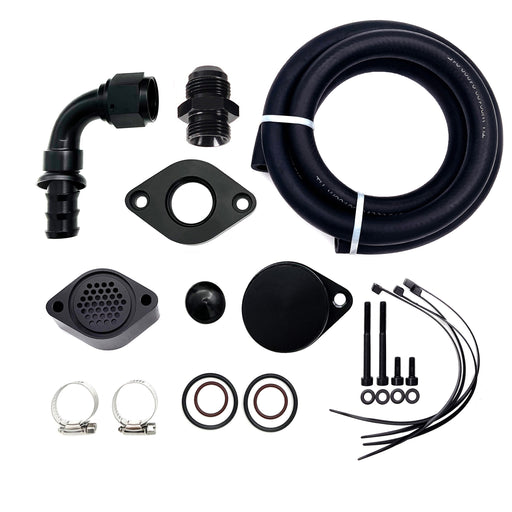
Seguler 2007.5-2018 6.7L Dodge Cummins 2500 3500 CCV Black Crankcase Ventilation Diesel
A CCV reroute changes where crankcase vapor goes. Instead of routing through the turbo inlet, a reroute system directs vapor to an external separator, catch can, atmospheric vent, or exhaust venturi — depending on design and application. The 2500 3500 CCV Black Crankcase Ventilation Diesel unit is one such solution, designed to alter the ventilation path so oil vapor is no longer fed into the intake tract.
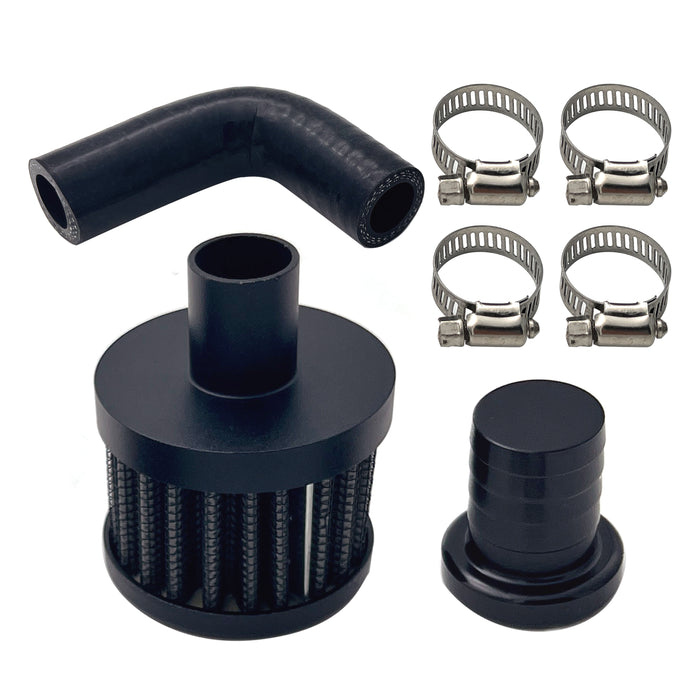
- Premium Durable Construction: Built from high-quality, corrosion-resistant materials, ensuring long-term durability and reliable performance in the engine bay.
- Enhanced Engine Cleanliness: Effectively eliminates oil accumulation on the turbo compressor and maintains intercooler cleanliness by converting the factory closed system to an open breather setup.
- Optimized Drainage Design: Features specialized 90-degree ventilation hoses that actively encourage oil drain-back and help eliminate oil droplets for a cleaner operation.
- Improved Efficiency: Expertly designed to reduce internal fouling, directly contributing to increased overall vehicle performance and efficiency.
The benefit is straightforward: zero oil vapor reaches the turbo compressor, regardless of blow-by volume or filter condition. The intake stays dry. The intercooler stays clean. The turbo compressor wheel runs aerodynamically clean.
Upgrade the Downstream Exhaust Path
Best for: Trucks that have already addressed the EGR and CCV sides but still see elevated EGTs and backpressure.
Seguler 2013-2018 6.7L Ram Cummins Turbo 4" Exhaust Tube Pipe
A high-flow exhaust system after the turbo — like the 4" Exhaust Tube Pipe — doesn’t directly address oil vapor, but it supports the broader goal of keeping the turbo operating in its efficient range. Lower exhaust backpressure reduces turbine-side heat load. Lower EGTs reduce thermal stress on the turbocharger shaft and bearings. And a turbo that runs cooler and breathes easier at the turbine side is less likely to develop seal wear that can contribute to oil consumption — even if the CCV system is the primary oil source.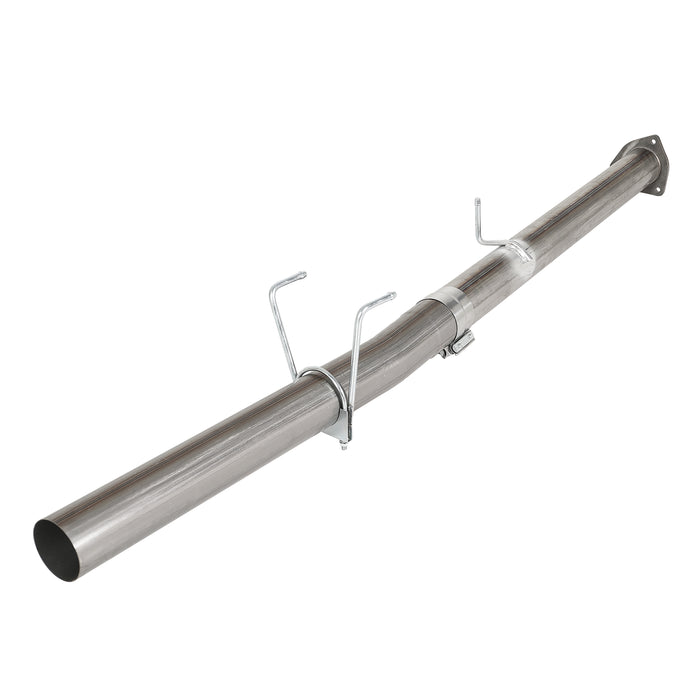
- Premium T409 Stainless Steel: Crafted from high-grade T409 stainless steel, ensuring exceptional durability and long-term resistance to corrosion in harsh exhaust environments.
- High-Flow Performance Design: Engineered with a 4.0" diameter to provide maximum exhaust flow and significantly reduce backpressure, directly boosting engine power and torque.
- DPF Failure Prevention: Effectively eliminates the risk of DPF clogging and failure, saving you from frequent maintenance and costly future engine repairs.
- Competition-Grade Efficiency: Designed to optimize motor performance for competition applications by streamlining the exhaust path and improving overall engine responsiveness.
| Consequence | Typical Repair Cost | What Actually Needs Fixing |
|---|---|---|
| Oil-soaked intercooler boots | $80–$200 per boot, 2–4 boots |
Boots + CCV system (or boots fail again) |
| MAP sensor replacement | $100–$250 |
Sensor + CCV system (or sensor fouls again) |
| Intercooler cleaning | $200–$400 labor | Chemical flush + CCV fix |
| Turbo replacement (misdiagnosed) | $1,500–$3,500 | Often CCV system, not the turbo |
| Rear main seal replacement | $1,500–$2,500 |
10+ hours labor to fix a $20 seal; root cause is crankcase pressure |
| CCV filter replacement | $50–$100 (DIY) | 30-minute driveway job |
| CCV reroute/upgrade kit | $100–$300 | Addresses the root cause permanently |
The most expensive repair on this list — rear main seal replacement — is often triggered by the cheapest fix on this list — a saturated CCV filter that nobody checked because the truck was running fine.
📊 The Complete System: EGR, CCV, and Exhaust Together
The EGR delete kit, the CCV ventilation upgrade, and the exhaust pipe upgrade work together because they address the three legs of the same problem:
EGR delete stops soot at the source. No soot means no carbon for oil to bind to. The intake remains free of paste-like sludge.
CCV upgrade stops oil at the source. No oil vapor in the intake means the turbo, intercooler, and MAP sensor stay dry — regardless of whether the EGR system is deleted or still active.
Exhaust upgrade reduces thermal stress. A 4-inch turbo-back or downpipe-back system lowers exhaust gas temperatures, which reduces heat soak into the turbocharger center housing. Cooler oil temperatures and lower turbine-side pressure mean longer turbo life and more consistent performance.
For the full selection of 6.7 Cummins intake, exhaust, and ventilation components designed to keep your turbo running clean, visit www.seguler.com.
❓ FAQs About 6.7 Cummins CCV and Turbo Oil Buildup
Q1: Can I just delete the CCV system entirely?
A1: No. The CCV system provides the only controlled ventilation path for crankcase pressure. Removing or capping it without providing an alternative vent path will cause crankcase pressure to build until it finds an uncontrolled exit — usually through the rear main seal, front main seal, or valve cover gasket. The goal is rerouting, not blocking.
Q2: How often should I check the CCV filter on a 6.7 Cummins?
A2: Inspect it every oil change if the truck tows, idles frequently, or has over 100,000 miles. For light-duty daily drivers, inspect every other oil change. If you see oil residue around the valve cover or turbo inlet boot between inspections, check it immediately.
Q3: Will a CCV reroute void my warranty?
A3: Any modification that alters the emissions system or crankcase ventilation path can affect warranty coverage, depending on jurisdiction and the specific terms of your warranty. Check your warranty documentation and consult local regulations before modifying the CCV system.
Q4: Is oil in the turbo inlet always a CCV problem?
A4: Not always — but on the 6.7 Cummins, it is the most common cause. Other possible sources include turbocharger compressor seal leakage (oil entering from the center housing, not upstream), excessive engine blow-by overwhelming even a healthy CCV filter, and oil carryover from a failing air filter in dusty conditions. If oil appears only in the compressor inlet and the CCV filter is overdue for replacement, start there.
Q5: Can a CCV reroute improve turbo spool or throttle response?
A5: Indirectly, yes. When oil coats the compressor wheel, it disrupts the aerodynamic profile of the blades. A clean compressor wheel moves air more efficiently. Removing oil vapor from the intake path allows the turbo to operate at its designed efficiency — spool response sharpens, and boost builds more predictably. The change is not a horsepower gain; it’s a recovery of the efficiency the oil was costing you.
Q6: What’s the difference between a CCV reroute and an oil catch can?
A6: A CCV reroute changes the destination of crankcase vapor — routing it away from the turbo inlet entirely, typically to an external vent, exhaust venturi, or catch can. An oil catch can is one possible destination within a reroute system. It traps oil mist for periodic draining while allowing vapor to continue venting. A catch can installed inline with the factory routing still feeds the remaining vapor into the turbo inlet — it reduces but does not eliminate the oil entering the intake.
Featured collection
-
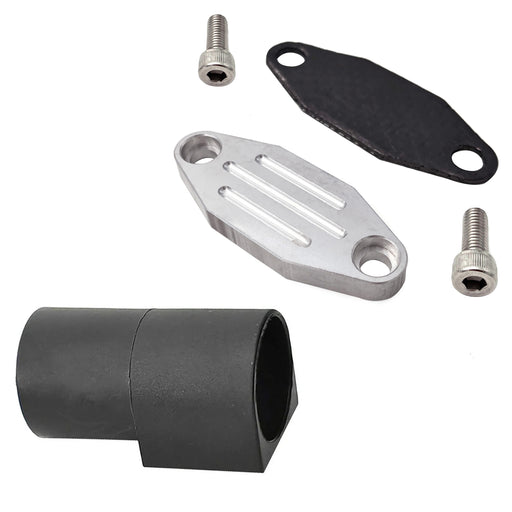
Seguler 1986-1995 Ford F150 F250 F350 Mustang Trucks EGR Simulator Eliminator / Block Off Plate Kit
SEGULEROriginal price $79.99 - Original price $79.99Original price$79.99$79.99 - $79.99Current price $79.99Block Off Plate Material: Aluminum alloy. Easy installation,and convenient to use. Made of CNC milled from aircraft grade Billet aluminum. Will N...
View full details -

Seguler 2011-2023 6.7L Ford Powerstroke Diesel EGR Delete Kit
SEGULEROriginal price $109.99 - Original price $109.99Original price$109.99$109.99 - $109.99Current price $109.99FITMENT 2011-2023 6.7L Ford Powerstroke F-250 F-350 F-450 F-550 Super Duty V8 Diesel. compatible with both standard Pickups and commercial Cab &...
View full details -
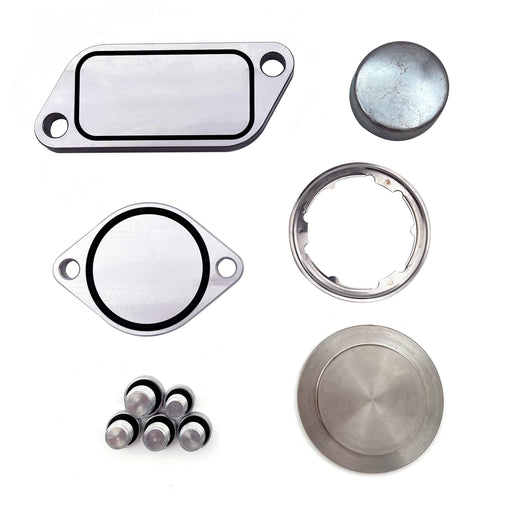
For 2010-Present Stage 2 ISX 15 CM2250 CM2350 EGR Delete Kit
SEGULEROriginal price $59.99 - Original price $59.99Original price$59.99$59.99 - $59.99Current price $59.99FITMENT 2010-Present Cummins Volvo, Peterbilt, Mack, International, Freightliner, Kenworth with the ISX15 CM2250 / CM2350 engines. DESCRIPTION P...
View full details -
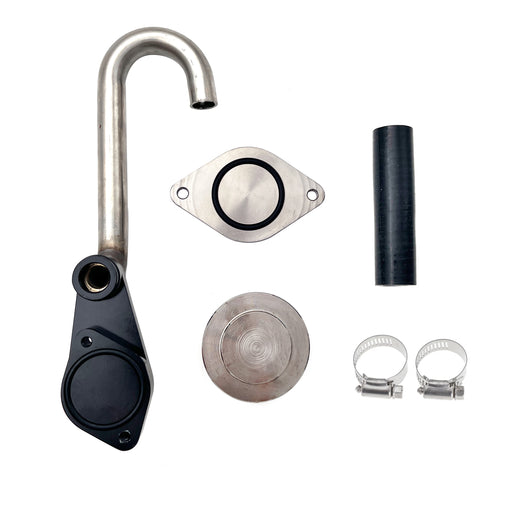
Seguler 2003-2007 6.0L FORD Powerstroke Diesel EGR Cooler Delete Kit
SEGULEROriginal price $56.14 - Original price $56.14Original price$56.14$56.14 - $56.14Current price $56.14FITMENT 2003-2007 6.0L Ford F-250 Ford F-350 F-450 F-550 Super Duty. 2003-2007 6.0L Ford Excursion SUV (Diesel Models Only). 2005-2010 Ford E-Se...
View full details -
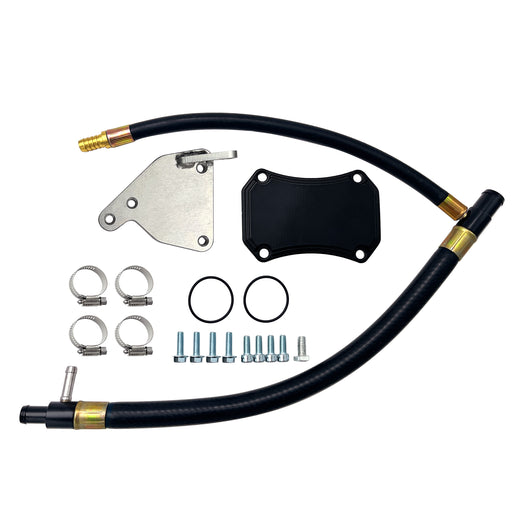
For 2011-2016 6.6L GMC Chevy Duramax Diesel LML EGR Valve Cooler Delete Kit
SEGULEROriginal price $66.49 - Original price $66.49Original price$66.49$66.49 - $66.49Current price $66.49FITMENT 2011-2016 6.6L Chevy GMC Duramax LML 2500 HD 3500 HD Diesel. DESCRIPTION Product Overview The 2011–2016 LML Duramax uses a complex EG...
View full details -
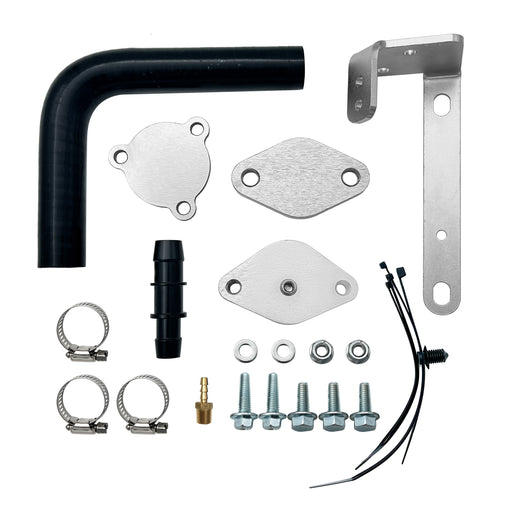
Seguler For 2014-2019 3.0L Dodge Ram 1500 EcoDiesel EGR Valve & Cooler Delete Kit
SEGULEROriginal price $72.99 - Original price $72.99Original price$72.99$72.99 - $72.99Current price $72.99FITMENT 2014-2019 3.0L Dodge Ram 1500 EcoDiesel V6 engine trucks. DESCRIPTION Product Overview Exhaust gas recirculation on 3.0L EcoDiesel V6 ...
View full details -

Seguler 2011-2023 6.7L Ford Powerstroke Diesel EGR Delete Kit
SEGULEROriginal price $85.99 - Original price $85.99Original price$85.99$85.99 - $85.99Current price $85.99FITMENT 2011-2023 6.7L Ford Powerstroke F-250 F-350 F-450 F-550 Super Duty V8 Diesel. compatible with both standard Pickups and commercial Cab &...
View full details -

Seguler 2010-2024 6.7L Dodge Ram Cummins Diesel EGR Valve Cooler Delete Kit
SEGULEROriginal price $89.99 - Original price $89.99Original price$89.99$89.99 - $89.99Current price $89.99FITMENT 2010–2024 6.7L Dodge Ram Cummins 2500 / 3500 Pickup Turbo Diesel. Note: Does NOT fit Chassis Cab 3500 / 4500 / 5500 models. DESCRIPTIO...
View full details -
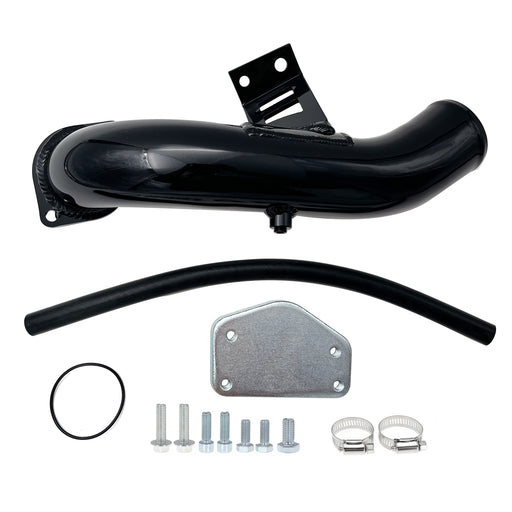
For 2004.5-2005 6.6L Chevy GMC Silverado LLY Duramax Diesel EGR Delete Kit
SEGULEROriginal price $92.99 - Original price $92.99Original price$92.99$92.99 - $92.99Current price $92.99FITMENT 2004.5-2005 6.6L Chevrolet Silverado Duramax LLY 2500HD / 3500 HD. 2004.5-2005 6.6L GMC Sierra Duramax LLY 2500HD / 3500 HD. DESCRIPTION...
View full details -

Seguler 2017-2019 L5P Duramax Diesel 4pcs L5P Can Bus Plugs Connector Replacement
SEGULEROriginal price $75.00 - Original price $75.00Original price$75.00$75.00 - $75.00Current price $75.00FITMENT 2017–2019 Chevrolet Silverado / GMC Sierra Duramax L5P 2500HD & 3500HD Diesel. DESCRIPTION Product Overview Unprotected harness con...
View full details -

Seguler 2020-2023 chevy duramax L5P Diesel Can Bus Plugs Connector
SEGULEROriginal price $80.00 - Original price $80.00Original price$80.00$80.00 - $80.00Current price $80.00FITMENT 2020–2023 Chevrolet Silverado / GMC Sierra Duramax L5P 2500HD & 3500HD Diesel. DESCRIPTION Product Overview Unprotected harness pl...
View full details -
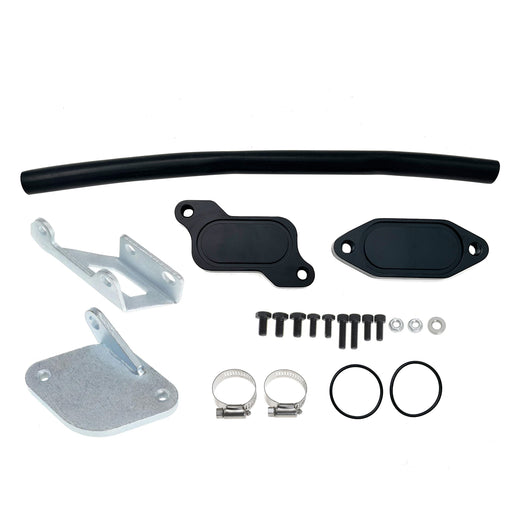
For 2006-2007 6.6L Chevrolet Silverado Classic GMC Duramax LBZ Diesel EGR Valve Cooler Delete Kit
SEGULEROriginal price $63.49 - Original price $63.49Original price$63.49$63.49 - $63.49Current price $63.49FITMENT 2006-2007.4 Chevrolet Silverado Duramax LBZ 2500HD / 3500HD. 2007.4 Chevrolet Silverado Duramax LBZ 2500HD / 3500HD Classic. 2006-2007.4 ...
View full details -

Seguler 2011-2023 6.7L Ford F250 F350 F450 F550 Powerstroke Diesel EGR Valve Delete Cooler Delete Kit
SEGULEROriginal price $55.99 - Original price $55.99Original price$55.99$55.99 - $55.99Current price $55.99FITMENT 2011-2023 6.7L Ford Powerstroke F-250 F-350 F-450 F-550 Super Duty V8 Diesel compatible with both standard Pickups and commercial Cab &a...
View full details -
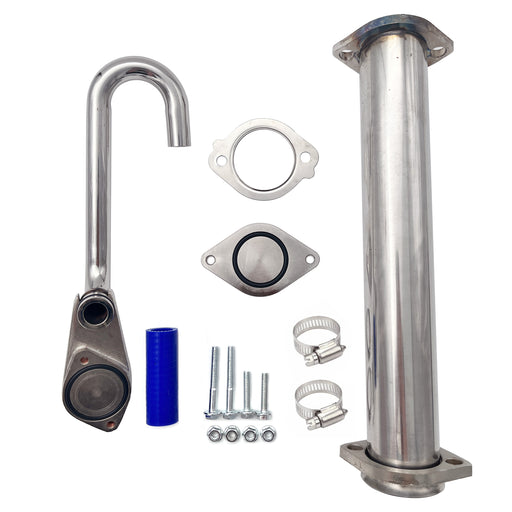
Seguler 2003-2007 6.0L Ford F250 F350 Powerstroke Diesel EGR Basic Cooler Kit
SEGULEROriginal price $79.99 - Original price $79.99Original price$79.99$79.99 - $79.99Current price $79.99FITMENT 2003-2007 6.0L Ford F250 F350 F450 F550 Super Duty Turbo (except 2004 F250 Super Duty). 2003-2005 6.0L Ford Excursion Turbo. 2005 Ford F...
View full details -
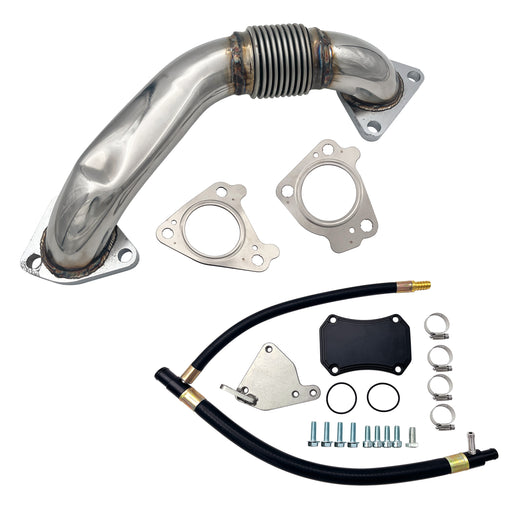
Seguler 2011-2016 6.6L GMC Chevy Duramax Diesel LML Up-Pipe & EGR Valve Cooler Delete Kit
SEGULEROriginal price $173.86 - Original price $173.86Original price$173.86$173.86 - $173.86Current price $173.86FITMENT 2011-2016 6.6L Chevy GMC Duramax LML 2500 HD 3500 HD Diesel. DESCRIPTION Product Overview Direct-injection technology endows GM 5.3L an...
View full details -
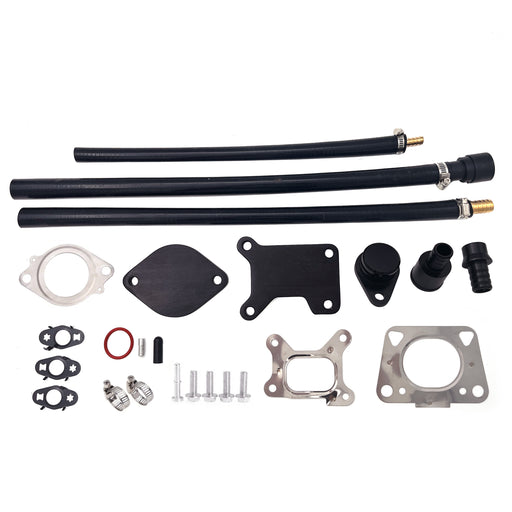
For 2017-2023 6.6L Chevy GMC Duramax L5P diesel EGR Valve Cooler Delete kit
SEGULEROriginal price $131.99 - Original price $131.99Original price$131.99$131.99 - $131.99Current price $131.99FITMENT 2017–2023 6.6L Chevrolet Silverado / GMC Sierra Duramax L5P 2500HD 3500HD Diesel. DESCRIPTION Product Overview Hot soot recirculation ...
View full details -
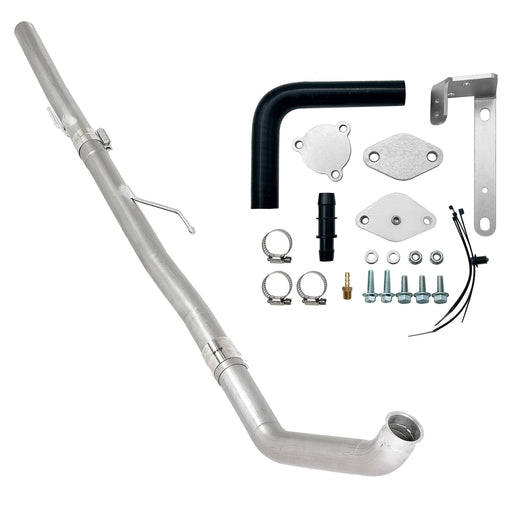
Seguler 3" Ecodiesel DPF Delete Pipe & EGR Delete kit for 2014-2018 3.0L Ram
SEGULEROriginal price $342.00 - Original price $342.00Original price$342.00$342.00 - $342.00Current price $342.00FITMENT 2014–2018 3.0L Dodge Ram 1500 EcoDiesel V6. NOTE: Fit standard Pickup models only (Crew Cab, Quad Cab). Does NOT fit Jeep Grand Cheroke...
View full details -
Seguler EGR valve cooler Delete kit for 2020-2022 3.0L Chevy Duramax LM2
SEGULEROriginal price $189.12 - Original price $189.12Original price$189.12$189.12 - $189.12Current price $189.12FITMENT 2020–2022 3.0L Chevrolet Silverado GMC Sierra 1500 LM2 Turbo-Diesel. DESCRIPTION Product Overview Powered by smooth inline-six engine...
View full details -

For 2013-2023 6.7L Dodge Ram Cummins Cab & Chassis EGR Delete Kit Diesel
SEGULEROriginal price $62.99 - Original price $62.99Original price$62.99$62.99 - $62.99Current price $62.99FITMENT 2013–2023 6.7L Ram Cummins 3500 4500 5500 Cab & Chassis / Commercial Trucks. Does NOT fit standard Ram 2500 3500 Pickups. DESCRIPTIO...
View full details -
Seguler 2011-2023 6.7L Ford Powerstroke CCV PCV Reroute Engine Ventilation Kit
SEGULEROriginal price $82.99 - Original price $82.99Original price$82.99$82.99 - $82.99Current price $82.99FITMENT 2011-2023 6.7L Ford Powerstroke F-250 F-350 F-450 F-550 Super Duty V8 Diesel. Compatible with both standard Pickups and commercial Cab &...
View full details -
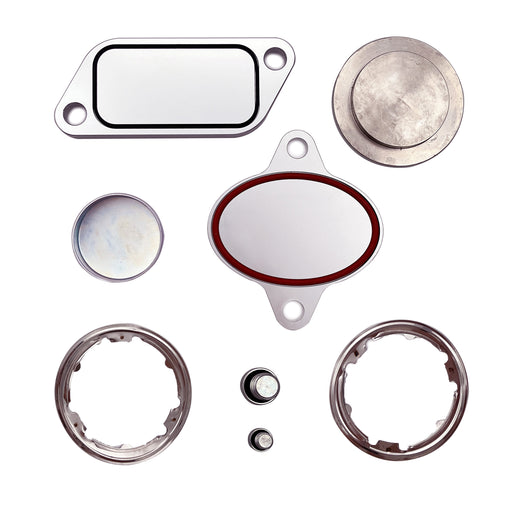
For 2007-2010 Cummins ISX CM871 EGR Plug Kit Stage 2 Plates and Plugs Aluminum
SEGULEROriginal price $67.99 - Original price $67.99Original price$67.99$67.99 - $67.99Current price $67.99FITMENT 2007-2010 Cummins Volvo, Peterbilt, Mack, International, Freightliner, Kenworth with the ISX CM871 Engines. DESCRIPTION Product Overvie...
View full details -
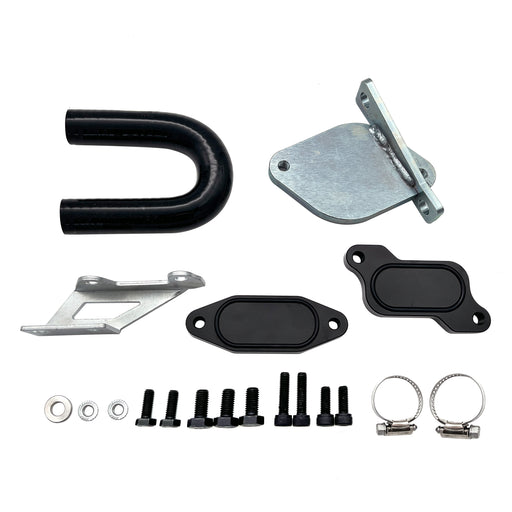
For 2007-2010 6.6L Chevy GMC LMM Duramax EGR Valve Cooler Delete Kit Fit
SEGULEROriginal price $61.99 - Original price $61.99Original price$61.99$61.99 - $61.99Current price $61.99FITMENT 2007.5-2010 6.6L Chevrolet Silverado Duramax LMM 2500HD / 3500HD. 2007.5-2010 6.6L GMC Sierra Duramax LMM 2500HD / 3500HD. Note: Standard...
View full details -
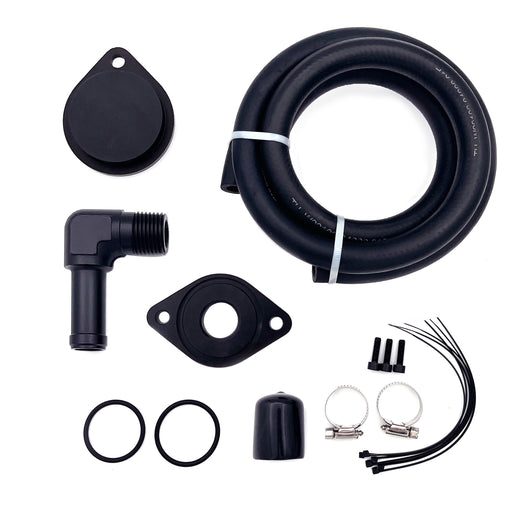
Seguler 2011-2023 Ford 6.7L Powerstroke CCV/PCV Reroute/Delete Engine Ventilation Kit
SEGULEROriginal price $72.00 - Original price $72.00Original price$72.00$72.00 - $72.00Current price $72.00FITMENT 2011-2023 6.7L Ford Powerstroke F-250 F-350 F-450 F-550 Super Duty V8 Diesel. Compatible with both standard Pickups and commercial Cab &...
View full details -
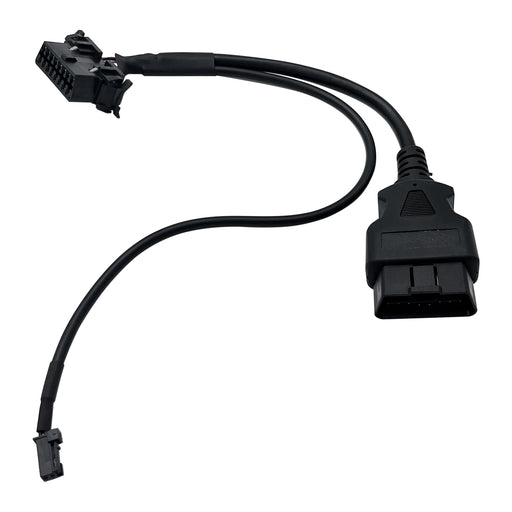
Seguler 2018+ RAM Cummins OBD2 HD Security Gate Bypass Cable
SEGULEROriginal price $45.00 - Original price $45.00Original price$45.00$45.00 - $45.00Current price $45.00FITMENT 2018+ 6.7L Ram Cummins 2500 3500 Turbo Diesel. Designed for Ram pickup trucks equipped with the factory Security Gateway Module. Note: Pl...
View full details -
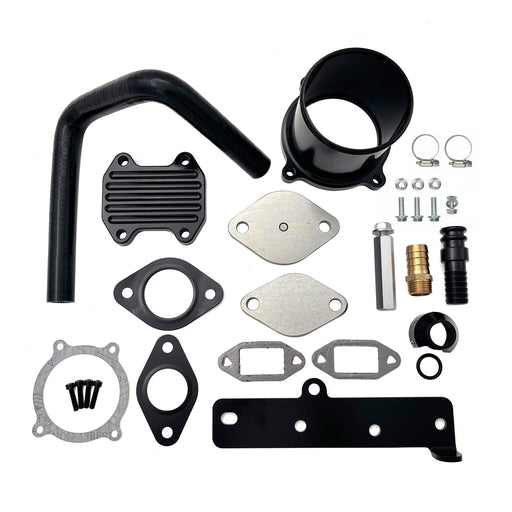
Seguler For 2013-2018 6.7L Dodge RAM 2500 3500 Cummins Diesel EGR Delete Cooler Throttle Valve Delete Kit
SEGULEROriginal price $112.00 - Original price $112.00Original price$112.00$112.00 - $112.00Current price $112.00FITMENT 2013–2018 6.7L Dodge Ram Cummins 2500 & 3500 Pickup Turbo Diesel. Note: Does NOT fit Cab & Chassis (3500 / 4500 / 5500 C&C) m...
View full details


Leave a comment