

6.4L Powerstroke DPF & EGR Delete: $400 to Fix Three Worst Flaws at Once
The 6.4L Powerstroke earned its “throwaway engine” reputation from three specific flaws — the DPF regen cycle that dilutes your oil, the twin EGR coolers that crack and dump coolant into the intake, and the up-pipe bellows that split and leak exhaust. One $400 delete kit removes all three at once, in a single teardown behind the firewall.
For off-road / competition use only. Not legal for on-road use in emissions-regulated areas. Check your local, state, and federal laws before modifying any emissions-related component.
Why Does the 6.4L Powerstroke Have Such a Bad Reputation?
The 6.4L is one of the shortest-lived diesel engines Ford ever put in a Super Duty — just three model years, 2008 through 2010. It’s not that the engine is fundamentally weak. It’s that it arrived at a brutal moment in emissions history, and the hardware bolted to it became its undoing.

Three facts define the 6.4L’s problem:
-
It was the first Powerstroke to carry a DPF. The 6.0L before it had an EGR system and a catalytic converter, but no diesel particulate filter. The 6.4L was the first time Ford had to make an emissions system actively regenerate — injecting raw fuel to torch soot — and that single mechanism set off a chain reaction.
-
It runs twin EGR coolers, not one. Where the 6.0L used a single cooler, the 6.4L uses two — a high-temperature cooler that sees exhaust first, and a low-temperature cooler downstream. The hot one is the failure point.
-
It was engineered and abandoned fast. Ford only had three years with the 6.4L before the in-house 6.7L replaced it. There was never time to fully work out the kinks, so the aftermarket had to.
The result is an engine that runs great when it runs — 350 horsepower, 650 lb-ft, a genuinely strong transmission, and a compound twin-turbo that makes it one of the most mod-friendly diesels ever built — but that slowly eats itself from the emissions system outward.
What Are the Three Worst Flaws a Delete Actually Fixes?
Let’s be precise about what “three worst flaws” means, because this is where the $400 kit earns its keep. These are the three emissions-driven failures that account for the overwhelming majority of expensive 6.4L repair bills.
Flaw 1: DPF Regeneration and the Fuel Dilution It Causes
The DPF traps soot, and the ECM “cleans” it by running an active regeneration — spraying extra fuel into the cylinders on the exhaust stroke to spike exhaust temps high enough to burn the trapped soot clean.
The catch: that extra fuel doesn’t all burn.
- Some of it washes past the piston rings and down the cylinder walls into the oil pan — that’s fuel dilution.
- Diesel mixed into your oil strips the lubrication that protects the rod bearings, main bearings, and every other rotating surface.
You can see it happening between oil changes:
- A 6.4L will often show the oil level rising instead of falling.
- That’s not the engine making oil — it’s fuel leaking into the crankcase.
It’s the #1 cause of 6.4L bottom-end failures:
- Tear-downs of blown cores routinely show spun rod bearings and vaporized bearing material.
- The root cause is almost always the same — diluted oil that stopped lubricating.
A delete pipe ends it: remove the DPF, stop the regen, and there’s no post-injection fuel and no dilution.
Flaw 2: EGR Cooler Cracking and the Coolant-Loss Hydrolock
The 6.4L’s EGR system pulls hot, soot-laden exhaust back into the intake, cooling it first through two EGR coolers — heat exchangers with engine coolant on one side and exhaust on the other.
The high-temperature cooler is the failure point:
- It sees exhaust first, so soot clogs its narrow passages.
- The clogged cooler runs hotter than designed, and thermal cycling cracks the internal tubes.
- Once cracked, coolant leaks into the exhaust stream and gets pulled into the combustion chamber.
The tell-tale symptom:
- Thick white smoke from the tailpipe, especially under acceleration, with no external coolant leak — the coolant is going out the exhaust, not onto the ground.
- Left unchecked, enough coolant in a cylinder causes a hydrolock that bends a rod and destroys the engine.
An EGR delete ends it: remove both coolers, block off the ports, and there’s no soot loading, no crack, and no coolant in the intake.
Flaw 3: Up-Pipe Bellows Cracking and the Boost Leak
The up-pipes connect the exhaust manifolds to the turbocharger, running through a brutally hot, vibration-heavy environment. The flex bellows that absorb thermal expansion fatigue and crack.
A cracked up-pipe leaks exhaust before the turbo, which means two things:
- The turbo loses drive pressure and spools slower.
- Raw exhaust escapes into the engine bay.
The symptoms to watch for:
- Soot staining around the firewall and a hissing sound under the hood.
- Laggy throttle response and reduced boost.
It’s easy to miss because it doesn’t throw a code on its own — it just makes the truck feel progressively lazier and dirtier.
A quality up-pipe ends it: braided, interlocking flex bellows (like the T-304 stainless ones in a complete kit) eliminate the crack point entirely.
What Symptoms Appear Before These Flaws Fail?
None of these three failures happens without warning — the trick is recognizing the early signs while the repair is still cheap. Here’s what to watch for, broken down by which flaw is developing.
Before Fuel Dilution Gets Bad
-
The oil level rises between changes. This is the single clearest signal — the dipstick reads higher at the end of a service interval than at the start, because diesel is leaking into the crankcase faster than the engine burns oil.
-
Regeneration cycles fire frequently. A healthy 6.4L regenerates every few hundred miles of highway driving. If yours is regenerating every 100–200 miles, the DPF is loading up and the post-injection fuel is doing its damage.
-
Fuel economy slowly drops. Active regeneration burns extra fuel, so a truck that’s regenning constantly sips more diesel than it should.
-
The oil smells like diesel. Pull the dipstick and give it a sniff — diluted oil has a faint fuel odor and feels thinner than it should.
Before an EGR Cooler Cracks
-
Coolant level drops with no visible leak. If the overflow tank needs topping up but there’s nothing on the driveway, the coolant is going somewhere it shouldn’t — on a 6.4L, that’s usually the EGR cooler.
-
White smoke on a cold start or under throttle. A little white vapor on a cold morning is normal condensation; thick white smoke that lingers or appears under acceleration is coolant entering the combustion chamber.
-
A sweet smell in the cab. Coolant has a distinctive sweet odor, and a leaking EGR cooler can push it into the intake where the smell reaches the cabin.
Before an Up-Pipe Bellows Splits
-
Soot tracing around the firewall. A cracked up-pipe leaks exhaust before the turbo, and that soot deposits as a dark, powdery film on the firewall and around the back of the engine.
-
A hiss or whistle under boost. The leak opens up as exhaust pressure builds, producing a high-pitched hiss that fades when you lift off the throttle.
-
Slower turbo spool and softer throttle response. The turbo is losing drive pressure to the leak, so it takes longer to build boost and the truck feels progressively lazier.
Catching any of these early is the difference between a $400 delete and a $10,000 engine rebuild. The fuel dilution and the coolant leak in particular don’t announce themselves with a check-engine light until the damage is already underway.
Why These Three Have to Be Fixed Together
Here’s the part that matters for your wallet: all three of these flaws live in the same physical place, and they feed each other.
- The EGR system dumps soot into the intake, which makes combustion dirtier, which loads the DPF faster, which triggers more regeneration, which causes more fuel dilution.
- The up-pipes and the EGR coolers are both buried behind the engine, against the firewall — one of the most cramped, expensive-to-access spots on the entire truck.
- Every one of these repairs, done separately, requires a major teardown to reach the back of the engine.
That’s the hidden cost. A shop that replaces a cracked EGR cooler today will charge you for the teardown. Six months later, when the up-pipe bellows split, you pay for the same teardown again to reach the same spot. And when the DPF finally clogs, you’re back a third time.
Combining all three into a single job — one teardown, one round of labor, one bill — is where the real savings live. A $400 kit that does all three at once isn’t just cheaper than three separate fixes; it’s cheaper than one dealer visit for a single EGR cooler replacement, which commonly runs $2,000 to $2,500.
What’s Actually in a $400 Kit?
The 4" Cat & DPF Delete Pipe & EGR Delete Kit for the 2008–2010 6.4L ($401.96) is built specifically around this “do it all once” logic, and it covers all three flaws in one box:

- 4" mandrel-bent straight pipe — replaces the DPF and catalytic converter, deleting the restriction and ending regeneration cycles for good.
- Complete EGR delete — removes both factory EGR coolers and blocks off the ports, eliminating the coolant-leak and intake-soot failure point.
- Heavy-duty T-304 stainless up-pipes — with inner-interlocking braided flex bellows designed to handle heat expansion without splitting, curing the boost-leak crack point.
It fits the 2008–2010 F-250, F-350, F-450, and F-550 — including both standard pickup beds and Cab & Chassis trucks (though the F-450/F-550 chassis cabs may need minor exhaust adjustments for wheelbase differences).
The kit is a hardware solution. It does not include the tuner — and that’s by design, because the tune is a separate, non-negotiable step (more on that below).
How the Install Goes: A Simple Walkthrough
The 6.4L delete is an advanced DIY job — plan on a full weekend the first time, mostly because of the cramped access behind the firewall. Here’s the flow, in the order that avoids the classic mistakes.

Step 0: Flash the Tune First
This is non-negotiable and it comes before you touch a wrench. Flash the delete tune into the ECM while the truck is still fully assembled and running. Pulling the DPF or EGR hardware without the recalibrated tune first means instant check-engine codes and limp mode. Hook up a battery charger while flashing — a voltage dip mid-flash can brick the ECM.
Step 1: Prep the Truck
Let the engine cool completely, then disconnect both batteries. Drain two to three gallons of coolant — the EGR coolers are full of it, and you’ll dump it everywhere if you don’t drain first. Spray every exhaust flange, clamp, and bolt with penetrating oil the day before.
Step 2: Pull the DPF/CAT
Unplug and label every sensor on the exhaust before removing anything — this saves a world of confusion on reassembly. Unbolt the downpipe connection, drop the hangers, and use a ratchet strap hooked to the frame to pull the heavy DPF/CAT assembly back and out. It’s a two-person lift.
Step 3: Remove the EGR Coolers and Up-Pipes
This is the hard part, and it’s all behind the engine. Remove the intake and the turbo heat shielding, then work the twin EGR coolers out — the high-temperature cooler first. The up-pipes come out next; their bellows bolts are notorious for seizing, so heat and patience beat brute force. Once everything is out, install the block-off plates, the coolant reroute, and the new T-304 up-pipes.
Step 4: Install the 4-Inch Pipe
Test-fit the new straight pipe before tightening anything, then work front to back, snugging each clamp evenly. Double-check the sensor bungs are capped or handled the way your tune expects.
Step 5: Refill, Burp, and Test
Refill the coolant and burp the system properly — the 6.4L cooling system holds 28–30 quarts and traps air easily, so raise the front or use a vacuum fill, then run it to operating temperature with the heater on. Take a short shake-down drive, then recheck every clamp and coolant level.
The three mistakes that come back to bite you: flashing the tune too late, skipping the coolant reroute (trapped air will overheat the engine), and not labeling the sensors before disconnecting them.
Does a Delete Actually Add Horsepower?
No — and it’s worth being blunt about this, because it’s the most common misconception around 6.4L deletes.
The hardware does not make horsepower. The tune does.
What a delete does change on its own:
- It removes exhaust backpressure, which lets the compound turbos spool a little freer.
- It ends regeneration, so you’re no longer burning extra fuel just to clean the filter.
- It stops the fuel dilution that was quietly killing your oil.
The meaningful power gains — the +50 to +150 hp that people talk about — come entirely from the custom tune you pair with the delete.
And there’s a subtlety specific to the 6.4L worth knowing:
Because removing the cat, DPF, and EGR does free up airflow, a deleted 6.4L rarely runs at true “stock” power even on a conservative tune. The airflow alone nudges it above where the factory calibration sat.
So the honest framing is this:
The delete is a reliability modification first, and a power modification only in combination with tuning. If all you want is horsepower, a tune on an emissions-intact truck gets you most of the way there. If you want the engine to survive, the delete is the part that matters.
What a Delete Won’t Fix — and the 6.4L’s Dirty Secret
Here’s where we have to be honest about the limit of a $400 kit, because the 6.4L has failure modes that no exhaust pipe can touch.
The engine’s internal weak points remain, delete or no delete:
-
Lifter and camshaft failure. The 6.4L uses a lifter design that’s been documented to fail — the roller comes apart, eats into the cam lobe, and sends metal shavings through the entire oiling system. Tear-downs of 6.4L cores repeatedly show exactly this pattern, even on engines that were otherwise healthy.
-
Cracked pistons. Ford used its own piston casting in the 6.4L, and they’re a known crack point under regen heat and high cylinder pressure — sometimes even on low-mileage, unmodified trucks. The common upgrade is the Navistar MaxxForce 7 piston (the single-turbo version of the same engine built for medium-duty trucks).
-
Head gasket failure. The factory torque-to-yield head bolts are a 200k-mile weak point, and they become more vulnerable the more you push cylinder pressure with tuning.
None of these are emissions problems, and a delete won’t touch them. This is the honest reality of the 6.4L: a delete makes the truck dramatically more reliable by removing the emissions-driven failures, but it does not turn it into a bulletproof engine.
If you’re buying a 6.4L specifically because you want to delete it and run it hard, go in with your eyes open: the delete stops the regen problem. It does not stop the internals problem.
How to Prevent These Failures (Delete or Not)
Whether you’re planning to delete or trying to keep a stock truck alive, the same handful of habits is what keeps a 6.4L from turning into a parts donor.
If You’re Keeping It Stock
-
Change the oil at 5,000 miles, not 10,000. The factory interval assumes the oil isn’t being diluted by regeneration fuel — and on a 6.4L, it usually is. Shortening the interval is the single cheapest way to protect the bearings from diluted oil.
-
Get the oil analyzed. A $30–$40 Blackstone report tells you exactly how much fuel is in the oil and whether you’re changing it often enough. It’s the only way to actually see the dilution problem instead of guessing.
-
Run it hard enough to complete regenerations. Short trips and long idling never get the exhaust hot enough to finish a regen, which means more partial regens and more fuel in the oil. A regular highway drive every week or two helps the DPF clean itself.
-
Watch the coolant level. A slowly dropping overflow tank with no visible leak is the earliest warning of an EGR cooler about to crack — catch it before it hydrolocks a cylinder.
-
Inspect the up-pipes and firewall for soot. A quick look under the hood at the back of the engine costs nothing and catches a bellows crack while it’s still just a hiss.
If You’ve Deleted It
-
Run a mild tune. The delete removes the emissions failures, but it doesn’t strengthen the pistons or the head bolts. A conservative tow tune keeps cylinder pressure — and the risk of a cracked piston or lifted head — in check.
-
Keep the 5,000-mile oil changes. Deleting stops the fuel dilution, but the lifter-and-camshaft wear problem is still there, and clean oil is your best defense against it.
-
Monitor EGTs if you tow. A deleted 6.4L under a heavy trailer can still spike exhaust temps, and sustained heat is what finishes off pistons and head gaskets.
-
Use quality filters. The 6.4L’s fuel and oil filters are the last line of defense for the K16 injection pump and the oiling system — cheap filters are a false economy on this engine.
The honest bottom line: the delete removes the emissions-driven failures, and good habits remove the maintenance-driven ones. Together, they’re what actually determines whether a 6.4L makes it past 200,000 miles.
Is a 6.4L Delete Legal?
No, not on public roads.
Under the federal Clean Air Act (42 U.S.C. § 7522), removing or disabling emissions equipment on a vehicle used on public roads is illegal, and the same goes for the DEF, EGR, DPF, and SCR systems the 6.4L runs. EPA guidance is explicit that labeling a kit “off-road” or “competition” does not create a legal exemption.
The 2026 Department of Justice enforcement memo narrowed criminal prosecution priorities, but it did not change the underlying law, and the EPA’s civil enforcement — including per-violation penalties — remains fully in effect. States like California go further with their own stricter rules.
For a daily driver, tow rig, or work truck that sees public roads, a delete is a compliance risk, not a fix. These kits are for off-road, competition, and non-public-road use where the law permits it. Know your local rules before you buy.
Get the Right Kit for Your 6.4L
The 6.4L Powerstroke doesn’t have to be a “throwaway engine.” Most of what kills it lives in the emissions hardware, not the engine itself — and the three worst offenders can all be removed in a single job.
The 4" Cat & DPF Delete Pipe & EGR Delete Kit bundles the DPF delete, the EGR delete, and the T-304 up-pipes into one $401.96 package for the 2008–2010 Super Duty — so you do one teardown instead of three, and pay less than a single dealer EGR cooler replacement. Pair it with a proper delete tuner, run a mild tune, and keep up on oil changes — that’s the combination that turns a 6.4L into the truck it should have been from the factory.
If you’re also chasing the up-pipe screech specifically, see our full 6.4L up-pipe guide for the diagnosis side. And for the deeper story on how regeneration causes fuel dilution, read the 6.4L DPF delete and fuel dilution guide.
Frequently Asked Questions
Q1: What are the three worst flaws this kit fixes?
A: DPF regeneration and the fuel dilution it causes, EGR cooler cracking that leaks coolant into the intake, and up-pipe bellows cracking that leaks exhaust and kills boost. All three are emissions-driven, and all three live behind the firewall.
Q2: Does deleting the 6.4L add horsepower?
A: The hardware itself doesn’t add power — the gains come from the tune you pair with it. Removing the DPF and EGR does free up airflow, so a deleted 6.4L rarely runs at true stock power even on a mild tune.
Q3: Will this kit stop my truck from going into regeneration?
A: Yes. Once the DPF delete pipe and EGR delete are installed alongside custom ECM tuning, the truck no longer performs regeneration cycles, which stops the post-injection fuel that was diluting your oil.
Q4: Does the $400 kit include a tuner?
A: No. The kit is the physical hardware — pipe, EGR delete, and up-pipes. A delete tuner is a separate, required purchase, because the truck will throw codes and go into limp mode without a recalibrated ECM.
Q5: Will a delete make my 6.4L bulletproof?
A: No. It removes the emissions-driven failures, but the 6.4L still has internal weak points — lifter and camshaft wear, cracked pistons, and head gasket failure — that no exhaust pipe can fix.
Q6: Why do I need to delete the DPF and EGR together?
A: The EGR system feeds soot into the intake, which makes combustion dirtier and loads the DPF faster, which triggers more regens. They’re one connected system, and deleting only one leaves the other to keep causing problems.
Q7: Why is the up-pipe included in a “DPF and EGR” kit?
A: Because it lives in the same spot behind the firewall. Replacing a cracked up-pipe separately means paying for a second teardown of the same cramped area — so bundling it into the same job saves a full round of labor.
Q8: What are the signs of a cracked EGR cooler on a 6.4L?
A: Thick white smoke from the tailpipe under acceleration, with no external coolant leak, and coolant level dropping in the overflow tank. It’s often mistaken for a head gasket, but on the 6.4L the EGR cooler is the far more common cause.
Q9: Does this kit fit F-450 and F-550 chassis cabs?
A: The EGR delete and up-pipes are direct bolt-on. The F-450/F-550 Cab & Chassis models may need minor exhaust adjustments for the different wheelbase and frame configuration.
Q10: Is a 6.4L delete legal on the road?
A: No. Removing emissions equipment on a road-driven vehicle violates the federal Clean Air Act, and the “off-road” label does not create a legal exemption. These kits are for off-road and competition use only.
Q11: How much does an EGR cooler replacement cost versus a delete?
A: A dealer EGR cooler replacement on the 6.4L commonly runs $2,000 to $2,500 for a single cooler — and it can fail again. A complete delete kit covering all three flaws costs around $400, plus the tuner.
Q12: What’s the biggest mistake people make with a 6.4L delete?
A: Running a high-horsepower tune and treating the truck like it’s now indestructible. The delete fixes the emissions problems, but the lifters, pistons, and head gasket still have limits — a mild tune and regular maintenance matter more than ever.
Featured collection
-
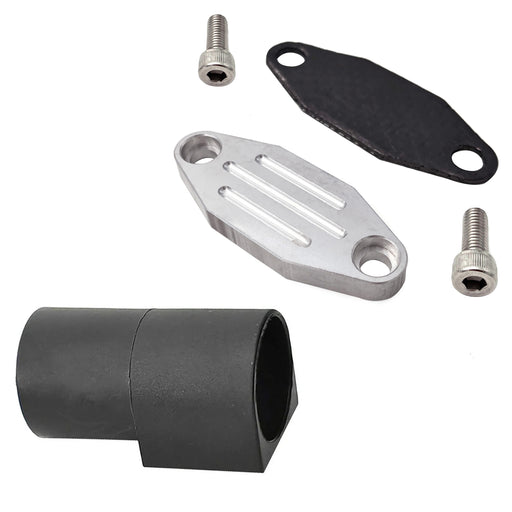
Seguler 1986-1995 Ford F150 F250 F350 Mustang Trucks EGR Simulator Eliminator / Block Off Plate Kit
SEGULEROriginal price $79.99 - Original price $79.99Original price$79.99$79.99 - $79.99Current price $79.99Block Off Plate Material: Aluminum alloy. Easy installation,and convenient to use. Made of CNC milled from aircraft grade Billet aluminum. Will N...
View full details -

Seguler 2011-2023 6.7L Ford Powerstroke Diesel EGR Delete Kit
SEGULEROriginal price $109.99 - Original price $109.99Original price$109.99$109.99 - $109.99Current price $109.99FITMENT 2011-2023 6.7L Ford Powerstroke F-250 F-350 F-450 F-550 Super Duty V8 Diesel. compatible with both standard Pickups and commercial Cab &...
View full details -
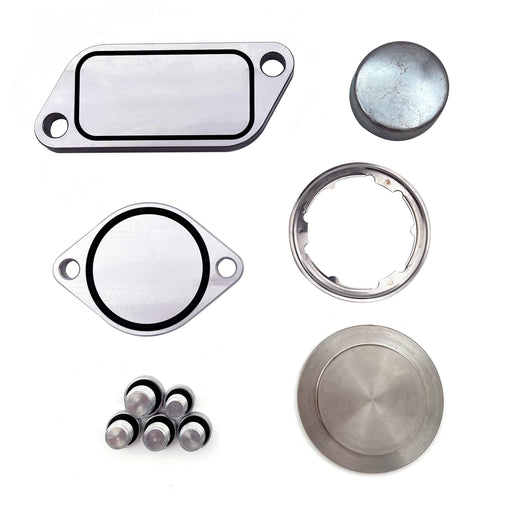
For 2010-Present Stage 2 ISX 15 CM2250 CM2350 EGR Delete Kit
SEGULEROriginal price $59.99 - Original price $59.99Original price$59.99$59.99 - $59.99Current price $59.99FITMENT 2010-Present Cummins Volvo, Peterbilt, Mack, International, Freightliner, Kenworth with the ISX15 CM2250 / CM2350 engines. DESCRIPTION P...
View full details -
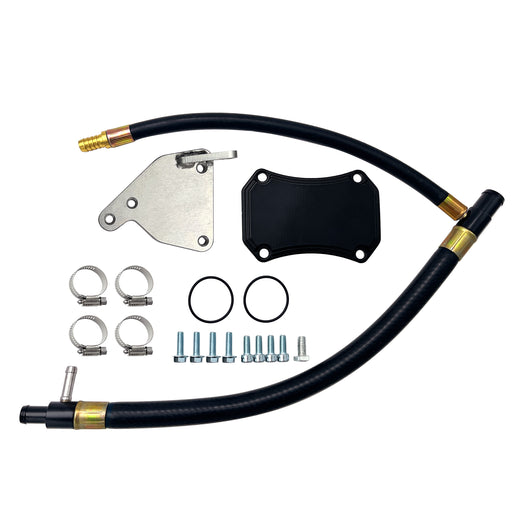
For 2011-2016 6.6L GMC Chevy Duramax Diesel LML EGR Valve Cooler Delete Kit
SEGULEROriginal price $66.49 - Original price $66.49Original price$66.49$66.49 - $66.49Current price $66.49FITMENT 2011-2016 6.6L Chevy GMC Duramax LML 2500 HD 3500 HD Diesel. DESCRIPTION Product Overview The 2011–2016 LML Duramax uses a complex EG...
View full details -
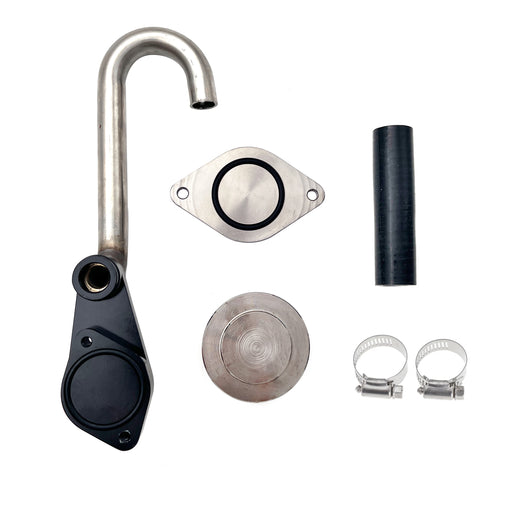
Seguler 2003-2007 6.0L FORD Powerstroke Diesel EGR Cooler Delete Kit
SEGULEROriginal price $56.14 - Original price $56.14Original price$56.14$56.14 - $56.14Current price $56.14FITMENT 2003-2007 6.0L Ford F-250 Ford F-350 F-450 F-550 Super Duty. 2003-2007 6.0L Ford Excursion SUV (Diesel Models Only). 2005-2010 Ford E-Se...
View full details -
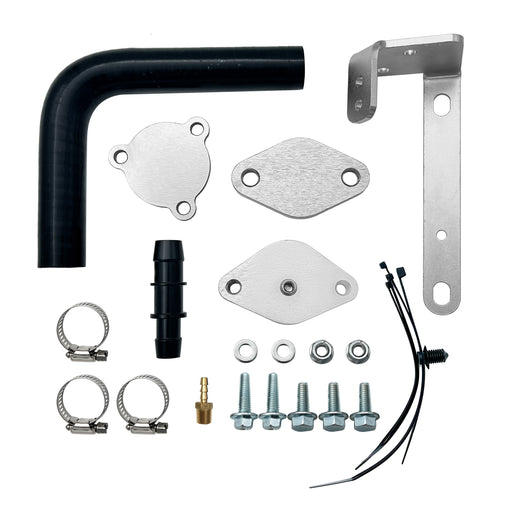
Seguler For 2014-2019 3.0L Dodge Ram 1500 EcoDiesel EGR Valve & Cooler Delete Kit
SEGULEROriginal price $72.99 - Original price $72.99Original price$72.99$72.99 - $72.99Current price $72.99FITMENT 2014-2019 3.0L Dodge Ram 1500 EcoDiesel V6 engine trucks. DESCRIPTION Product Overview Exhaust gas recirculation on 3.0L EcoDiesel V6 ...
View full details -

Seguler 2011-2023 6.7L Ford Powerstroke Diesel EGR Delete Kit
SEGULEROriginal price $85.99 - Original price $85.99Original price$85.99$85.99 - $85.99Current price $85.99FITMENT 2011-2023 6.7L Ford Powerstroke F-250 F-350 F-450 F-550 Super Duty V8 Diesel. compatible with both standard Pickups and commercial Cab &...
View full details -

Seguler 2010-2024 6.7L Dodge Ram Cummins Diesel EGR Valve Cooler Delete Kit
SEGULEROriginal price $89.99 - Original price $89.99Original price$89.99$89.99 - $89.99Current price $89.99FITMENT 2010–2024 6.7L Dodge Ram Cummins 2500 / 3500 Pickup Turbo Diesel. Note: Does NOT fit Chassis Cab 3500 / 4500 / 5500 models. DESCRIPTIO...
View full details -

Seguler 2017-2019 L5P Duramax Diesel 4pcs L5P Can Bus Plugs Connector Replacement
SEGULEROriginal price $75.00 - Original price $75.00Original price$75.00$75.00 - $75.00Current price $75.00FITMENT 2017–2019 Chevrolet Silverado / GMC Sierra Duramax L5P 2500HD & 3500HD Diesel. DESCRIPTION Product Overview Unprotected harness con...
View full details -
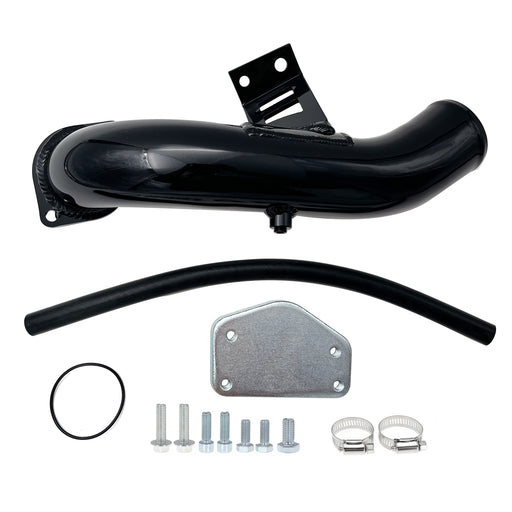
For 2004.5-2005 6.6L Chevy GMC Silverado LLY Duramax Diesel EGR Delete Kit
SEGULEROriginal price $92.99 - Original price $92.99Original price$92.99$92.99 - $92.99Current price $92.99FITMENT 2004.5-2005 6.6L Chevrolet Silverado Duramax LLY 2500HD / 3500 HD. 2004.5-2005 6.6L GMC Sierra Duramax LLY 2500HD / 3500 HD. DESCRIPTION...
View full details -

Seguler 2020-2023 chevy duramax L5P Diesel Can Bus Plugs Connector
SEGULEROriginal price $80.00 - Original price $80.00Original price$80.00$80.00 - $80.00Current price $80.00FITMENT 2020–2023 Chevrolet Silverado / GMC Sierra Duramax L5P 2500HD & 3500HD Diesel. DESCRIPTION Product Overview Unprotected harness pl...
View full details -
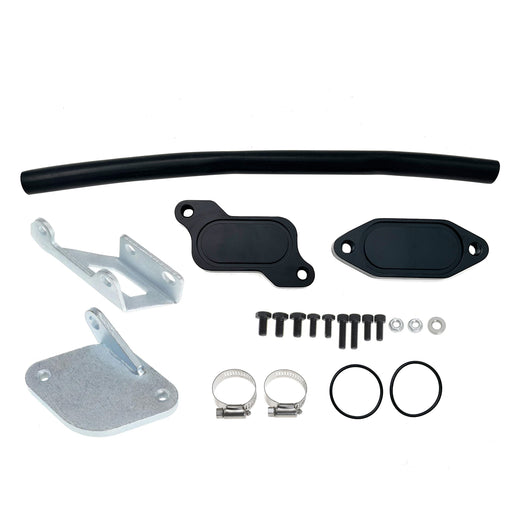
For 2006-2007 6.6L Chevrolet Silverado Classic GMC Duramax LBZ Diesel EGR Valve Cooler Delete Kit
SEGULEROriginal price $63.49 - Original price $63.49Original price$63.49$63.49 - $63.49Current price $63.49FITMENT 2006-2007.4 Chevrolet Silverado Duramax LBZ 2500HD / 3500HD. 2007.4 Chevrolet Silverado Duramax LBZ 2500HD / 3500HD Classic. 2006-2007.4 ...
View full details -

Seguler 2011-2023 6.7L Ford F250 F350 F450 F550 Powerstroke Diesel EGR Valve Delete Cooler Delete Kit
SEGULEROriginal price $55.99 - Original price $55.99Original price$55.99$55.99 - $55.99Current price $55.99FITMENT 2011-2023 6.7L Ford Powerstroke F-250 F-350 F-450 F-550 Super Duty V8 Diesel compatible with both standard Pickups and commercial Cab &a...
View full details -
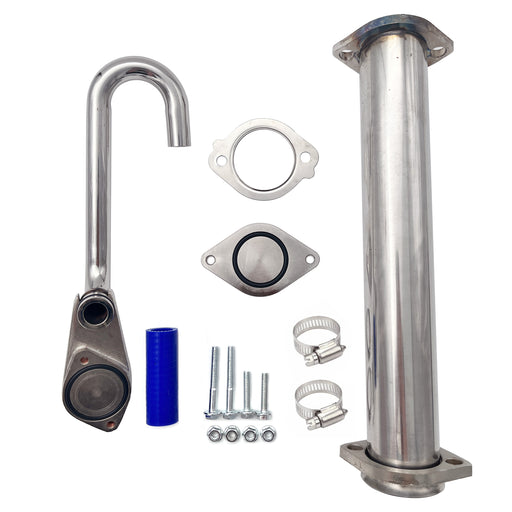
Seguler 2003-2007 6.0L Ford F250 F350 Powerstroke Diesel EGR Basic Cooler Kit
SEGULEROriginal price $79.99 - Original price $79.99Original price$79.99$79.99 - $79.99Current price $79.99FITMENT 2003-2007 6.0L Ford F250 F350 F450 F550 Super Duty Turbo (except 2004 F250 Super Duty). 2003-2005 6.0L Ford Excursion Turbo. 2005 Ford F...
View full details -
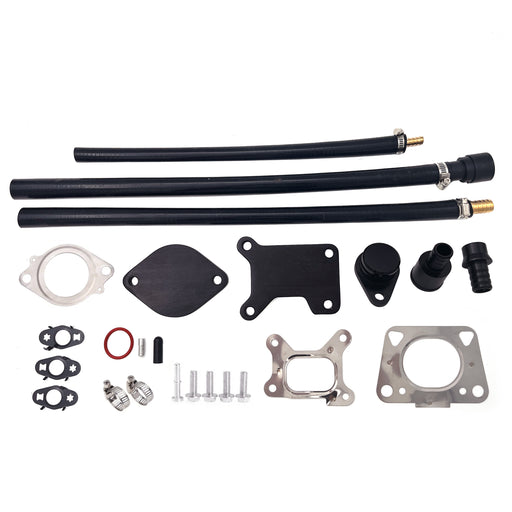
For 2017-2023 6.6L Chevy GMC Duramax L5P diesel EGR Valve Cooler Delete kit
SEGULEROriginal price $131.99 - Original price $131.99Original price$131.99$131.99 - $131.99Current price $131.99FITMENT 2017–2023 6.6L Chevrolet Silverado / GMC Sierra Duramax L5P 2500HD 3500HD Diesel. DESCRIPTION Product Overview Hot soot recirculation ...
View full details -
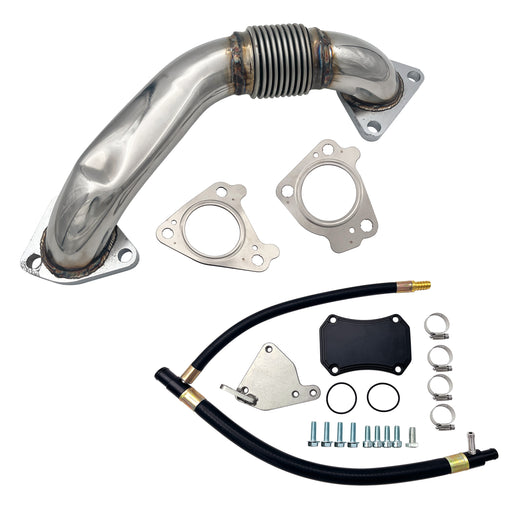
Seguler 2011-2016 6.6L GMC Chevy Duramax Diesel LML Up-Pipe & EGR Valve Cooler Delete Kit
SEGULEROriginal price $173.86 - Original price $173.86Original price$173.86$173.86 - $173.86Current price $173.86FITMENT 2011-2016 6.6L Chevy GMC Duramax LML 2500 HD 3500 HD Diesel. DESCRIPTION Product Overview Direct-injection technology endows GM 5.3L an...
View full details -
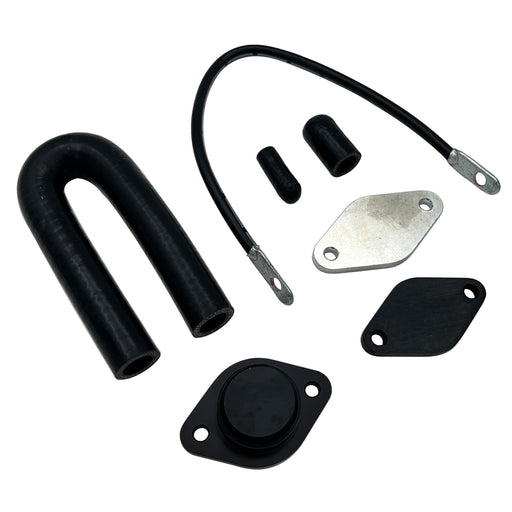
Seguler EGR valve cooler Delete kit for 2020-2022 3.0L Chevy Duramax LM2
SEGULEROriginal price $189.12 - Original price $189.12Original price$189.12$189.12 - $189.12Current price $189.12FITMENT 2020–2022 3.0L Chevrolet Silverado GMC Sierra 1500 LM2 Turbo-Diesel. DESCRIPTION Product Overview Powered by smooth inline-six engine...
View full details -
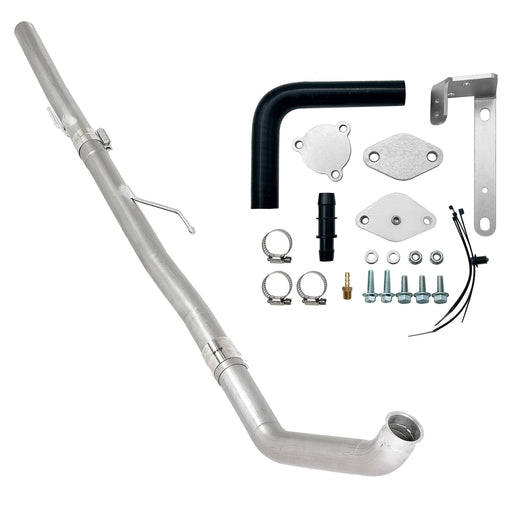
Seguler 3" Ecodiesel DPF Delete Pipe & EGR Delete kit for 2014-2018 3.0L Ram
SEGULEROriginal price $342.00 - Original price $342.00Original price$342.00$342.00 - $342.00Current price $342.00FITMENT 2014–2018 3.0L Dodge Ram 1500 EcoDiesel V6. NOTE: Fit standard Pickup models only (Crew Cab, Quad Cab). Does NOT fit Jeep Grand Cheroke...
View full details -

For 2013-2023 6.7L Dodge Ram Cummins Cab & Chassis EGR Delete Kit Diesel
SEGULEROriginal price $62.99 - Original price $62.99Original price$62.99$62.99 - $62.99Current price $62.99FITMENT 2013–2023 6.7L Ram Cummins 3500 4500 5500 Cab & Chassis / Commercial Trucks. Does NOT fit standard Ram 2500 3500 Pickups. DESCRIPTIO...
View full details -
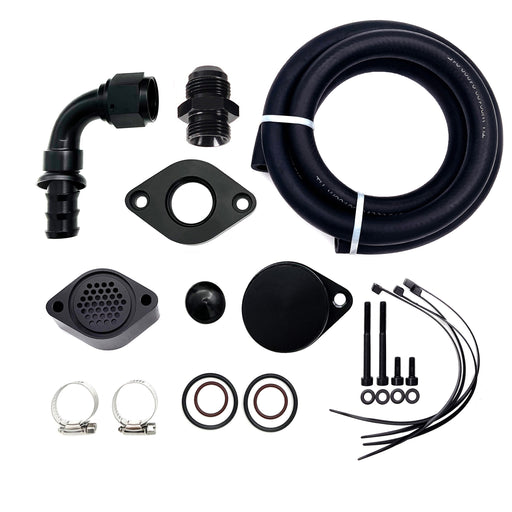
Seguler 2011-2023 6.7L Ford Powerstroke CCV PCV Reroute Engine Ventilation Kit
SEGULEROriginal price $82.99 - Original price $82.99Original price$82.99$82.99 - $82.99Current price $82.99FITMENT 2011-2023 6.7L Ford Powerstroke F-250 F-350 F-450 F-550 Super Duty V8 Diesel. Compatible with both standard Pickups and commercial Cab &...
View full details -
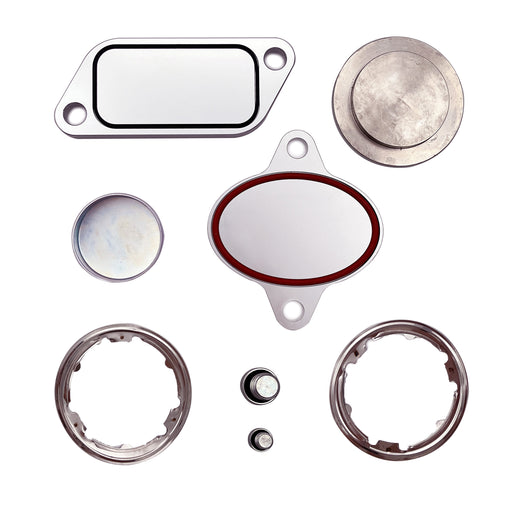
For 2007-2010 Cummins ISX CM871 EGR Plug Kit Stage 2 Plates and Plugs Aluminum
SEGULEROriginal price $67.99 - Original price $67.99Original price$67.99$67.99 - $67.99Current price $67.99FITMENT 2007-2010 Cummins Volvo, Peterbilt, Mack, International, Freightliner, Kenworth with the ISX CM871 Engines. DESCRIPTION Product Overvie...
View full details -
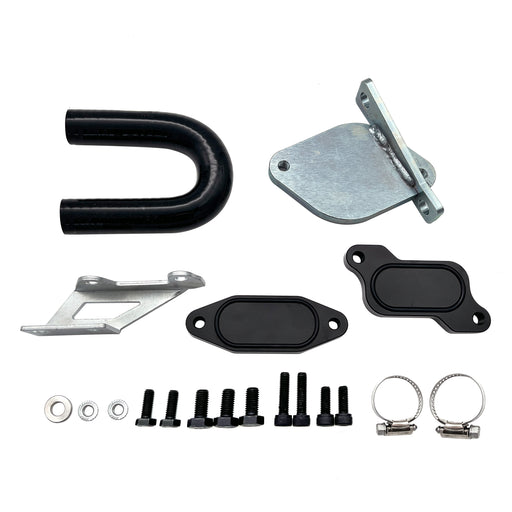
For 2007-2010 6.6L Chevy GMC LMM Duramax EGR Valve Cooler Delete Kit Fit
SEGULEROriginal price $61.99 - Original price $61.99Original price$61.99$61.99 - $61.99Current price $61.99FITMENT 2007.5-2010 6.6L Chevrolet Silverado Duramax LMM 2500HD / 3500HD. 2007.5-2010 6.6L GMC Sierra Duramax LMM 2500HD / 3500HD. Note: Standard...
View full details -
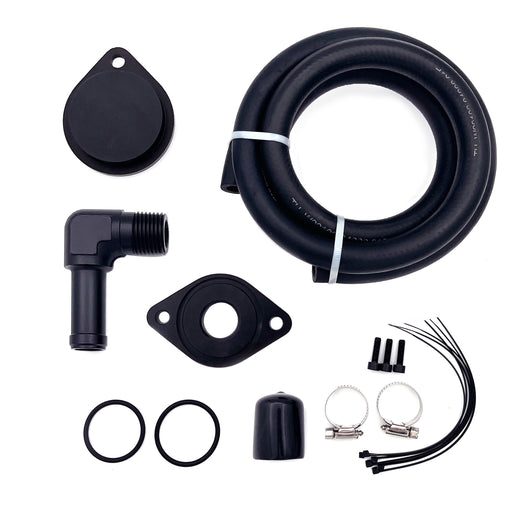
Seguler 2011-2023 Ford 6.7L Powerstroke CCV/PCV Reroute/Delete Engine Ventilation Kit
SEGULEROriginal price $72.00 - Original price $72.00Original price$72.00$72.00 - $72.00Current price $72.00FITMENT 2011-2023 6.7L Ford Powerstroke F-250 F-350 F-450 F-550 Super Duty V8 Diesel. Compatible with both standard Pickups and commercial Cab &...
View full details -
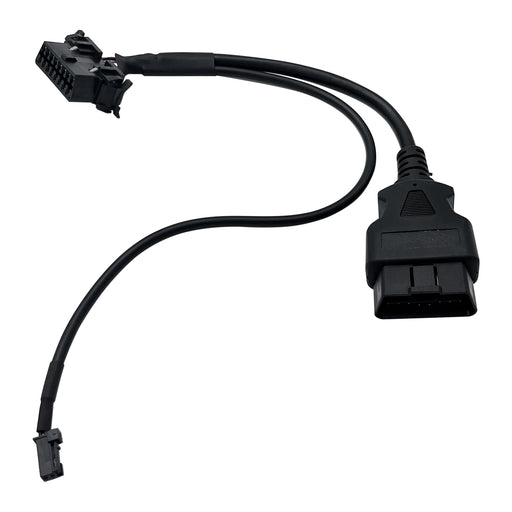
Seguler 2018+ RAM Cummins OBD2 HD Security Gate Bypass Cable
SEGULEROriginal price $45.00 - Original price $45.00Original price$45.00$45.00 - $45.00Current price $45.00FITMENT 2018+ 6.7L Ram Cummins 2500 3500 Turbo Diesel. Designed for Ram pickup trucks equipped with the factory Security Gateway Module. Note: Pl...
View full details -
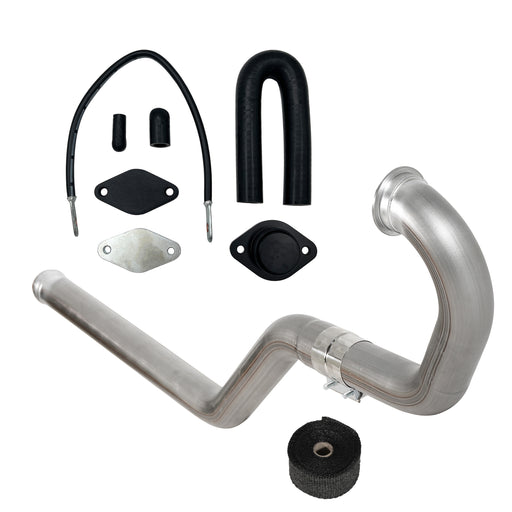
3" Turbo Back DPF & EGR Delete Kit for 2020-2022 GM 3.0L LM2 Duramax
SEGULEROriginal price $550.00 - Original price $550.00Original price$550.00$550.00 - $550.00Current price $550.00FITMENT 2020–2022 3.0L Chevrolet Silverado 1500 LM2 Diesel. 2020–2022 3.0L GMC Sierra 1500 LM2 Diesel. DESCRIPTION Product Overview On the 3.0...
View full details


Leave a comment