

Stainless Steel vs. Aluminum 6.7L Powerstroke DPF Delete — Why consider It?
You’ve made the call to delete the DPF on your 6.7L Powerstroke. Now comes the part that trips up more owners than the delete itself: choosing the right pipe. And before you start comparing stainless to aluminum, you need to know that “aluminum” isn’t aluminum — and that the material is the one choice on the list that quietly decides whether this delete lasts three winters or ten.
A delete is already an expensive, high-stakes job. Getting the pipe wrong means paying for it twice — and carrying the legal exposure twice — when it rusts out and has to come back off the truck.
This guide walks you through every choice you’ll face once you’ve decided to delete, then zooms in on the one that matters most: the material.
You’ve Decided to Delete — Here’s What You Actually Have to Choose
Once the DPF is coming off, you’re not just buying “a pipe.” You’re making five separate decisions that all interact, and getting any one of them wrong can turn a clean delete into a truck on jack stands.
1. Diameter: 4-Inch or 5-Inch?
-
4-inch is the default for a daily driver or a towing rig. It flows plenty for a mild to moderate tune, keeps low-end response, and is quieter in the cab. It’s also the diameter that bolts cleanly to the stock tailpipe on a mid-section replacement.
-
5-inch is for the truck that’s actually making big power — a hot tune, heavy fueling, or a competition build — or for the owner who wants the deepest, loudest note possible. The trade-off is cab drone at highway speed and a small low-RPM torque penalty on a stock-ish tune.
Match the diameter to what the truck actually is, not to what sounds coolest.
2. Coverage: Mid-Section Pipe or Downpipe-Back?
-
Mid-section (DPF/CAT delete) pipe replaces only the restrictive DPF and catalyst assembly, and bolts to your existing tailpipe. It’s the value play — you get the delete’s benefits without paying for a full exhaust.
-
Downpipe-back system replaces everything behind the turbo downpipe with a larger, free-flowing section and typically drops the muffler. It’s the full-volume option for tuned or high-horsepower builds.
3. Fitment: Year, Cab, and Cab & Chassis
The 6.7L Powerstroke spans 2011 through 2023 across multiple generations, and a pipe listed as “fits 6.7L” is not a guarantee. Confirm your exact year, cab configuration, and bed length — and note that Cab & Chassis commercial trucks route exhaust differently and require a specific pipe.
4. The Tuner
No delete pipe works without a matched delete tune. The tune disables the DPF/EGR/DEF monitors and prevents the check engine light and limp mode that follow any sensor removal. Plan the tuner before you plan the pipe — it’s non-negotiable regardless of which pipe you pick.
5. Material: Aluminized Steel, T409, or T304
This is the one most buyers skip — and it’s the one that decides how long the whole thing lasts. A pipe that rusts through in three seasons means you repeat the entire delete, legal exposure included. That’s the choice the rest of this guide is about.
The One Choice Most People Get Wrong: Material
The single most important correction in the entire stainless-vs-aluminum debate is that there is no aluminum DPF delete pipe. What gets sold as “aluminum” is aluminized steel — ordinary mild steel with a thin aluminum-silicon coating baked onto the surface to slow corrosion.
The difference matters more than it sounds, and the physics is unforgiving:
-
Real aluminum goes soft above roughly 400°F. Exhaust gas temperatures on a working 6.7L — especially one towing — run far hotter than that, every single time the turbo is loaded. A genuine aluminum exhaust pipe would anneal, sag, and fail almost immediately.
-
Stainless steel holds up to 800°F and beyond, which is exactly why every exhaust system — factory or aftermarket — that lives near the turbo is steel-based, not aluminum-based.
So when a listing says “aluminum delete pipe,” it’s shorthand for aluminized steel. The base metal is still steel. The only thing “aluminum” about it is the coating — and that coating is thin enough to scratch with a fingernail. One ding from road debris, one chip at a weld seam, and the bare steel underneath starts rusting like any other mild-steel part.
This isn’t a nitpick. It’s the difference between understanding what you’re actually buying and paying “aluminum” money for what is, underneath, the cheapest exhaust steel on the market.
The Three Materials You’ll Actually Find
Forget the two-way split the title implies. There are three materials in play on 6.7L delete pipes, and they sit on a clear spectrum of durability and price.
| Material | Typical Life | Salt / Corrosion | Relative Cost | Best For |
|---|---|---|---|---|
| Aluminized Steel | 2–4 years (shorter in salt) |
Weak — once the coating chips, the steel rusts |
Lowest |
Short-term trucks, dry climates |
| T409 Stainless | Years — resists rusting |
Good — surface rust are normal, won’t rot it |
Middle |
Work trucks, four-season climates |
| T304 Stainless | Longest |
Best — resists surface corrosion and pitting |
Highest |
Coastal, salt-belt, long-term keepers |
Aluminized Steel — The Value Option
Aluminized steel is mild steel with an aluminum-silicon coating. It’s the cheapest delete pipe material for a reason: it costs less to produce, and it keeps the retail price down.
-
Expected service life: 2–4 years for a daily-driven truck, and often less in road-salt states.
-
The coating does its job until it’s scratched, chipped by gravel, or worn through at a weld. After that, the bare steel rusts from the surface in.
-
It’s a defensible choice for a truck you’re selling within a couple of years, or one that lives its whole life in a dry climate and never sees salt.
T409 Stainless — The Practical Middle
T409 is a ferritic stainless with enough chromium to give it real corrosion resistance, without the nickel content that drives 304’s price up. It’s the workhorse of the diesel aftermarket for a reason.
-
Surface rust freckles are normal, not a defect. T409 forms a light brown oxide patina on the surface over time — this is exactly how it protects itself. It looks “rusty” but it is not rusting through.
-
It handles road salt, moisture, and constant heat cycling far better than aluminized steel.
-
It’s the sweet spot for work trucks and daily drivers in four-season climates: most of 304’s longevity at a meaningfully lower price.
T304 Stainless — The Long-Term Option
T304 adds nickel on top of the chromium, which is what gives it the highest corrosion resistance of the three — including resistance to the pitting that eventually eats through 409 and aluminized in the harshest conditions.
-
It’s the material specified for marine hardware and coastal architecture for the same reason it’s the top pick for a delete pipe on a truck that lives near the ocean.
-
It resists surface discoloration longer, and it’s the choice for someone who wants to install the pipe once and never think about it again.
-
The trade-off is price — T304 carries the highest sticker of the three, and some owners report it heat-tints (turns a straw/gold color) over time.
The Price Gap Is Smaller Than You Think
Here’s the part that surprises most buyers: the jump from aluminized steel to stainless is a lot cheaper than the “premium metal” label suggests — and the jump to T304 is where the price actually climbs.
-
Aluminized to T409 is a small premium. Real forum numbers from owners buying delete pipes put the gap at roughly $30–$80 on a single pipe — sometimes less. That’s the difference between a pipe that rusts out in a few seasons and one that survives the truck, and it’s pocket change next to the cost of doing the job twice.
-
T409 to T304 is the real price step. Owners who’ve spec’d 304 consistently report it’s not a $50 upgrade — on a downpipe-back system, 304 can run close to double the 409 price. That’s the premium you only pay if you’re coastal, long-term, or chasing maximum corrosion resistance.
-
Diameter and coverage move the price more than material does. A 5-inch downpipe-back system costs dramatically more than a 4-inch mid-section pipe regardless of what metal it’s made from. When you see a big price gap between two pipes, most of it is usually diameter and coverage — not the stainless-versus-aluminized choice.
The takeaway:
If you’re choosing between aluminized and T409, the material upgrade is almost free on a single pipe, and it buys you years of extra life. It’s the closest thing to a no-brainer in the whole delete-pipe decision. T304 is a different story — worth it for the right truck and climate, but a real expense you should justify rather than default to.
Corrosion Comes From Outside, Not Inside
Here’s a counterintuitive fact that reframes the whole material decision: a diesel exhaust pipe corrodes from the outside in, not the inside out.
The inside of a deleted 6.7L pipe quickly picks up a thin soot coating, and that soot actually acts as a protective barrier against the acidic vapors in the exhaust stream. The enemy isn’t what’s flowing through the pipe — it’s what’s being thrown up at it from the road.
Road-salt States (Midwest, Northeast, any snow belt):
Salt brine sprayed up from the road settles on the underside of the pipe and works into weld seams, clamp joints, and any place the coating or surface finish has been compromised. Aluminized pipes in these states routinely show visible rust within two winters. This is where T409 — and for the worst cases — earns its premium.
Coastal Regions (Gulf states, either coastline):
Salt air works differently than road salt but attacks aluminized steel the same way: constant low-level chloride exposure that eventually breaks the coating down. T409 is formulated specifically to resist this.
Dry climates (Arizona, Nevada, West Texas):
With minimal salt and low humidity, the corrosion gap between materials narrows dramatically. Aluminized can hold up reasonably well for years because the environment simply isn’t working against it. Heat cycling and weld quality still matter, but the corrosion argument for stainless largely disappears.
What the Forums Actually Say (Both Sides)
The “stainless isn’t worth it” camp — almost always from the South or dry climates — argues that without road salt, the extra money buys nothing. Their logic holds up: if you live where the truck never sees salt or salt air, aluminized steel can run for years with nothing but a dull finish.
The “stainless, no question” camp — almost always from the snow belt — has seen too many aluminized pipes rot out to ever go back. Their consensus is consistent: T409 will develop surface rust but won’t rust through, while 304 won’t even surface-rust.
The through-line in all of it: match the material to your climate and your holding period, not to a brand’s claim. There is no single “best” material — there’s a best material for your situation.
The Real Question: How Long Are You Keeping the Truck?
Strip away the marketing and the material decision comes down to one honest question: how long is this truck going to be yours?
-
Keeping it under three years: Aluminized is usually fine. You’ll sell the truck before the pipe becomes your problem, and you save money up front.
-
Keeping it five years or more: T409 or T304 pays for itself. The math is simple — one stainless install beats two aluminized installs over the same window, even with the higher sticker on day one.
And that’s the cost that gets missed. The number nobody puts on the product page is the second install. If an aluminized pipe fails at year three, you’re paying for another round of labor — whether that’s your own weekend or a shop bill — plus a second pipe, plus another round of the legal and logistical hassle that comes with a delete.
Why Material Matters More on a 6.7L Delete
A delete pipe isn’t a cosmetic accessory. On a 6.7L Powerstroke, the material question carries more weight than it does on, say, a cat-back system on a gas truck, for three reasons.
First, the temperatures are brutal
The 6.7L runs a VGT turbo, and a deleted, tuned truck under load pushes exhaust gas temperatures high and sustained. Every heat cycle — hot, then cold, then hot again — stresses the welds more than the pipe body. Thin-gauge aluminized pipe with inconsistent welds is far more likely to develop stress cracks at the seams after repeated cycling, especially on a towing truck where EGTs run higher and longer.
Second, a delete is already an expensive, high-stakes decision.
You’ve paid for the hardware, the tuner, the install — and you’ve accepted the legal exposure that comes with running a deleted truck. If the pipe rusts through in three seasons, you don’t just buy a new pipe. You repeat the entire exercise, exposure included. Spending a little more on material the first time is cheap insurance against doing the whole thing twice.
Third, you’re removing the very component that was hiding the corrosion.
The factory DPF/SCR assembly is a big, heavy stainless-and-ceramic unit that, for all its maintenance headaches, doesn’t rot. Once it’s gone and replaced with a thin aftermarket pipe, the pipe becomes the corrosion surface. There’s nothing downstream of it but open road — so the material you pick is the only thing standing between the exhaust and the salt.
TruckTok’s 6.7L Powerstroke delete pipes make the material decision for you — and they make it the same way on both ends of the diameter spectrum. Both are built from T409 stainless steel, not aluminized steel. That’s a deliberate call: T409 gives you the durability to survive road salt and punishing EGTs without the T304 price tag, which is the sensible middle ground for a delete pipe that has to earn its keep.
The Products: Two Pipes, One Material
2011-2023 6.7L Ford powerstroke 4" DPF Delete Pipe SuperDuty Exhaust
The TruckTok 2011–2023 6.7L Ford 4" DPF Delete Pipe is the value play — a single free-flowing 4" section that replaces the restrictive CAT and DPF assembly and bolts straight to your factory tailpipe. You keep the stock rear pipe and tip, so you get the delete’s benefits without paying for a full-length exhaust system.

- T409 stainless construction built to hold up to intense EGTs and road conditions, with rust resistance that aluminized steel can’t match.
- Retains the factory tailpipe, which keeps cost down and preserves a factory-style exit.
- Eliminates the four fragile DPF sensors that rust, fail, and trigger limp mode — the straight pipe removes those failure points entirely.
- Fits 2011–2023 F-250/F-350/F-450 Super Duty pickups (crew cab short or long bed); does not fit Cab & Chassis commercial trucks.
This is the right pick for the owner who wants the delete done properly, on a reasonable budget, and plans to keep the truck for years — the T409 pipe won’t rust out the way an aluminized one would.
2011-2022 6.7L Ford Powerstroke 5" Down-pipe Back DPF Delete Pipe
The 2011–2022 6.7L Ford 5" Downpipe-Back DPF Delete Pipe is the full-volume option for a tuned, modified, or high-horsepower build. It replaces everything behind the turbo downpipe with a 5" straight-through system and drops the muffler entirely.

- T409 stainless throughout, built for punishing exhaust gas temperatures, road salt, and harsh winter conditions.
- Oversized 5" flow that maximizes exhaust volume and velocity for tuned or high-horsepower trucks that need maximum turbo breathing room.
- Fixes oil dilution at the source by permanently eliminating the active regeneration cycles that push unburnt diesel past the rings.
- Fits 2011–2022 F-250/F-350/F-450 Super Duty pickups; does not fit Cab & Chassis commercial trucks. Bolts to your factory downpipe flange (a separate turbo downpipe is sold for a true turbo-back setup).
The thread that ties both pipes together: neither one cuts corners on material. Where a budget listing might spec aluminized steel to shave the sticker price, TruckTok runs T409 across the board — because a delete pipe that survives the truck is the only kind worth installing.
What Happens When a Delete Pipe Rusts Out
If the material is the wrong call, the failure isn’t sudden — it’s a slow, staged deterioration that gets more expensive and more dangerous the longer it’s ignored. Here’s how it plays out, in the order you’ll actually notice it.
It Starts Quiet: Exhaust Leaks and Soot Stains
The first sign is usually cosmetic — surface rust freckles that, on aluminized steel, mean the coating has already been breached. From there the pitting works inward until it breaches the wall, and exhaust starts seeping out of a pinhole you can’t hear over the engine. You’ll spot it first as a soot stain, then as a faint ticking or hiss that slowly grows louder.
Then It Gets Noisy and Loose
Rust attacks the welds and the hangers harder than the pipe body. As clamps and hangers corrode, the pipe starts to rattle against the frame, buzz under load, and hang loose. The same heat cycling that stresses the metal also cracks the now-weakened weld seams, and what started as a pinhole becomes a visible gap.
The Dangerous Part: Exhaust Gas Where It Doesn’t Belong
A delete pipe lives under the cab and bed, right alongside wiring, brake lines, and the fuel tank. Once it leaks, exhaust — with its soot, NOx, and hydrocarbons — is venting into that space instead of out the tailpipe. On a diesel the carbon-monoxide risk is lower than on a gas engine because diesels run lean, but the particulate and odor that get pulled into the cab are still a genuine health and comfort problem, especially on a long tow. A hot leak aimed at a wiring harness or a brake line is a bigger issue still.
The Endgame: A Pipe That Comes Apart
The final stage is structural — a weld fails completely, a rusted section breaks, and the pipe drops. That’s a chunk of exhaust hanging off the truck or, worse, coming loose on the road at speed. It’s most likely to happen exactly when the pipe is working hardest: towing, hot, and under sustained vibration.
And Then You Pay for It All Over Again
Every stage of this lands you back at the same place: a second pipe, a second install, and — because a delete is a delete — a second round of the same legal exposure you already accepted once. The material decision isn’t really about how the pipe looks after a few winters. It’s about when, and how badly, it fails — and whether you end up paying for the job twice.
The Legal Reality
Before you commit to any of this, the material question is the last legal consideration — the first one is whether you can legally run a deleted truck at all.
Removing or tampering with emissions equipment on a street-driven vehicle violates the federal Clean Air Act under 42 U.S.C. § 7522, and EPA regulations under 40 CFR Part 86. Individual penalties can reach $5,911 per violation, and states with OBD-II readiness checks or visual inspections — California, New York, Colorado, Maine, and others — will fail a deleted truck outright. There is no “off-road” or “race use” label that creates an automatic legal exemption for a truck originally certified for street use.
Everything in this article — materials, diameters, installs, longevity — is presented in the context of off-road, competition, or closed-course use where permitted by law. It’s your responsibility to know and comply with your local and state regulations before modifying any emissions system.
Conclusion
The “stainless vs. aluminum” question on a 6.7L DPF delete pipe is really a question about how long you want the delete to last — and whether you want to pay for it once or twice.
Strip it down and the decision is a three-way fork:
-
Aluminized steel if the truck is short-term, lives in a dry climate, and the up-front savings matter more than longevity. Just know you’re buying a pipe with a 2–4 year clock on it in the wrong environment.
-
T409 stainless if you’re keeping the truck, driving in four-season or salt-belt conditions, and want most of the durability without the premium price. Expect surface rust freckles — they’re the material doing its job, not failing.
-
T304 stainless if you’re near the coast, keeping the truck long-term, and want the pipe to outlive the rest of the exhaust. You’ll pay for it, but you’ll install it once.
For 6.7L Powerstroke delete pipes built from T409 stainless — so the pipe survives the truck, not the other way around — head to SEGULER. TruckTok carries year-matched DPF delete pipes, EGR delete kits, and full exhaust systems for the 2011–2023 Super Duty platform, every one built for the heat, salt, and workload a deleted 6.7L actually sees. If you’re going to delete it, delete it with a pipe that’s in it for the long haul.
Frequently Asked Questions
Q1: Is an “aluminum” delete pipe actually made of aluminum?
A: No. It’s aluminized steel — ordinary mild steel with a thin aluminum-silicon coating. Real aluminum goes soft above roughly 400°F, far below exhaust temperatures, so no functioning exhaust pipe is made of it.
Q2: Why does my T409 stainless pipe have rust spots on it?
A: T409 forms a light brown surface oxide as a protective layer — those freckles are normal and do not mean it’s rusting through. It’s the trade-off for 409’s lower price versus 304’s nickel content.
Q3: How long will an aluminized delete pipe last?
A: Roughly 2–4 years for a daily driver, and often less in road-salt states. Once the coating is scratched or worn through at a weld, the bare steel underneath rusts like any mild-steel part.
Q4: Which material is best for a road-salt state?
A: T409 or T304 stainless. Aluminized steel in the snow belt commonly shows visible rust within two winters, while T409 holds up structurally and T304 resists surface corrosion entirely.
Q5: Does the pipe material affect sound or performance?
A: Not meaningfully. Diameter, muffler choice, and whether it’s straight-through drive the tone and flow far more than the metal itself. Material changes durability and cost, not the install or the output.
Q6: Do I need a tuner regardless of which material I pick?
A: Yes. Removing the DPF and its sensors will trigger a check engine light and limp mode without a delete tune. The material decision is separate from — and no substitute for — proper calibration.
Q7: Is a 5-inch pipe always better than 4-inch?
A: No. 5-inch is for tuned, high-horsepower builds or maximum exhaust note. A stock-tune daily driver gains little from 5-inch flow and picks up cab drone and a small low-RPM torque penalty instead.
Q8: Is it legal to run a deleted 6.7L on the street?
A: No. Removing emissions equipment violates the Clean Air Act (42 U.S.C. § 7522), with individual fines up to $5,911, and deleted trucks fail inspection in states with OBD-II or visual checks. These parts are for off-road or competition use only.
Featured collection
-
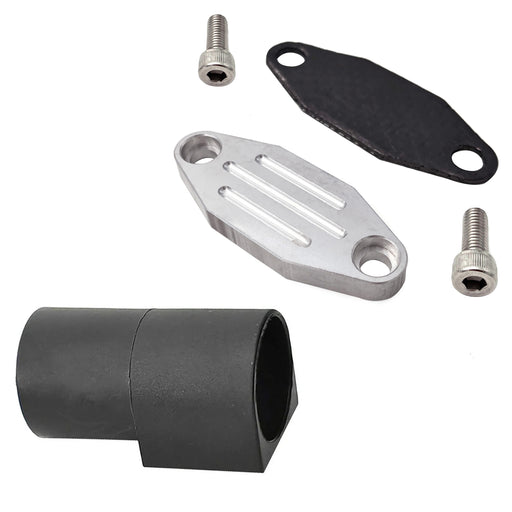
Seguler 1986-1995 Ford F150 F250 F350 Mustang Trucks EGR Simulator Eliminator / Block Off Plate Kit
SEGULEROriginal price $79.99 - Original price $79.99Original price$79.99$79.99 - $79.99Current price $79.99Block Off Plate Material: Aluminum alloy. Easy installation,and convenient to use. Made of CNC milled from aircraft grade Billet aluminum. Will N...
View full details -

Seguler 2011-2023 6.7L Ford Powerstroke Diesel EGR Delete Kit
SEGULEROriginal price $109.99 - Original price $109.99Original price$109.99$109.99 - $109.99Current price $109.99FITMENT 2011-2023 6.7L Ford Powerstroke F-250 F-350 F-450 F-550 Super Duty V8 Diesel. compatible with both standard Pickups and commercial Cab &...
View full details -
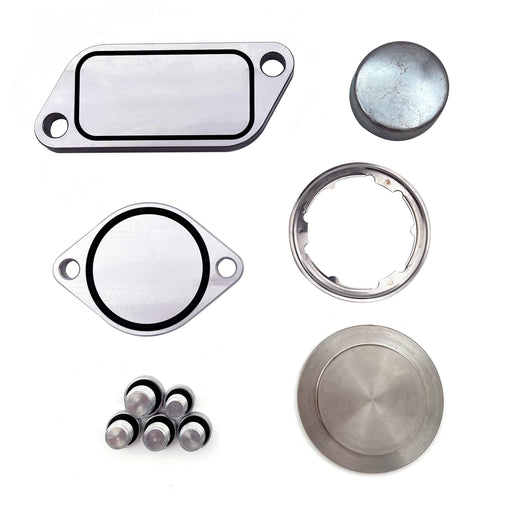
For 2010-Present Stage 2 ISX 15 CM2250 CM2350 EGR Delete Kit
SEGULEROriginal price $59.99 - Original price $59.99Original price$59.99$59.99 - $59.99Current price $59.99FITMENT 2010-Present Cummins Volvo, Peterbilt, Mack, International, Freightliner, Kenworth with the ISX15 CM2250 / CM2350 engines. DESCRIPTION P...
View full details -
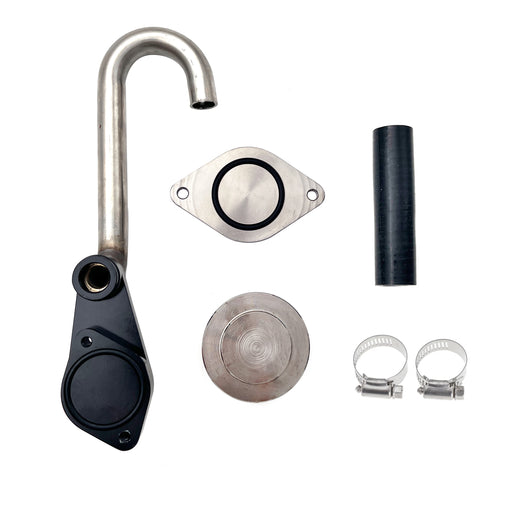
Seguler 2003-2007 6.0L FORD Powerstroke Diesel EGR Cooler Delete Kit
SEGULEROriginal price $56.14 - Original price $56.14Original price$56.14$56.14 - $56.14Current price $56.14FITMENT 2003-2007 6.0L Ford F-250 Ford F-350 F-450 F-550 Super Duty. 2003-2007 6.0L Ford Excursion SUV (Diesel Models Only). 2005-2010 Ford E-Se...
View full details -
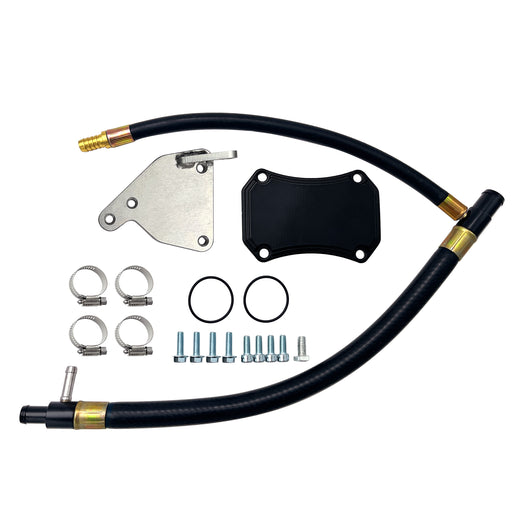
For 2011-2016 6.6L GMC Chevy Duramax Diesel LML EGR Valve Cooler Delete Kit
SEGULEROriginal price $66.49 - Original price $66.49Original price$66.49$66.49 - $66.49Current price $66.49FITMENT 2011-2016 6.6L Chevy GMC Duramax LML 2500 HD 3500 HD Diesel. DESCRIPTION Product Overview The 2011–2016 LML Duramax uses a complex EG...
View full details -
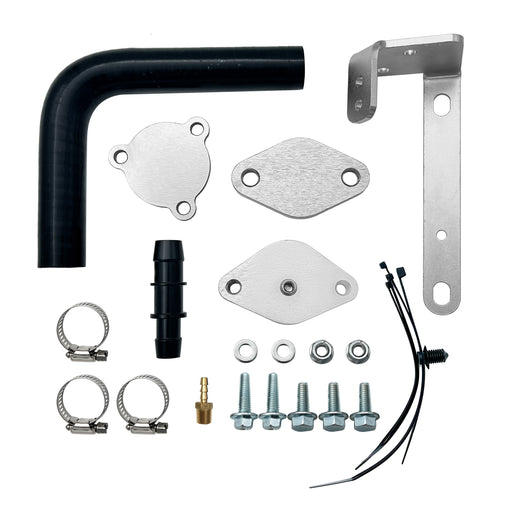
Seguler For 2014-2019 3.0L Dodge Ram 1500 EcoDiesel EGR Valve & Cooler Delete Kit
SEGULEROriginal price $72.99 - Original price $72.99Original price$72.99$72.99 - $72.99Current price $72.99FITMENT 2014-2019 3.0L Dodge Ram 1500 EcoDiesel V6 engine trucks. DESCRIPTION Product Overview Exhaust gas recirculation on 3.0L EcoDiesel V6 ...
View full details -

Seguler 2011-2023 6.7L Ford Powerstroke Diesel EGR Delete Kit
SEGULEROriginal price $85.99 - Original price $85.99Original price$85.99$85.99 - $85.99Current price $85.99FITMENT 2011-2023 6.7L Ford Powerstroke F-250 F-350 F-450 F-550 Super Duty V8 Diesel. compatible with both standard Pickups and commercial Cab &...
View full details -

Seguler 2010-2024 6.7L Dodge Ram Cummins Diesel EGR Valve Cooler Delete Kit
SEGULEROriginal price $89.99 - Original price $89.99Original price$89.99$89.99 - $89.99Current price $89.99FITMENT 2010–2024 6.7L Dodge Ram Cummins 2500 / 3500 Pickup Turbo Diesel. Note: Does NOT fit Chassis Cab 3500 / 4500 / 5500 models. DESCRIPTIO...
View full details -
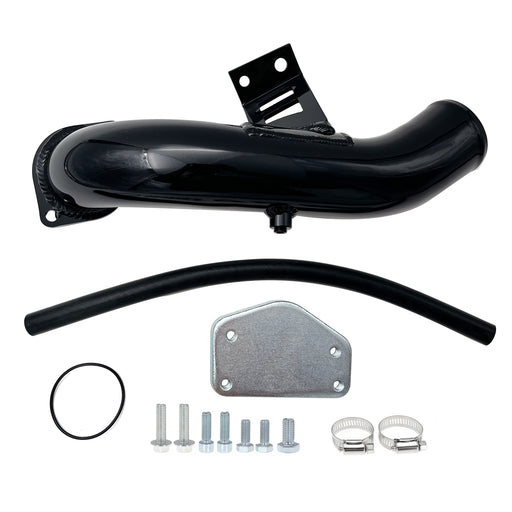
For 2004.5-2005 6.6L Chevy GMC Silverado LLY Duramax Diesel EGR Delete Kit
SEGULEROriginal price $92.99 - Original price $92.99Original price$92.99$92.99 - $92.99Current price $92.99FITMENT 2004.5-2005 6.6L Chevrolet Silverado Duramax LLY 2500HD / 3500 HD. 2004.5-2005 6.6L GMC Sierra Duramax LLY 2500HD / 3500 HD. DESCRIPTION...
View full details -

Seguler 2017-2019 L5P Duramax Diesel 4pcs L5P Can Bus Plugs Connector Replacement
SEGULEROriginal price $75.00 - Original price $75.00Original price$75.00$75.00 - $75.00Current price $75.00FITMENT 2017–2019 Chevrolet Silverado / GMC Sierra Duramax L5P 2500HD & 3500HD Diesel. DESCRIPTION Product Overview Unprotected harness con...
View full details -

Seguler 2020-2023 chevy duramax L5P Diesel Can Bus Plugs Connector
SEGULEROriginal price $80.00 - Original price $80.00Original price$80.00$80.00 - $80.00Current price $80.00FITMENT 2020–2023 Chevrolet Silverado / GMC Sierra Duramax L5P 2500HD & 3500HD Diesel. DESCRIPTION Product Overview Unprotected harness pl...
View full details -
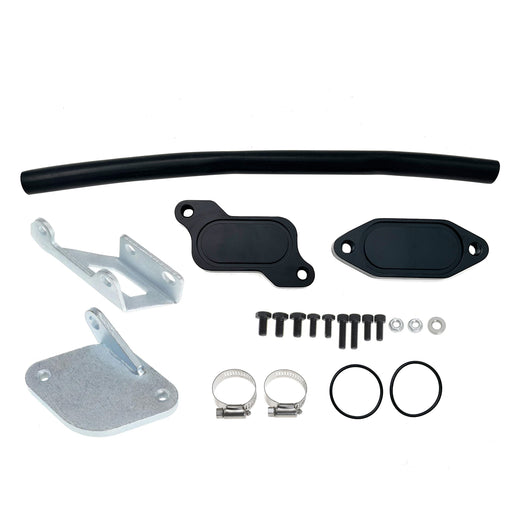
For 2006-2007 6.6L Chevrolet Silverado Classic GMC Duramax LBZ Diesel EGR Valve Cooler Delete Kit
SEGULEROriginal price $63.49 - Original price $63.49Original price$63.49$63.49 - $63.49Current price $63.49FITMENT 2006-2007.4 Chevrolet Silverado Duramax LBZ 2500HD / 3500HD. 2007.4 Chevrolet Silverado Duramax LBZ 2500HD / 3500HD Classic. 2006-2007.4 ...
View full details -
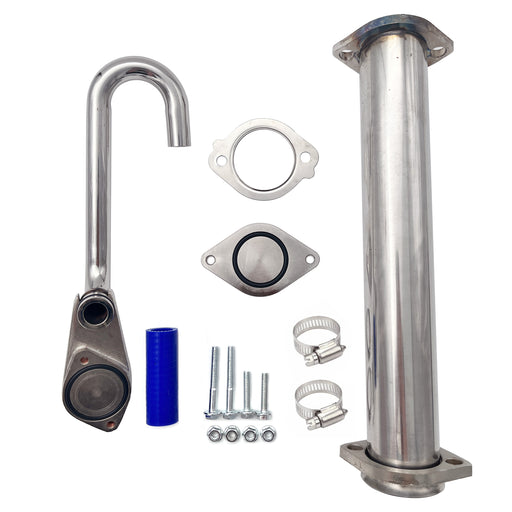
Seguler 2003-2007 6.0L Ford F250 F350 Powerstroke Diesel EGR Basic Cooler Kit
SEGULEROriginal price $79.99 - Original price $79.99Original price$79.99$79.99 - $79.99Current price $79.99FITMENT 2003-2007 6.0L Ford F250 F350 F450 F550 Super Duty Turbo (except 2004 F250 Super Duty). 2003-2005 6.0L Ford Excursion Turbo. 2005 Ford F...
View full details -

Seguler 2011-2023 6.7L Ford F250 F350 F450 F550 Powerstroke Diesel EGR Valve Delete Cooler Delete Kit
SEGULEROriginal price $55.99 - Original price $55.99Original price$55.99$55.99 - $55.99Current price $55.99FITMENT 2011-2023 6.7L Ford Powerstroke F-250 F-350 F-450 F-550 Super Duty V8 Diesel compatible with both standard Pickups and commercial Cab &a...
View full details -
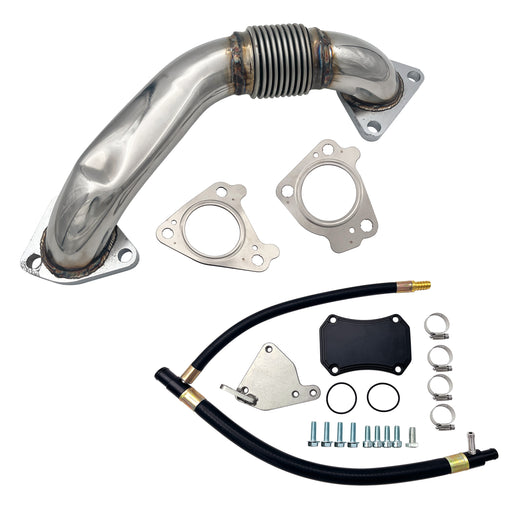
Seguler 2011-2016 6.6L GMC Chevy Duramax Diesel LML Up-Pipe & EGR Valve Cooler Delete Kit
SEGULEROriginal price $173.86 - Original price $173.86Original price$173.86$173.86 - $173.86Current price $173.86FITMENT 2011-2016 6.6L Chevy GMC Duramax LML 2500 HD 3500 HD Diesel. DESCRIPTION Product Overview Direct-injection technology endows GM 5.3L an...
View full details -
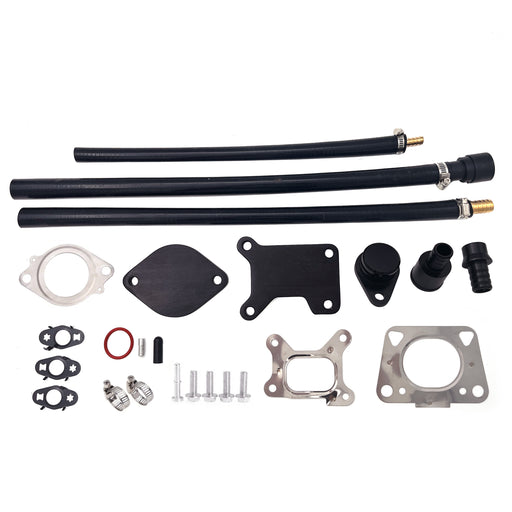
For 2017-2023 6.6L Chevy GMC Duramax L5P diesel EGR Valve Cooler Delete kit
SEGULEROriginal price $131.99 - Original price $131.99Original price$131.99$131.99 - $131.99Current price $131.99FITMENT 2017–2023 6.6L Chevrolet Silverado / GMC Sierra Duramax L5P 2500HD 3500HD Diesel. DESCRIPTION Product Overview Hot soot recirculation ...
View full details -
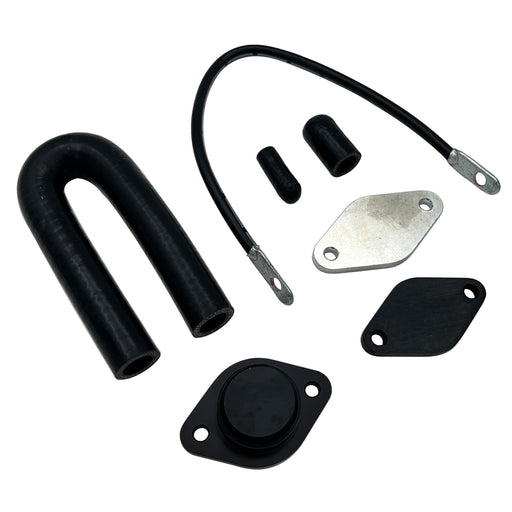
Seguler EGR valve cooler Delete kit for 2020-2022 3.0L Chevy Duramax LM2
SEGULEROriginal price $189.12 - Original price $189.12Original price$189.12$189.12 - $189.12Current price $189.12FITMENT 2020–2022 3.0L Chevrolet Silverado GMC Sierra 1500 LM2 Turbo-Diesel. DESCRIPTION Product Overview Powered by smooth inline-six engine...
View full details -
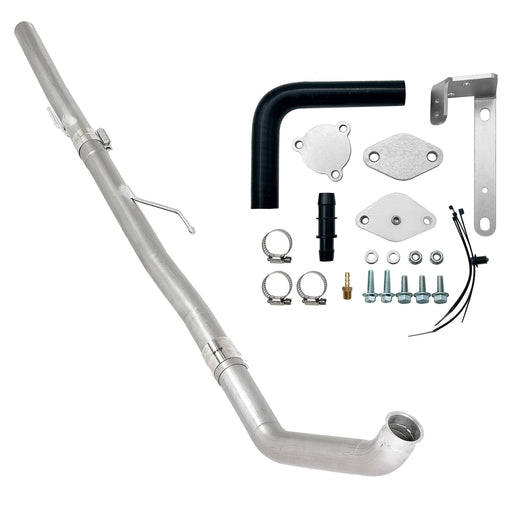
Seguler 3" Ecodiesel DPF Delete Pipe & EGR Delete kit for 2014-2018 3.0L Ram
SEGULEROriginal price $342.00 - Original price $342.00Original price$342.00$342.00 - $342.00Current price $342.00FITMENT 2014–2018 3.0L Dodge Ram 1500 EcoDiesel V6. NOTE: Fit standard Pickup models only (Crew Cab, Quad Cab). Does NOT fit Jeep Grand Cheroke...
View full details -

For 2013-2023 6.7L Dodge Ram Cummins Cab & Chassis EGR Delete Kit Diesel
SEGULEROriginal price $62.99 - Original price $62.99Original price$62.99$62.99 - $62.99Current price $62.99FITMENT 2013–2023 6.7L Ram Cummins 3500 4500 5500 Cab & Chassis / Commercial Trucks. Does NOT fit standard Ram 2500 3500 Pickups. DESCRIPTIO...
View full details -
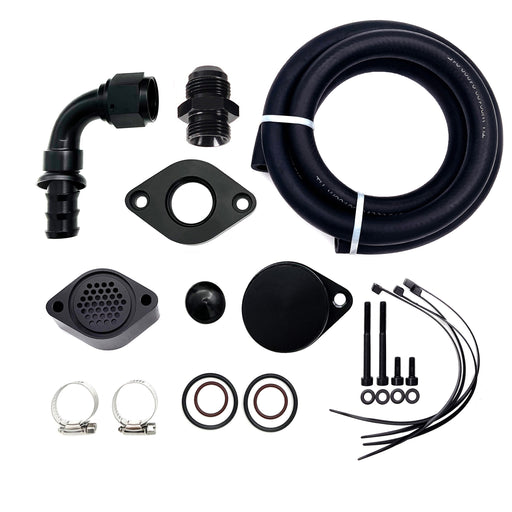
Seguler 2011-2023 6.7L Ford Powerstroke CCV PCV Reroute Engine Ventilation Kit
SEGULEROriginal price $82.99 - Original price $82.99Original price$82.99$82.99 - $82.99Current price $82.99FITMENT 2011-2023 6.7L Ford Powerstroke F-250 F-350 F-450 F-550 Super Duty V8 Diesel. Compatible with both standard Pickups and commercial Cab &...
View full details -
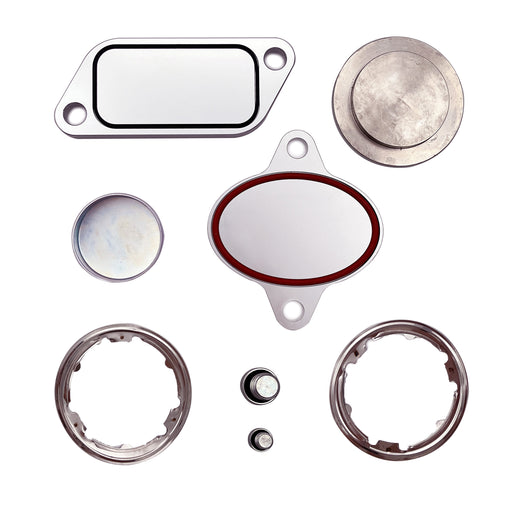
For 2007-2010 Cummins ISX CM871 EGR Plug Kit Stage 2 Plates and Plugs Aluminum
SEGULEROriginal price $67.99 - Original price $67.99Original price$67.99$67.99 - $67.99Current price $67.99FITMENT 2007-2010 Cummins Volvo, Peterbilt, Mack, International, Freightliner, Kenworth with the ISX CM871 Engines. DESCRIPTION Product Overvie...
View full details -
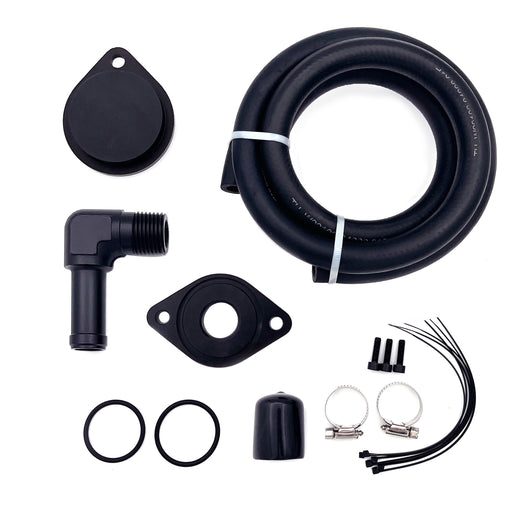
Seguler 2011-2023 Ford 6.7L Powerstroke CCV/PCV Reroute/Delete Engine Ventilation Kit
SEGULEROriginal price $72.00 - Original price $72.00Original price$72.00$72.00 - $72.00Current price $72.00FITMENT 2011-2023 6.7L Ford Powerstroke F-250 F-350 F-450 F-550 Super Duty V8 Diesel. Compatible with both standard Pickups and commercial Cab &...
View full details -
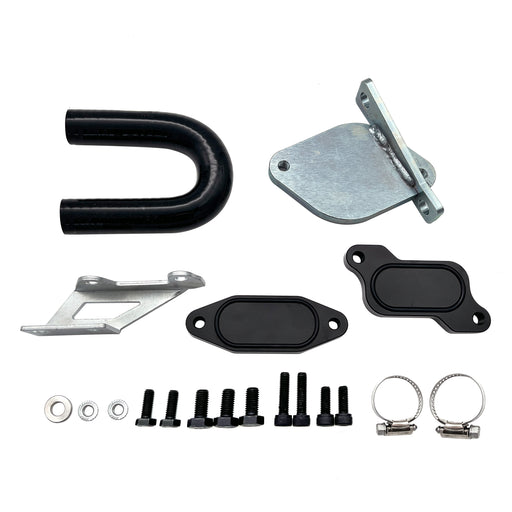
For 2007-2010 6.6L Chevy GMC LMM Duramax EGR Valve Cooler Delete Kit Fit
SEGULEROriginal price $61.99 - Original price $61.99Original price$61.99$61.99 - $61.99Current price $61.99FITMENT 2007.5-2010 6.6L Chevrolet Silverado Duramax LMM 2500HD / 3500HD. 2007.5-2010 6.6L GMC Sierra Duramax LMM 2500HD / 3500HD. Note: Standard...
View full details -
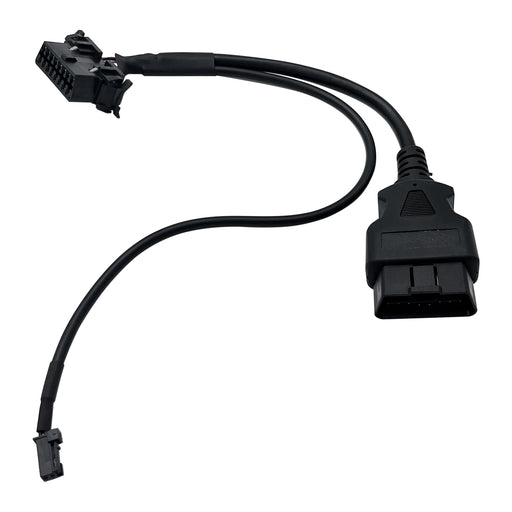
Seguler 2018+ RAM Cummins OBD2 HD Security Gate Bypass Cable
SEGULEROriginal price $45.00 - Original price $45.00Original price$45.00$45.00 - $45.00Current price $45.00FITMENT 2018+ 6.7L Ram Cummins 2500 3500 Turbo Diesel. Designed for Ram pickup trucks equipped with the factory Security Gateway Module. Note: Pl...
View full details -
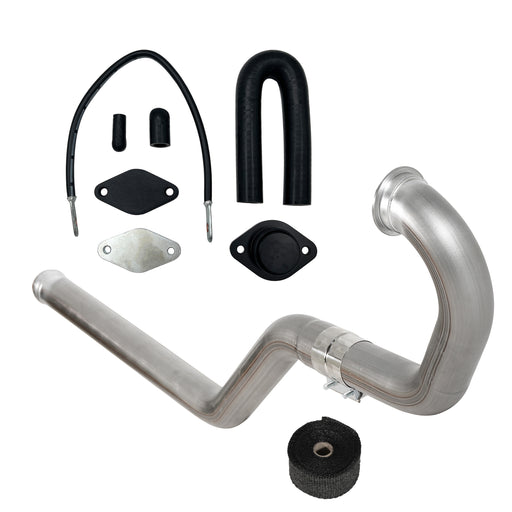
3" Turbo Back DPF & EGR Delete Kit for 2020-2022 GM 3.0L LM2 Duramax
SEGULEROriginal price $550.00 - Original price $550.00Original price$550.00$550.00 - $550.00Current price $550.00FITMENT 2020–2022 3.0L Chevrolet Silverado 1500 LM2 Diesel. 2020–2022 3.0L GMC Sierra 1500 LM2 Diesel. DESCRIPTION Product Overview On the 3.0...
View full details


Leave a comment